Follow Us on Google

From Ndubuisi Orji, Abuja
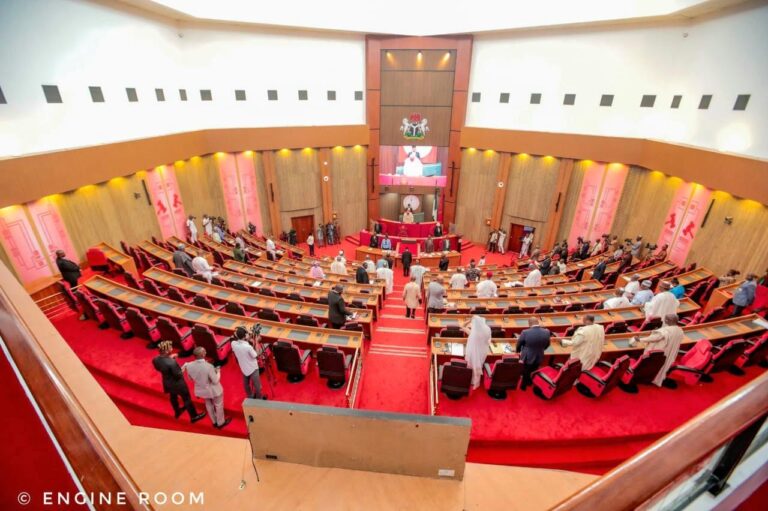
Amid escalating insecurity across the country, members of the House of Representatives, yesterday, disagreed on the performance of President Bola Tinubu in combating the security crisis in the country.
While some of the members including Speaker Tajudeen Abbas and the Majority Leader, Julius Ihonvbere, said the All Progressives Congress-led Federal Government is responding decisively to security challenges in the country, the Minority Leader, Kingsley Chinda and the Chairman of the Northern caucus, Alhassan Ado Doguwa, berated the government for abysmal performance.
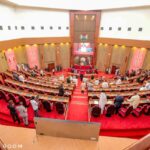
The lawmakers, who spoke at a special session dedicated to the security crisis were in agreement that there was urgent need for the government, including the executive and legislative arms, to step up efforts to combat the reign of terror across the country.
Abbas, in his opening remarks, noted that the last weeks have been difficult for the country, owing to multiple attacks, killings and abductions by terror groups, in different communities across the country.
“The attack in Kebbi State shocked the nation. The abduction of students in Niger State caused deep distress. The kidnapping of worshippers in Kwara State brought fear to many communities. Families are grieving. Citizens are anxious. These incidents remind us of the scale of the threat we face and the seriousness of the work before us.”
However, Abbas noted that the security forces, acting on the directive of President Tinubu, have responded swiftly and courageously to the attacks. He added that this has led to the rescue of the worshippers, who were abducted in Kwara State and some of the students abducted in Niger State
“Since President Bola Ahmed Tinubu assumed office, his administration has taken steps to reform the security architecture. There has been a shift in coordination among the services and a more deliberate effort to regain the initiative.
“Evidence shows that these reforms have produced results. Thousands of captives have been freed. High-ranking commanders linked to violent networks have been eliminated. Millions of displaced people have returned to their communities. There was also a measurable decline in some categories of mass abductions and kidnappings. These gains reminded us that progress is possible when strategy, coordination and political will converge.
“We must, however, accept that certain forms of violence have resurfaced in different parts of the country and are evolving rapidly. The roots of this resurgence lie both within and beyond our borders. The Sahel has undergone significant upheaval. Changes of government in Mali, Burkina Faso and Niger Republic have created ungoverned spaces that armed groups now exploit. Illegal arms trafficking has increased. Nigeria, therefore, faces domestic and transnational pressures that require an integrated response.
“Amid these challenges, international developments also deserve our careful attention. The Nigeria Religious Freedom Accountability Act of 2025 was introduced in the United States Congress, which places Nigeria on the list of Countries of Particular Concern. The Bill suggests that Nigeria permits or encourages religious persecution. Members may recall that this House extensively debated and unanimously rejected the claims.
“The government of Nigeria does not and will never support or sponsor violence against its own citizens. We conveyed our resolutions to the United States Congress, the Department of State and the United States Commission on International Religious Freedom.
“It is, therefore, important to restate Nigeria’s actual security reality. Over the past 15 years, the government has invested significant resources in confronting insurgency and widespread violence. It is true that in some communities, Christians have been targeted, just as Muslim communities have suffered similar attacks in others.
“These acts have been carried out by violent groups pursuing their own agendas. They do not reflect the policy or practice of the Nigerian state. Terrorism, banditry, communal clashes and extremist violence have brought suffering to Nigerians of all faiths. Our Constitution guarantees freedom of religion, and every institution of government remains committed to protecting that right.”
Chinda, in his contribution, noted that contrary to claims that the Federal Government was doing so much to combat the security challenge, the “government is still sleeping.”
The Minority Leader, who agreed that there were religious, economic and political dimensions to the security crisis in the country, urged the parliament to unite in the interest of the country and proffer solutions to the challenges.
Other News
“My dear colleagues, the task is very heavy because we cannot pretend that we do not have insecurity problems in this country. And the solution ought to come from us, all of us seated here. Not from Nigerians outside here. But we must own up to the truth. How well are we doing? How well are we tackling this problem? When I hear people praising the government, saying the government is doing well… Are we sincere?
“Government is still sleeping. Nothing fundamental has been done. Nothing. We cannot continue with the fire brigade approach. Must we wait until our children are kidnapped before we take steps? And when 20 are kidnapped, we recover 2. We beat our chest that we are achieving. What about the 18? Dear colleagues, we recall, there is no week that this chamber has not discussed the issue of insecurity.
“Not one week passes without a motion on insecurity. And at the end of the day, all we do is observe one minute silence. I think that the time has come for us to unite, if not as a country, as parliamentarians. Remove the toga of religion. Remove the toga of political parties. And wear the toga of Nigeria.
“Whoever is affected should not be our concern. But we must salvage our country. We must salvage ourselves. We must begin to go home freely. We must find solutions to ensure that Nigerians sleep with their two eyes closed.”
Similarly, Ado-Doguwa, who stated that he was speaking, in his personal capacity, said the praise for the government notwithstanding, the obvious truth is that efforts of the government was not good enough. He stated that the country is at war and there was a need for the government to rise to its responsibility, which is the protection of lives and property.
“Mr. Speaker, I am, therefore, prepared to say that no matter what the government does, my government, led by Bola Ahmed Tinubu, the APC government my party and despite all the submissions of the efforts of all security agencies that were made here through their respective chairmen, I want to say that yes the government is doing its best, the security agencies are doing their best, but I want to say with every sense of responsibility and without any fear of equivocation that their best is not good enough.
“It is not good enough because the security situation in Nigeria today Mr Speaker it is horrific. Mr. Speaker our security situation is tragic; Mr Speaker, the security situation especially in the North where I come from is devastating. Mr Speaker our situation in Nigeria today, in the area of security is unspeakable. It’s unspeakable because our people are left ravaged, in serious tension, fear , all because we are lacking and reneging in our institutional responsibility as a government,” he stated.
Consequently, the lawmaker, who was the leader of the House in the ninth Assembly, proposed that the Green chamber should shut down its operations pending when the government is able to provide security for the people.
“Mr. Speaker, we can even declare a legislative emergency; close the house, shut it up. Who are you legislating for? What laws are you making when the country is running in blood? The country is running in blood and tears. Farmers cannot go to farms. Our traders cannot go to the market. Worshippers cannot go to mosques; cannot go to churches. Then what are you legislating here? “
However, in a quick intervention, the Deputy Speaker, Benjamin Kalu, said the House is the hope of the people and would not shut down over the security crisis. He noted that no problem is too big for the legislature to address.
“It is important to note that we are the hope of Nigeria, the Parliament. We are the fulcrum of democracy. It doesn’t matter how emotional we get, it doesn’t matter how burdensome the problem is. We cannot argue that the Parliament should be shut down because the problems are much. This is the solution hub of the nation. I want to say that we should be careful in projecting what might be misunderstood by the people outside this chamber.
“Mr. Speaker, no problem is too big for the Parliament to handle. We will not shut the Parliament. We will stay here together because we have the best brains from all over the country. We will find solutions to our problems. We have faced stronger problems before now, Mr. Speaker. Last dispensation, upper dispensation, we faced problems. We never shut the Parliament. It will not be this time that the Parliament will be shut. We are capable, we are able, we will find solutions to our problems under your leadership. We will not close the door.”
Earlier, Ihonvbere, while opening the debate, said the country was facing several security challenges, which has led to the death of many Nigerians and displacement of families and communities.
“We recognise that today we face multifaceted security threats across the country. We also recognize the displacement of families, and even communities. Fatalities remain high, Reaching up to 9500 in 2024. These are reported and recorded cases. It could be higher. Even the Global Terrorism Index places Nigeria 6th, as the 6th most impacted country by terrorism globally. But now, it is not just a question of Boko Haram, we have ISWAP and copycat gangs ravaging different parts of the country. We have experienced mass killings, kidnap for ransom, banditry, and criminal violence.”
The Edo lawmaker added: “What has been the general response from the government. There have been consistent, intensified operations, deployment of troops, recruitment and training, change of service chiefs in order to ginger the leadership of security agencies. Massive increase in defence spending and acquisition of military platforms, including helicopters and drones.”
The Speaker, in his ruling, said all positions canvassed were the opinions of the individual lawmakers, stating that the debate will continue the special session after which the House will take a position.