Follow Us on Google
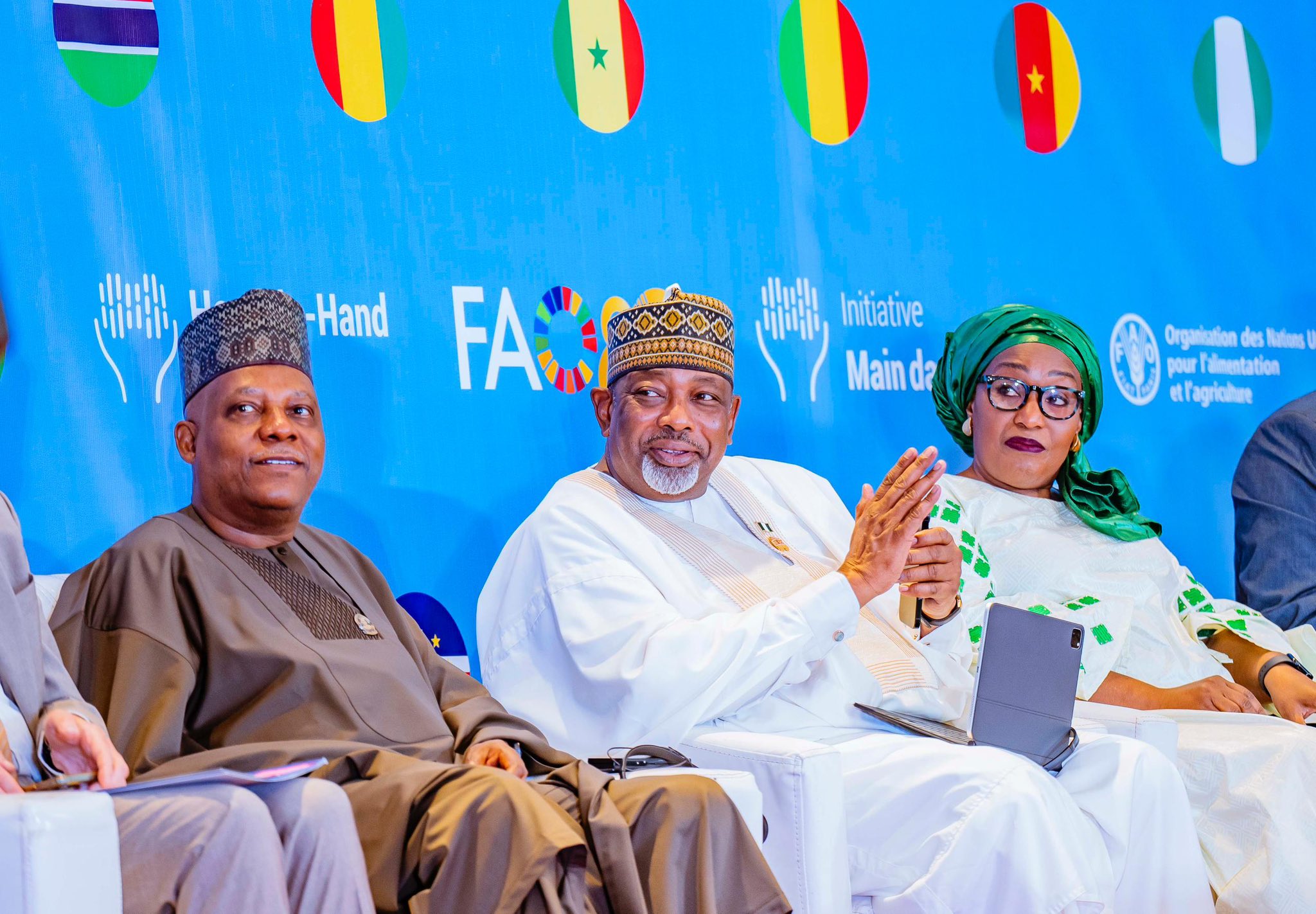
The Federal Government has unveiled new incentives to boost agriculture investment and food security under President Bola Tinubu’s Renewed Hope Agenda. The ambitious agricultural programme with a target of $3.14billion investment will enhance access to credit and create about 21million rural jobs in the nation’s agricultural value chain. While disclosing this at the Food and Agriculture Organization (FAO) National and Sub-regional Hand-in-Hand Investment Forum in Abuja recently, Vice President Kashim Shettima said the incentives would boost investment in agriculture and ensure food security. ‘Nothing unifies humanity as much as hunger. It is the great equalizer that reveals our vulnerabilities and the shared fragility of our existence. Food is not merely a matter of survival; it is a matter of global security,’ Shettima stated.
The new incentives to boost agriculture include single-window platforms for land registration, strengthened agricultural credit systems, large-scale mechanization and strategic irrigation projects. To achieve this lofty dream of boosting the agricultural value chain and ensure food security the vice president further said ‘we must facilitate access to land and resources for serious investors. We must drive mechanization to reduce drudgery and enhance productivity. We must strengthen the agricultural credit system to ensure capital flows to where it is needed most.’
The government has under the 2021-2025 National Development Plan aimed to lift 35 million Nigerians out of poverty, create 21 million jobs in rural communities and secure food and nutrition sufficiency. We also agree with the government position that ‘strategic investment in irrigation alone could triple yields, free us from seasonal dependency, and fortify our resilience and climate shocks.’
The government’s fresh plan in agriculture is good and commendable. No doubt, it is a bold plan to tap our agriculture potential, which unfortunately has largely remained untapped for years because of our fixation on oil wealth. At independence, agriculture was the mainstay of the economy and the largest employer of labour. The then regional governments depended so much on agricultural produce to effectively run their affairs.
The North was famous for groundnut pyramids, the West, cocoa production and the East, oil palm production. When the Mid-West region was created, it also depended on its rubber plantation. Even with oil boom, agriculture remains the largest employer of labour in spite of its utter neglect. It is laudable that the government is giving agriculture the much-needed attention. However, the programme must have the buy-in of the governors, local government chairmen and farmers to succeed.
Nevertheless, the only challenge will be in its implementation. Our governments do not lack thoughtful plans. What they lack is the political will to implement those beautiful plans. Most government’s good agricultural plans were plagued by implementation fatigue or lack of continuity. Lack of stakeholders’ input, corruption, inadequate budgetary allocation, and diversion of resources from real farmers to non-beneficiaries also contribute to failure of agricultural programmes in the country.
We can recall the government’s failed agricultural projects such as the 1972-1973 National Accelerated Food Production Programme (NAFPP); Operation Feed the Nation (OFN), 1976-1980; the Green Revolution Programme(GRP), 1981-1983; the Go Back to Land Programme, 1983-1985; and the Anchor Borrowers’ Programme (ABP) of the Buhari administration.
Despite these ambitious and laudable agricultural programmes, we so much depend on food imports. Nigeria is still among hunger challenged countries in the world. Nigeria’s food imports witnessed 16 per cent rise in 2024 to $2.5billion. This dependency on food imports is driven by the general insecurity in the country, especially in the nation’s food-producing zone of North-Central Nigeria, where killer herdsmen have been on the prowl for years.
Unfortunately, Nigeria was classified as a hunger hotspot in the June 2025 FAO-World Food Programme (WFP) “Hunger Hotspots” report, indicating a high risk of serious food insecurity in the country. The report listed the Democratic Republic of the Congo, Nigeria, Burkina Faso, Chad and Somalia as key hotspots facing worsening hunger due to a combination of conflict, climate change, and economic factors.
It is sad that we depend so much on Brazil, Germany, Ireland, the United States, China and even war-torn Ukraine for our major food imports such as rice, sugar, and wheat flour. We have enough arable land to grow food and meat for our teeming population and enough body of waters for aquatic farming. According to the World Bank, Nigeria’s arable land in 2022 stood at 40.48 per cent. The country has about 70.8 million hectares of agriculture land area with major crops like maize, cassava, guinea corn, yam, beans, millet and rice.
Our agriculture is still rural and rudimentary with most farmers using traditional farm implements such as hoes and knives with much dependence on seasonal farming poor yielding seeds. The traditional land tenure system and even the Land Use Act have not helped much in acquiring land for large-scale mechanized farming. We hope that the recent tractors and other modern farm implements imported from Belarus and Brazil will go a long way in mechanizing our agricultures.
In all, the greatest challenge facing our agriculture is insecurity. The recent abduction of 40 people in Zamfara and killings of helpless farmers in other parts of the country will dampen the zeal and enthusiasm of rural farmers. The reign of bandits in Sokoto State does not help matters. Besides, the government should frontally address the factors which impeded our past lofty agricultural programmes.