Follow Us on Google
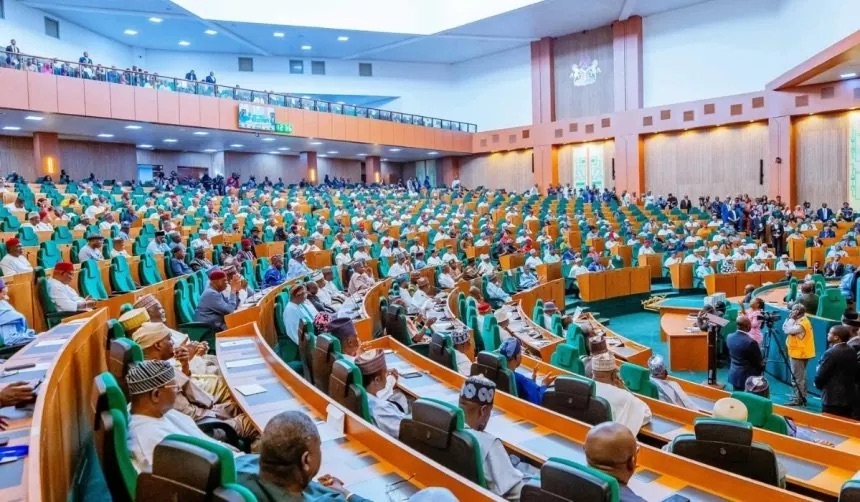
Recently, the House of Representatives set up an ad hoc committee to probe no fewer than 11,866 abandoned federal government’s properties littered across the country, worth over N20trillion. The motion to investigate the properties was sponsored by the Minority Leader, Kingsley Chinda, (PDP, Rivers State) during plenary. The lawmaker recalled that the Nigerian Institute of Quantity Surveyors in 2021 identified about 11, 866 abandoned federal government’s properties nationwide. According to him, this represents about 63 per cent of the total projects initiated since the nation’s independence.
The abandoned properties are the Federal Secretariat Complex, Ikoyi, Lagos; the Nigerian International Hotel Building, Suleja, Niger State; NIPOST Headquarters, Abuja; the Millennium Towers, Abuja; the Federal Inland Revenue Service (FIRS) Building in Abia State; Livestock Multiplication and Milk Processing Centres in Adamawa and Taraba states; the National Library Headquarters, Abuja; the Nigeria Newsprint Manufacturing Company (NNMC) in Akwa Ibom State; the Kaduna Textile Building; and the Aluminium Smelting Company (ALSCON) in Ikot Abasi, Akwa Ibom State.
During the inauguration of the ad hoc committee, the Speaker of the House of Representatives, Tajudeen Abbas, said the era of national assets wasting is over. “We are committed to ensuring that no public property is left to decay or fall into neglect,” the Speaker stated. The committee will be chaired by Daniel Amos, while Lanre Oladebo will serve as his deputy. He tasked the committee to be meticulous and fearless in identifying assets that have been left idle, mismanaged, encroached upon, or illegally acquired.
The mandate of the committee include establishing a national inventory of abandoned national assets; examining the financial, economic and development cost of their abandonment; determining the MDAs responsible for each property; investigating administrative, regulatory and budgeting failures; recommending recovery, rehabilitation, or productive reuse; and proposing long-term reforms to prevent future waste.
The committee’s work will cover the location, status, history and current occupancy of all abandoned federal government properties, alongside the policy failures that led to their abandonment. Amos observed that every abandoned property represents deferred development, loss of revenue; and a diminishing public trust and vowed that the committee will be meticulous, transparent and professional in the probe. “The work before us is not just technical, it is moral,” he stated. He also charged ministries, agencies and other stakeholders to fully cooperate with the committee.
In 2000, the federal government set up a Presidential Implementation Committee (PIC) on the recovery of all government properties. Twenty-five years later, nothing has been heard of the report. The prolonged delay in releasing the report has raised serious concerns about the transparency and accountability in the management of public assets. It is sad and unacceptable that past efforts to investigate abandoned federal government’s properties were inconclusive. This should not be the fate of this probe.
Going forward, the current probe of abandoned public assets must be thorough and transparent. The outcome should not be swept under the carpet in the usual Nigerian style. Nigerians should know the outcome and recommendations. The matter should be handled with great tenacity of purpose and dispatch. The committee should make far-reaching recommendations on how to manage the assets in future. The federal government can partner with the private sector to manage some of the assets under the Public-Private Partnership (PPP) model which has worked in many parts of the world.
We must end the culture of wasting and abandoning public assets. These assets can earn the country billions of naira per annum if they are adequately managed. The government can also complete some of the abandoned projects that can earn money for the country and improve the lives of the citizens.
These include the National Library Headquarters, Abuja; the Nigerian Newsprint Manufacturing Company, Oku-Iboku, Akwa Ibom State, the Nigerian International Hotel Building, Suleja, Niger State, the Federal Inland Revenue Service Building in Abia State, and the Livestock Multiplication and Milk Processing Centres in Adamawa and Taraba states.
Some of the abandoned public assets can be converted to housing estates or deployed to other uses like the Federal Secretariat Complex in Ikoyi, Lagos. In a country with housing deficit put at over 28 million units, it is unacceptable that 11, 866 properties have been abandoned. It has been projected that Nigeria’s housing deficit may hit 40 million units due to growing youth population and urbanisation. The federal government should evolve a new pragmatic policy to monitor and manage its assets nationwide.