Follow Us on Google
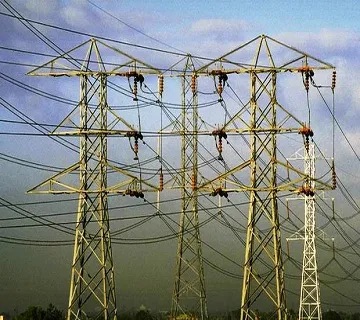
The Federal Government and Lagos State Government have unveiled plans to increase electricity supply across the state to about 3,500 megawatts (MW) as part of renewed efforts to tackle persistent blackouts and strengthen the electricity value chain.
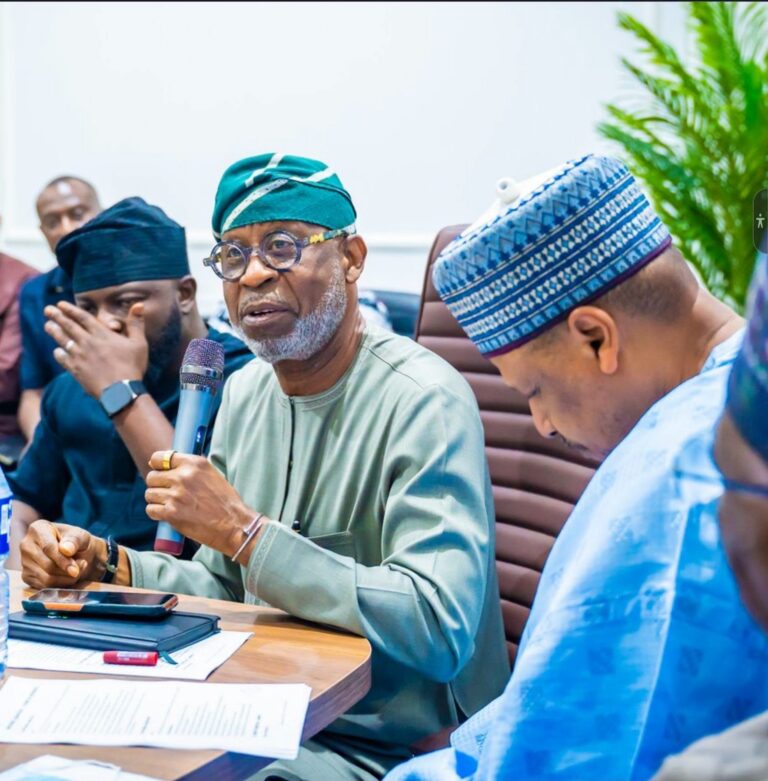
The plan was announced yesterday at the Lagos State High-Level Strategic Power Town Hall Meeting held at Lagos House, Marina, where the state government, Federal Government, regulators and industry operators agreed that reliable electricity was critical to Lagos’ economic growth and industrial development.
Minister of Power, Joseph Tegbe, represented by the ministry’s Director of Distribution Services, Baba Mustapha, said Lagos required more than 6,000MW to adequately meet its electricity demand but currently received only a fraction of that requirement from the national grid.
Mustapha, however, said increasing generation alone would not resolve the state’s power challenges without corresponding investments in gas supply, transmission and distribution infrastructure, as well as metering.
He disclosed that Lagos had secured 400MW from private power producers, adding that the state must continue to explore gas-fired, embedded and renewable energy sources to increase available supply.
Governor Babajide Sanwo-Olu called for stronger coordination among stakeholders, alongside improvements in smart metering, data management, regulatory enforcement and revenue assurance.
According to him, the measures were necessary to restore consumer confidence, improve service delivery and create an environment capable of attracting sustained investment into the electricity sector.
Sanwo-Olu proposed that stakeholders reconvene within five to six months to review progress and assess the implementation of commitments reached at the meeting.
Commissioner for Energy and Mineral Resources, Abiodun Ogunleye, said the state government was determined to end what he described as the “culture of blackout” in Lagos.
Ogunleye said Lagos currently receives less than one gigawatt from the national grid, despite the Transmission Company of Nigeria (TCN) having about 3.5GW of wheeling capacity.
He said the immediate objective was to add about 2GW to existing supply, bringing available electricity closer to 3.5GW and allowing more feeders to supply homes, businesses and industries across the state.
Other News
According to him, the government would develop specific action points and establish a baseline against which progress would be measured at the proposed six-month review.
On electricity tariffs and payment obligations, Ogunleye said improved supply must be matched by prompt payment of electricity bills.
He, however, stressed that consumers should not be required to pay for electricity they did not receive, insisting that the state government opposed billing practices capable of undermining public confidence in the sector.
Also speaking, the Special Adviser to the President on Power and Chairman of the Presidential Task Force on Power Sector Reset and Restoration, Dr Rilwan Babalola, said Nigeria’s electricity crisis could not be resolved simply by announcing additional megawatts.
He said the country must move from managing electricity shortages to building a functional electricity market in which energy, contracts and payments move predictably across the entire value chain.
Babalola identified Lagos as a strategic testing ground for the proposed Clean Lagos Electricity Market (CLEM), designed around demand aggregation, bilateral contracting, open access, payment assurance and transparent settlement.
He said the proposed initial 500MW under the model must first demonstrate that electricity could be reliably generated, transmitted, distributed, metered, accounted for and paid for before the initiative was expanded.
Babalola also cautioned that decentralising the electricity market must not lead to fragmentation, stressing the need for clear coordination among Federal and state regulators and the interconnected national grid.
He said the ultimate objective of the Power Sector Reset was to shift the country’s focus “from megawatts announced to electricity delivered; from government interventions to functioning markets; and from managing scarcity to building a sustainable electricity industry.”
With Lagos accounting for a significant share of Nigeria’s commercial and industrial activity, stakeholders said achieving the proposed 3,500MW supply target would be critical to reducing dependence on unreliable power sources, supporting businesses and improving the state’s economic productivity.
The proposed five-to-six-month review is expected to provide the first major test of whether the commitments made at the town hall can translate from policy announcements into measurable improvements in electricity delivered to Lagos consumers.