Follow Us on Google

• Davido earns global praise for promoting Africa’s image
From Juliana Taiwo-Obalonye, Abuja
The Federal Government has warned that Nigeria’s ongoing economic and institutional reforms could fail unless citizens and leaders embrace fundamental changes in their attitudes, values and conduct, insisting that policies and investments alone cannot guarantee sustainable national development.
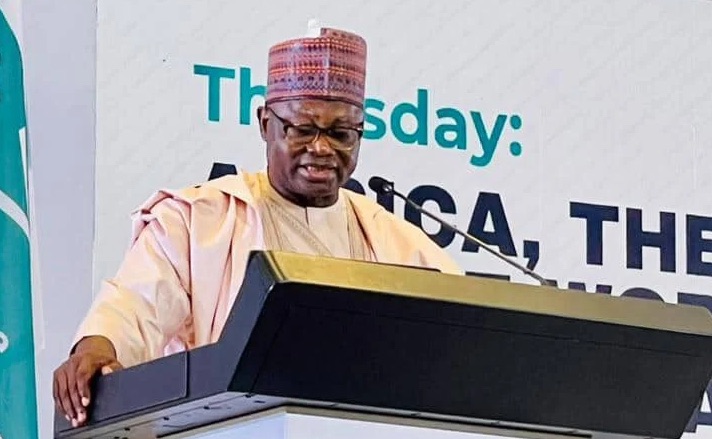
Director-General of the National Orientation Agency (NOA), Lanre Issa-Onilu, who sounded the warning at the 2026 World Public Relations Forum (WPRF) in Abuja, described the Nigerian National Ethics Policy as the “mother of all reforms,” stressing that economic restructuring, infrastructure development and institutional transformation would achieve little without integrity, discipline, accountability and respect for public property.
He maintained that although President Bola Tinubu’s administration had introduced far-reaching reforms across critical sectors, their long-term success would depend largely on the character of Nigerians responsible for implementing and sustaining them.
“This administration, in a short period, has embarked on far-reaching reforms. These reforms have been yielding positive outcomes that we can all see. However, the question remains: Can we sustain these reforms when our national character is unsupportive of development?” he asked.
Issa-Onilu argued that successive governments had concentrated on economic, political and institutional reforms without paying sufficient attention to the values and attitudes of citizens, which ultimately determine whether public policies succeed or fail.
“We are succeeding with economic, political and institutional reforms for now, yet we have paid insufficient attention to the reform that determines whether these other reforms succeed: the character of the people who live through the reforms,” he stated.
The NOA boss challenged communication professionals to confront the contradiction between Nigeria’s projected national image and the conduct of its citizens and institutions, warning that reputation-building without behavioural transformation amounted to an exercise in futility.
“Can we successfully promote an entity whose conduct does not align with the image we are trying to protect? Can we advertise a country as an investment destination while investors encounter unnecessary bureaucracy? Can we promote national unity while citizens perceive discrimination and prejudice?” he asked.
He cited the destruction and vandalisation of public infrastructure as examples of how indiscipline and disregard for collective assets undermine government investments, lamenting that facilities constructed with taxpayers’ money were sometimes stripped of fittings or left in poor condition shortly after completion.
“Government may replace the damaged facility, but unless behaviour changes, the problem will return. That is why character reform is fundamental to national development. Policies do not implement themselves. People implement them, and their values influence the results,” he said.
Drawing comparisons with Japan and Singapore, Issa-Onilu said both countries had deliberately incorporated moral education, responsibility and citizenship values into their educational systems to cultivate discipline and respect for shared resources.
He noted that Japanese schoolchildren were taught to clean their classrooms as part of efforts to instil responsibility and respect for public property, stressing that Nigeria must similarly invest in character development from childhood.
Reflecting on Nigeria’s 66 years of independence, the NOA director-general said the country must critically examine the national character it had developed and the values it intended to bequeath to future generations.
While acknowledging the achievements of Nigerian professionals, entrepreneurs, innovators and creative talents internationally, he lamented that indiscipline, intolerance and declining public trust continued to undermine national progress.
“We cannot continue to do the same things and expect different results. We must deliberately build a national character that supports our development aspirations.”
Issa-Onilu explained that the National Values Charter recognised nation-building as a reciprocal responsibility between leaders and followers, stressing that those exercising authority must demonstrate the values they expect from others.
“National character is not built by what we preach occasionally, but by what we practise consistently.”
He disclosed that the agency had developed a national hero, Captain Excellence, to teach children honesty, discipline, responsibility and good citizenship through cartoons and relatable everyday experiences.
“Our objective is to ensure that Nigerian children grow up watching characters in cartoons that reflect the values of our society.”
He added that the agency was collaborating with institutions responsible for training graduates, including security agencies and private sector organisations, to integrate national values into their activities.
Other News
Issa-Onilu urged public relations practitioners to use their professional influence to promote integrity, accountability and responsible citizenship rather than merely defend individuals and institutions irrespective of their conduct.
“Responsible communication is not about defending every individual or method of presenting and attracting people. It is about communicating truthfully, recognising achievements, applying sound judgement and encouraging responsible conduct.”
He challenged leaders to demonstrate the values they expected from their subordinates and urged parents and teachers to practise what they taught, while calling on young people to reject indiscipline.
“Nigeria has the talent, creativity and determination to achieve greatness, but our nation must be supported by the character required to sustain it.
“To build the Nigeria we desire, we must build the Nigerians that can sustain it,” he declared.
Meanwhile, the forum’s African Day celebration provided a cultural dimension to the discussions, as President of the Global Alliance for Public Relations and Communication Management, Justin Green, praised Afrobeats superstar David Adeleke, popularly known as Davido, for adjusting his international schedule to participate in the gathering.
Green said the singer’s decision to return from the United States to perform at the event demonstrated his commitment to projecting a positive image of Nigeria and Africa on the global stage.
Recounting how Davido’s participation was secured, Green said he had publicly appealed to the singer during a television interview ahead of the conference, although the presenters initially dismissed the suggestion as unrealistic.
According to him, the appeal eventually reached Davido, who was in New York at the time.
Green said he was visiting the Nigeria Customs Service when he was handed a telephone and informed that someone wanted to speak with him, only to discover that Davido was calling from New York.
He recalled that the singer, who had reportedly been woken at about 5am because of the time difference, immediately asked which day he was expected to perform.
Davido subsequently adjusted his travel arrangements, returned to Nigeria and flew from Lagos to Abuja, arriving shortly before his performance at the forum.
“He was supposed to still be in New York. He agreed to fly back. He flew back, and he flew from Lagos to here. And he agreed to do it. And he landed last night, came straight here to do it,” Green said.
Commending the gesture, the Global Alliance president described Davido as an outstanding cultural ambassador whose international achievements had contributed significantly to Africa’s visibility and reputation.
“That is the type of Nigerian spirit that we keep talking about. He wanted to contribute in a way to make this event and to show the world.
“Everywhere he goes, he puts out a great image of Africa. And what he has achieved worldwide is enormous. And he’s a great, great ambassador for the African continent,” Green said.
Davido’s performance on Wednesday night thrilled delegates, dignitaries and other guests, bringing Afrobeats to the international gathering and reinforcing the celebration of African creativity and cultural influence.
The African Day activities also featured a colourful parade by 54 children representing the continent’s 54 countries, each carrying a national flag to symbolise Africa’s diversity, identity and unity.
Head of Protocol and member of the National Planning Committee, Aisha Gambari, said the parade was designed to demonstrate the pride Africans should take in their shared heritage and identity.
The ceremony, which featured the Global Alliance anthem, formed part of the forum’s broader theme, “Africa, the Voice of the World: Communication for Peace, Democracy and Development”.
The WPRF Abuja 2026 is jointly organised by the Global Alliance for Public Relations and Communication Management, the African Public Relations Association (APRA), as continental host, and the Nigerian Institute of Public Relations (NIPR), as national host.