Follow Us on Google
…to sanction erring institutions, officials
From Fred Ezeh, Abuja
The Federal Government said on Wednesday that it recently uncovered the illegal admission of over 58,000 students into various colleges of education across the country.
The government said it also observed similar practices in universities and polytechnics across the country, but they would no longer be tolerated.
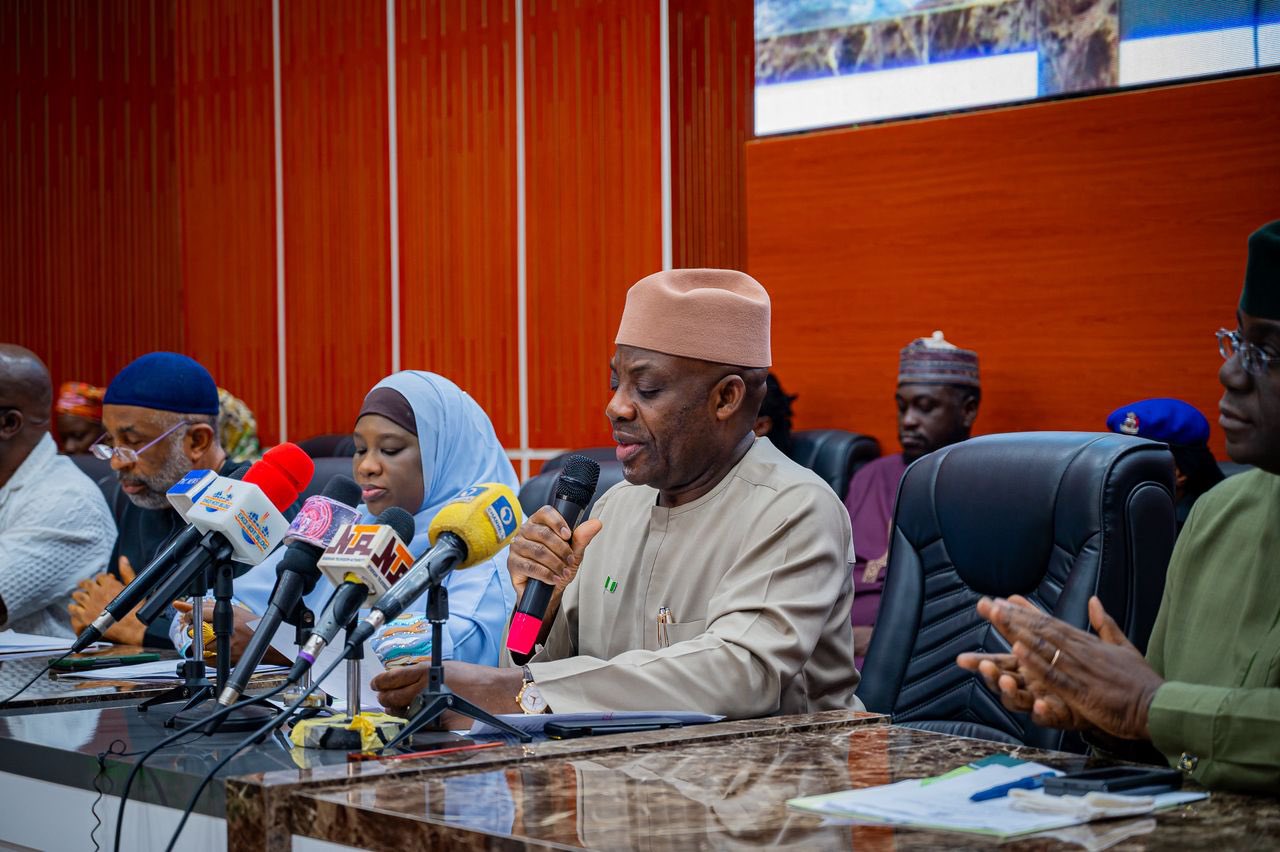
Minister of Education, Dr Tunji Alausa, disclosed this in Abuja at the inauguration of a ministerial committee on strengthening the accreditation and quality assurance system for tertiary institutions, chaired by the immediate past JAMB Registrar, Prof Ishaq Oloyede.
He said the figure of 58,000 students was far above the 5,600 initially discovered when the ministry began investigating illegal admissions into colleges of education.
He said the development was so disturbing that in one institution, only 8,593 students were legally admitted. In contrast, 9,872 were illegally admitted, making the number of illegal students higher than those admitted through approved channels.
The minister said the government would treat the current intervention as a one-time amnesty, stressing that it would not repeatedly legitimise illegal admissions through what he described as “condonement”.
Alausa said the problem was not limited to colleges of education, noting that illegal admissions were also taking place in universities and polytechnics.
He estimated that the number of illegally admitted students in universities could be more than 200,000, although the figure is yet to be fully established.
The minister warned that institutions were admitting students beyond their approved capacities and programmes, making it difficult for regulators to determine the actual number of students being trained.
He linked the practice to the poor quality of graduates entering the labour market, noting that employers were increasingly complaining that despite receiving hundreds of applications, only a few candidates possessed the required competence.
Alausa challenged the new accreditation committee to address the loopholes that had allowed institutions to manipulate accreditation exercises by temporarily moving staff, equipment and other facilities to meet regulatory requirements.
He insisted that accreditation must shift from occasional inspections to continuous quality assurance, supported by digital systems capable of tracking staff, students, facilities and equipment.
The minister also directed that institutions should be assessed based on what they actually possess and sustainably maintain, rather than what they hurriedly assemble for accreditation visits.
He warned that under President Bola Ahmed Tinubu’s administration, officials who fail to enforce regulatory standards could lose their jobs, while private institutions found culpable could risk losing their licences.
Alausa said the reform was necessary to restore credibility to Nigeria’s tertiary education system and protect students from being admitted into programmes whose qualifications could ultimately lack regulatory recognition.
He thus charged the committee, chaired by Oloyede, to produce practical measures that would close existing loopholes and establish a more transparent, credible and technology-driven accreditation system across universities, polytechnics and colleges of education.