Follow Us on Google
From Fred Ezeh, Abuja
The Federal Government said it has commenced moves to scrap the criminal penalty for attempted suicide, following the approval of its position on decriminalisation by the Federal Executive Council (FEC).
The decision, described by stakeholders as a major shift from punishment to care, is expected to pave the way for amendments to the relevant provisions of the Penal Code and Criminal Code when the proposal is transmitted to the National Assembly.
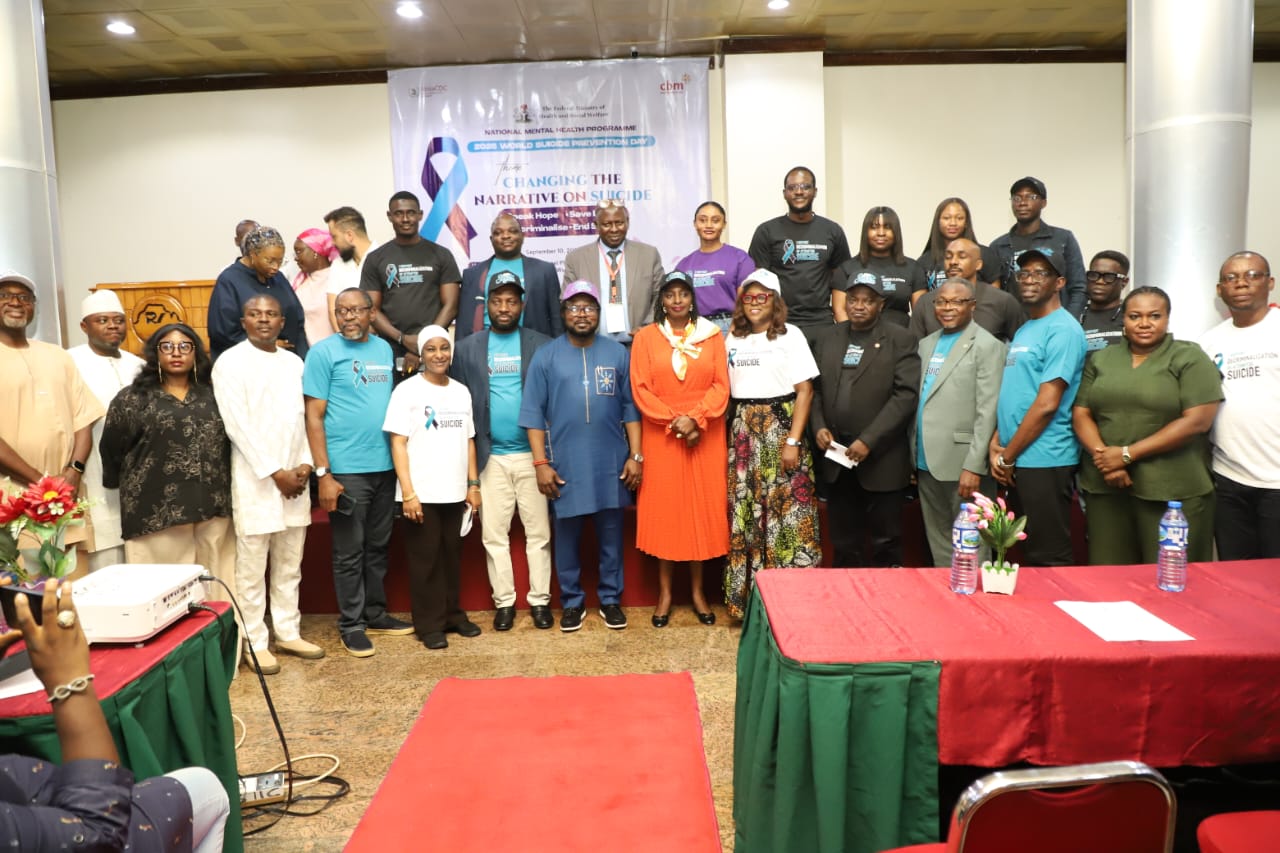
The development was announced on Thursday at an event organised by the Federal Ministry of Health and Social Welfare to mark the 2026 World Suicide Prevention Day in Abuja.
Minster of State for Health, Dr. Iziaq Salako, in a speech delivered by the Permanent Secretary, Federal Ministry of Health and Social Welfare, Daju Kachollom, said the Federal Executive Council’s (FEC) approval of decriminalisation of suicide attempts followed the work of the National Task Force on Decriminalisation of Attempted Suicide, which has undertaken stakeholder consultations, policy engagements and advocacy involving government institutions, legal experts, mental health professionals, civil society organisations, development partners and people with lived experience.
He said the decriminalisation is more than a legal reform, but a public health and human rights imperative. “People experiencing mental health crises should be provided with care, support and appropriate intervention rather than punishment,” he suggested.
He expressed optimism that the legislative process at the National Assembly would be concluded without unnecessary delay, and disclosed that efforts were underway to integrate mental health services into other areas of the healthcare system.
The minister’s representative said Standard Operating Procedures (SOPs) for integrating mental health into HIV care were being developed, with the process expected to be concluded shortly.
He further disclosed that the National Coordinator of the National Mental Health Programme had been directed to prepare a memorandum for consideration by the National Council on Health on integrating mental health into primary healthcare.
The move, he said, was necessary to ensure that mental health services were taken closer to Nigerians, particularly those who may not have access to specialised psychiatric facilities.
Stakeholders at the event, however, warned that removing criminal sanctions would not by itself solve Nigeria’s suicide crisis.
A representative of the Nigeria Suicide Prevention Advocacy Working Group, Prof. Taiwo Lateef Sheik, said criminalisation was only one part of the problem, stressing the need for a comprehensive national response.
He said the group was advocating for improved suicide and suicidality data, crisis intervention services, dedicated funding, specialised training for healthcare workers and first responders, as well as full implementation of the National Mental Health Act 2021.
He said the country had set a target of reducing suicide deaths and attempts by 50 per cent by 2030, warning that legislative reform alone could not achieve the objective.
The representative put annual suicide deaths in Nigeria at about 16,000, describing the situation as a public health crisis.
President, Association of Psychiatrists in Nigeria, Dr. Veronica Oluyemisi Nyamali, in her remarks also warned that the country’s mental health workforce was inadequate and shrinking, with professionals leaving the country and some medical residents abandoning psychiatric training.
She said decriminalisation would make it easier for people in distress to seek help without fear of prosecution, but urged the government to ensure that the necessary mental health services were available.
Official of the International Committee of the Red Cross (ICRC), Juan Carlos, in his submissions, called for greater attention to people affected by conflict and violence, noting that distance, insecurity and cost often prevent vulnerable people from accessing mental healthcare.
Similarly, civil society organisations urged government to look beyond treatment and address the social and economic factors that predispose people to suicidal behaviour.
Speaking on behalf of people living with HIV in Nigeria, Isah Takuma said mental health interventions must become a core component of HIV services rather than being treated as an optional or secondary intervention.
He urged government to ensure that mental health services were integrated into HIV programmes as Nigeria moves towards greater integration of healthcare delivery.
The ministry said its suicide prevention efforts were anchored on the National Mental Health Act 2021, National Mental Health Policy 2023 and National Suicide Prevention Strategic Framework 2023–2030.
The 2026 World Suicide Prevention Day, with the theme, “Changing the Narrative on Suicide” and call to action, “Start the Conversation,” seeks to move public discourse away from stigma, fear and misinformation towards compassion, understanding and timely support.
The ministry said the ultimate goal was to create a society where people experiencing emotional or psychological distress could seek help without fear of criminal sanctions, discrimination or stigma.
Photo attachment: 485531.jpg