Follow Us on Google
By Chukwuma Umeorah
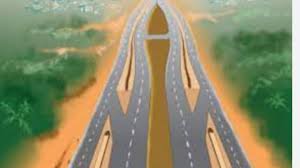
The Federal Government has announced plans to commission the first phase of the Lagos-Calabar Highway on May 29, 2025.
Minister of Works, David Umahi, disclosed this during an inspection tour of the 55-kilometer Section 2 of the highway, where 10 kilometers are expected to be completed by the commissioning date. He added that the project contractor, HITECH Construction, had divided the highway into six lanes across five sections, with simultaneous work underway in all areas.
The minister highlighted that the construction involved removing unsuitable materials and embedding stable soil to create a durable road structure. “If you look around, you will see the depth at which work is ongoing,” Umahi said, referencing ongoing demolition and foundational work.
Umahi noted that one major challenge had been rerouting the alignment to avoid private properties, including Ocean Bay Estate, which was constructed on gazetted land. He emphasized the government’s commitment to minimizing displacement while adhering to timelines.
Other News
To address compensation issues, the government has allocated N18 billion for affected property owners. Umahi acknowledged that some recipients were dissatisfied with their payments but assured a humane approach. “Nobody ever fully meets their expectations in compensation, but we are ensuring a human face to the process,” he explained.
Efforts to resolve utility-related challenges along the route, such as gas pipelines and installations, are also ongoing, with the Nigerian Liquefied Petroleum Company (NLPC) involved in discussions.
Additionally, Umahi revealed that 20 kilometers of Section 1 were set to be commissioned by May, while the remaining 17 kilometers were expected to be completed later in the year. The government’s phased commissioning strategy aims to address funding challenges and ensure progress across multiple infrastructure projects.
Acting Director of Road Design, Engr. Musa Saidi, assured that the highway construction adheres to approved specifications and includes additional measures for durability. “Any realignment is for public interest, safety, and economic reasons,” he said.