Follow Us on Google
The National Quality Council (NQC) has said the establishment of the Council to promote enhanced development, harmonisation and rationalisation of Nigeria’s quality infrastructure was part of measures put in place by the Federal Government to mitigate the constant rejection of Nigeria’s export products in the international market now seen as an emergency.
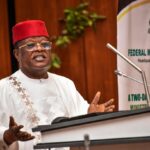
Chairman, Chief Executive of NQC, Osita Aboloma who stated this recently, posited that the various legs of the quality infrastructure, namely standards development, metrology, conformity assessment and accreditation require urgent harmonisation and rationalisation.
These, he said would ensure cost effectiveness and efficiency in support of the acceptance of Nigeria’s export products around the world.
Responding to questions on the recent assertion by the Director General, NAFDAC, Professor Mojisola Adeyeye that 70 percent of Nigeria’s food exports are rejected in Europe and America, Aboloma corroborated the statement, stating that sanitary and phytosanitary requirements are some of the key issues to be surmounted to avoid the constant rejects.
The SPS requirements according to him, are quarantine and biosecurity measures applied to protect human, animal and plant life or health risks arising from the introduction, establishment and spread of pests, diseases as well as from the use of additives, toxins and contaminants in food and feed.
Aboloma also alluded to a recent national newspaper report of Nigerians shipping goods to Ghana for certification to enhance export value as unacceptable, stressing that the solution lies in accelerated development, rationalisation and harmonisation of the nation’s quality infrastructure for optimum value addition.
He however stressed the need for greater synergy among organisations and institutions in the public and private sectors, hosting the National Quality Infrastructure as well as greater awareness creation for operators along the export value chain.
According to him, the NQC was created to implement the letters and spirit of the approved Nigerian National Quality Policy (NNQP) document which provides for efficient and effective management of regulatory responsibilities to achieve protection of society and the environment as well as transparent and reliable state-regulatory systems, devoid of bureaucratic vagaries.
Others he said, include the provision of a supportive National Quality Infrastructure (NQI), which consists of Standards, Metrology, Accreditation and Conformity Assessment Services that must be acceptable globally to enhance the competitiveness of products and services made in Nigeria.
Aboloma explained that Standards serve as benchmark for products and service quality; metrology ensures accuracy of measurements in industry for both equipment and products; accreditation assures mutual recognition of competencies in Nigeria across borders while conformity assessment entails inspection and testing of products to meet destination requirements.
The NQC according to him is domiciled in the Presidency under the Office of the Secretary to the Government of the Federation to reduce bureaucratic bottlenecks in the discharge of its mandate like similar bodies in other parts of the world.
He stated that countries in the Americas, Europe, Asia and Africa that have promoted harmonized quality infrastructure are reaping the benefits in huge inflow of foreign exchange from unhindered exports, listing America, India, United Kingdom, Morocco, Ghana and Kenya as good examples.
He said the NQC would promote industry access to conformity assessment services that are affordable and acceptable globally so that Nigerian made products can be marketed under the motto: “Tested once, certified once and accepted everywhere.”
He emphasized that the Council would work to ensure that all Nigeria’s goods, services and persons’ certification comply with relevant standards, technical regulations and applicable accredited conformity assessment requirements of domestic, regional and international markets and yet be competitive. These he said will affirm Nigeria’s leadership in the African Continental trade and better position its huge market and its people to benefit optimally.
The NQC chairman admonished Nigerian exporters to take optimum advantage of the existing quality infrastructure in the country, to save the Nation scarce foreign exchange, increase the efficiency of the export value chain and mitigate the rejection of Nigerian made products across regional, continental and international borders.
He assured stakeholders of the Council’s preparedness to work seamlessly and in close collaboration with all stakeholders in the public and private sectors to ensure rapid improvement in the Nation’s quality infrastructure.
This he said will promote efficient and effective service delivery as well as overall economic emancipation, in order to benefit immensely from the implementation of the African Continental Free Trade Area (AfCFTA) agreement.
The NQC chairman appealed for maximum cooperation from all Ministries, Departments andAgencies (MDAs) of Government, the organized private sector groups, development partners and all other stakeholders in quality related activities to assist the Council achieve its mandate aimed at improved competitiveness of made-in-Nigeria goods and services in the global market.