Follow Us on Google

•States to drive local production
By Steve Agbota and Idu Jude, Abuja
The federal government has secured a $200 million World Bank-backed financing package to help states expand fish farming, increase local production and reduce Nigeria’s dependence on imported fish.
The initiative is part of efforts to address the country’s huge gap between fish consumption and domestic production, which costs Nigeria nearly $1bn in foreign exchange annually.
Minister of Marine and Blue Economy, Dr Adegboyega Oyetola, said the funding, which will be made available to state governments as concessional loans, would support investment in fisheries and aquaculture, create business opportunities and strengthen food security.
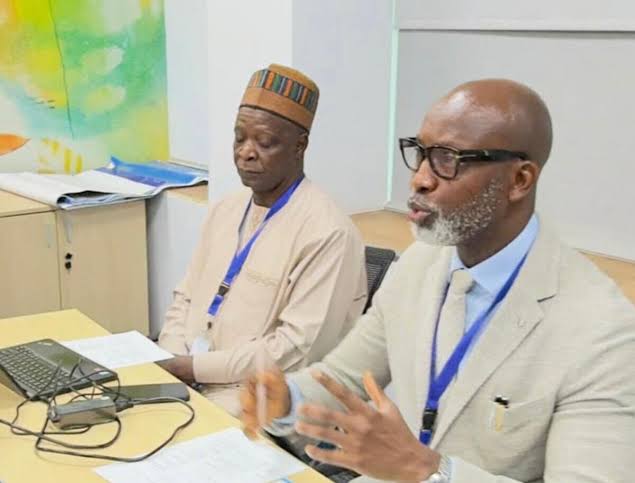
He spoke through the Senior Special Assistant to the President on Marine and Blue Economy, Professor Busayo Fakinlede, at an executive training on the Aquaculture Investment Guide organised by the Federal Ministry of Marine and Blue Economy in partnership with the World Bank Group in Abuja.
The training attracted policymakers and government officials, including commissioners from Rivers, Bayelsa, Delta and Cross River states, as well as permanent secretaries and directors responsible for fisheries and aquaculture across the country.
It was designed to help states identify viable fish farming opportunities, attract investors and develop projects capable of securing funding.
Participants were also trained on managing business risks, meeting environmental standards and building partnerships with private investors.
Oyetola said Nigeria could no longer depend heavily on imported fish when it had the resources and potential to produce enough locally.
“Fish is a pillar of food security, household nutrition and rural livelihoods. No nation can call itself food secure while it imports most of the fish it eats. Our ambition is to produce more, import less and, in time, become a net exporter. That ambition can be achieved only when every state plays its part,” he said.
According to him, Nigeria needs about 3.6 million tonnes of fish annually but produces only 1.4 million tonnes, leaving a supply gap of more than 2.2 million tonnes.
He said imports currently make up for much of the shortfall, costing the country close to $1bn annually.
Other News
To address the problem, the minister said the Federal Government was developing a plan that would require each state to identify areas of strength in fish production, assess available investment opportunities and develop projects that could attract funding.
“To reverse the trend, the Ministry is pursuing a state-driven aquaculture development framework under which each state will identify priority value chains, assess investment readiness, develop bankable project pipelines and commit to measurable contributions towards national fish production.
“The $200 million World Bank support is expected to provide critical financing for states to implement these priorities, expand production capacity and accelerate the country’s journey towards fish sufficiency
“A Federal-State interface is also expected to provide a coordinated platform for an inclusive national fish security strategy, ensuring that the Federal Government’s ambition is translated into measurable production commitments and investment outcomes at the sub-national level,” he explained.
Oyetola praised the World Bank Group for supporting Nigeria’s marine and blue economy through research, investment planning, training and the development of the Aquaculture Investment Guide.
He also pledged to sustain engagement with state governments, investors and other stakeholders, disclosing plans for a post-training meeting to agree on implementation steps and turn the proposals into actual investments.
Fakinlede, meanwhile, attributed progress in the sector to Oyetola’s leadership, highlighting the inauguration of a Technical Committee on Accelerating Fish Production in August 2026 and the digitisation of fish import licensing.
He said national fish production had increased from 1.1 million tonnes to 1.4 million tonnes.
He also listed Nigeria’s certification to export shrimp to the United States following compliance with Turtle Excluder Device requirements, as well as the development of the Fish City and Fish Terminal investment portfolio to attract private investors.
Fakinlede said the government’s ultimate objective was to close the country’s fish supply gap, create jobs, improve household incomes and reduce dependence on imports.
“Through strategic collaboration, contributive support and shared commitment, we will close the fish deficit, create jobs, raise household incomes and secure Nigeria’s place as a fish-sufficient nation,” he added.