Follow Us on Google
By Merit Ibe
The Federal Government has again reiterated its plan to prioritise non-oil exports to subsidise the gross reliance on oil, which makes over 90 percent of export goods in Nigeria.
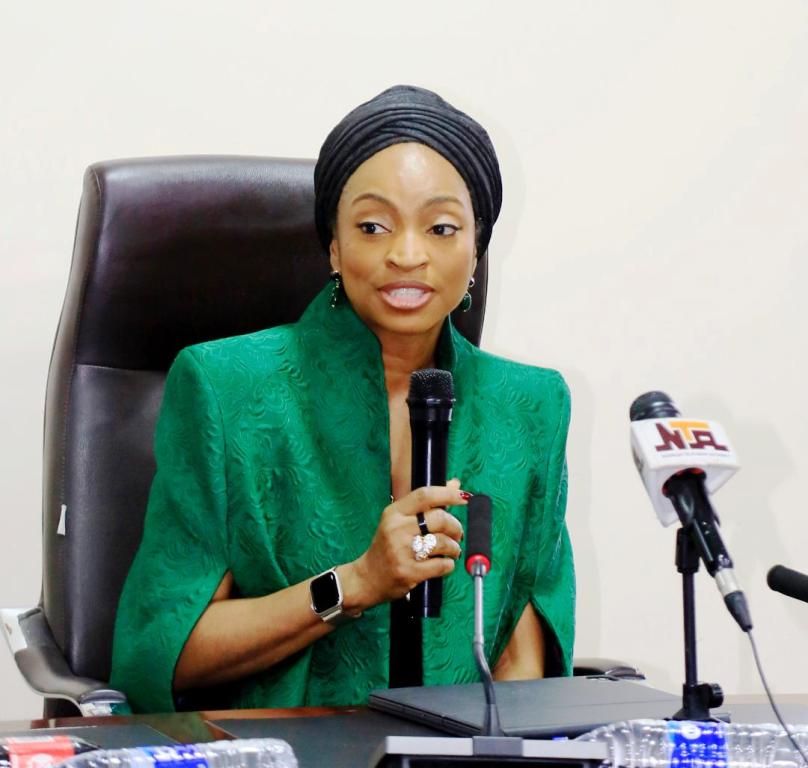
Minister of Industry Trade and Investment, Jumoke Oduwole made the remark at the 31st Nigerian Economic Summit in Abuja.
“One important section of our new plan is expanding non-oil exports. “We’ve identified new friends, and we’ve also engaged strategically with old friends, she said.
In a separate interview in August, Oduwole told CNN that it was “exploring other alternatives,” following the U.S tariff regime and the expiry of the African Growth and Opportunity Act (AGOA) in September.
“Urea fertiliser is in high demand in Brazil. We have trading partnerships with China, with Japan, with the UAE and so we continue to look for opportunities for our Nigerian businesses,” Oduwole had said.
This time, she noted that Japan has officially recognised Nigeria’s sesame exports, which accounts for 40 percent of the sesame imported into Japan in a government-to-government arrangement.
Oduwole brought attention to Nigeria’s Single Window (NSW) project promised to take off in the first quarter of 2026 to unify and simplify trade processes for trade facilitation. That project is also expected to enhance the possibilities of the $3.6 trillion African Continental Free Trade Agreement (AfCFTA) market.
She said 24 percent of Nigeria’s exports in the first quarter of the year were to African countries, according to the CBN.
The gathering also
Nigeria reiterated its plan to prioritise non-oil exports to subsidise its gross reliance on oil, which makes over 90 percent of its export goods and mainly finds it way to Europe and Asia.
Experts at the gathering also expressed optimism over federal government’s moves at broadening its circle of trade and economic relationships, noting that these alliances will remain ambitious without reliable infrastructure, lower production costs, and policy consistency.
Omoboyede Olusanya, vice chairman of the Nigerian Economic Summit Group (NESG) said Nigeria could learn from Turkey, which transformed into a large export-based economy by developing domestic infrastructure and reducing production costs.
He said the cost of production is too high, adding that since the Nigerian government removed the subsidy on fuel in 2023, many businesses that relied on cheap fuel to replace inconsistent electricity supply have struggled to keep up. “Without infrastructure or power, there’s barely a foundation for competition,” Olusanya said.
Nigeria must create an environment where foreign investments come in with tenures and rates that make economic sense for the foreigner and indigene.
“The factors that draw foreign direct investment are the same ones that encourage domestic investors. Nigeria needs to create an environment where everyone can invest,” he said.
According to him, while the government can provide seed funding for large projects like the Lekki Port, private sector stability is essential for sustained investment, but they must be incentivised. “Private investors want assurance that their investments will yield returns.
He called for reforms in Customs operations, levies, and documentation procedures, saying Nigeria’s export competitiveness depends on its ability to meet quality standards and simplify trade processes.