Follow Us on Google

From Isaac Anumihe, Abuja
The Federal Government has expressed concern over the persistent liquidity shortfalls and under-recovery plaguing Nigeria’s power distribution companies (DisCos), questioning why the problem remains unresolved despite years of reform and intervention.
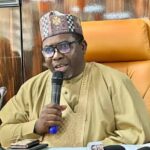
Speaking at the fifth edition of the Power Correspondents Association of Nigeria (PCAN) conference in Abuja yesterday, the Managing Director and Chief Executive Officer of the Nigeria Independent System Operator (NISO), Abdu Mohammed, said the sector’s chronic funding gaps have hindered investment, weakened infrastructure, and eroded consumer confidence.
“The tariff framework provides a transparent methodology based on key variables such as exchange rate, inflation, and gas price. However, political and social considerations have often led to tariffs that remain below actual cost levels”, he explained.
Mohammed, who also represented the Managing Director of Mainstream Energy Solutions, noted that these imbalances continue to cripple the sector’s ability to attract investment, sustain operations, and deliver stable power supply.
Other News
“But beyond economics lies a deeper issue, the enduring challenge of energy poverty,” he said. “Millions of households in Nigeria still lack access to reliable electricity. For many, connection to the grid does not guarantee supply, and for others, the cost of energy remains beyond reach.”
He warned that without cost-reflective tariffs, the sector would remain financially unsustainable. “The real question, therefore, is not whether we should have cost-reflective tariffs, but how to achieve them in a way that preserves affordability and protects the most vulnerable among us,” he added.
In his remarks, Chairman of PCAN, Mr. Obas Esiedesa, lamented that the industry is weighed down by debts exceeding N6 trillion, coupled with liquidity gaps, gas shortages, weak transmission infrastructure and volatile foreign exchange rates.
“The industry is still weighed down by an estimated N6 trillion debt owed by the Federal Government to power generation companies,” he said.
“According to the World Bank, about 85 million Nigerians, roughly 43 percent of our population, still lack access to grid electricity, making Nigeria home to the largest electricity access deficit in the world. This statistic is not just a number; it is a stark reminder of the scale of our national challenge and the urgency of reform.”