Follow Us on Google
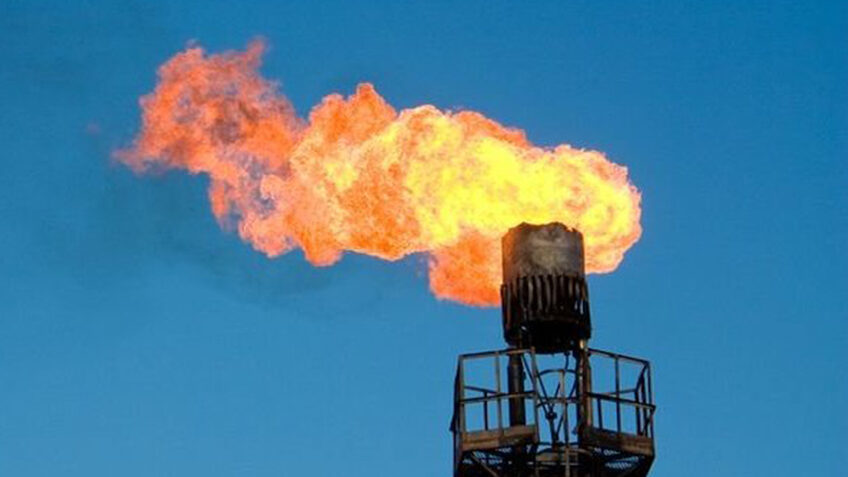
In its new report, the World Bank has revealed that nine countries, including Nigeria, were responsible for over 83 per cent of global gas flaring worth $54 billion last year. This represents more than four-fifth of all gas flared globally. The report was based on its latest Global Gas Flaring Tracker and Methane Reduction Partnership in collaboration with U.S-based Payne Institute at Colorado School of mines.
Aside Nigeria, other countries identified in the report as causing global flaring are oil-producing nations of Russia, Iran, Venezuela, Mexico, Algeria, Libya, Kazakhstan, and the United States. Together, these countries account for 46 per cent of the global crude oil.
The harm caused by gas flaring has risen tremendously in three consecutive years, increasing from 157 billion cubic metres (bcm) in 2024 to 167bcm in 2025. Nigeria is reportedly one of the major culprits of gas flaring. The country had lost over N2trillion to gas flaring in the last 10 years. International oil companies in the country have been accused of burning gas found in oil wells when exploiting crude oil. They have also refused to make necessary investments to harness the gas.
Though the regulatory authorities have imposed fines to deter oil majors from gas flaring, the fines are not deterrent enough to stop the practice. It is also estimated that gas flaring generated about 429 million tonnes of carbon dioxide equivalent emissions in 2025. This includes 50 million tonnes from the unburned methane considered one of the most dangerous greenhouse gases.
For Nigeria, the World Bank report should be taken seriously. It is particularly concerning now that the federal government has promised to position natural gas as the cornerstone of its energy transition strategy. The government has also pledged to end routine gas flaring in 2030. It intends to do this through the Nigerian Gas Flare Commercialisation Programme (NGFCP). Government has equally encouraged investment in gas processing infrastructure and domestic gas policies. The government should just walk the talk.
No doubt, Nigeria holds one of Africa’s largest proven natural gas reserves, and is currently seeking to leverage the reserves to boost electricity generation, support industrialisation, expand gas-based industries and increase export earnings. The Nigerian Upstream Petroleum Regulatory Commission (NUPRC) has reaffirmed its commitment to on-going efforts to commercialise gas flaring capable of unlocking about 3 gigawatts (Gw) of electricity. Such effort, as promising as it seems, should consider the environmental and health hazards caused by gas flaring, especially in oil producing communities in the Niger Delta region.
Other News
It has been proven that the carbon dioxide, methane and soot released during gas flaring have caused some respiratory and skin diseases. Environmental pollution has also destroyed livelihoods in many oil-bearing states. According to statistics, international oil companies in Nigeria produce about 2.524 trillion standard cubic feet (scf) of gas yearly, out of which only 2.334 billion scf is utilised, while 289.6 billion scf is flared. As a matter of urgency, the federal government should muster the political will to eradicate gas flaring.
The oil majors indulge in gas flaring because the practice has not been sufficiently punished. The absence of deterrent measures has emboldened the international oil companies to continue to flare gas. The government should enforce the extant laws on gas flaring. If there are loopholes in the existing laws on gas flaring, the National Assembly should strengthen existing laws and make them stricter. This has become expedient as oil majors have reportedly taken advantage of weak regulatory frameworks and inadequate gas infrastructure to continue gas flaring.
A recent report by the National Oil Spill Detection Response Agency (NOSDRA) indicated that Nigeria lost N702 billion from January to November 2023 as a result of gas flaring by oil companies operating in the country. The amount translates to 241 million standard cubic feet (scf) of gas. It also represents 18.9 per cent increase compared to 195.5 per cent of scf of gas flared in the corresponding period of 2022. Besides, NOSDRA said defaulting oil firms are liable to fines totalling $482 million or N401.3 billion. The volume of gas flared during the period under review is said to be equivalent to carbon dioxide emissions of 673 thousand tonnes. It has the potential to generate 241.00 Gigawatts hour (GWh) of electricity. Also, oil companies operating offshore have flared 132.9 million scf, while those operating onshore flared 108.1 million scf.
At the 2025 United Nations Conference on Climate Change, COP28, in Dubai, United Arab Emirates, President Bola Tinubu pledged Nigeria’s commitment to end gas flaring in 2030. His promise was part of Nigeria’s contribution to the current global push to reduce methane emissions and other greenhouse gas. In 1999, the federal government established the Nigerian Liquified Natural Gas as part of efforts to cut gas flares and monetise the by-products. Many decades after, the objective is yet to be achieved.
Gas flaring must end. The flared gas can be used to generate electricity. The government should fast-track the necessary regulatory frameworks to drastically reduce gas flaring. It should also promptly penalise defaulting oil companies.