Follow Us on Google
• Tinubu orders tighter management of forfeited assets
From Juliana Taiwo-Obalonye, Abuja
The Federal Government has moved to strengthen the management and utilisation of properties recovered through corruption cases, as President Bola Tinubu directed closer coordination among agencies responsible for forfeited assets.
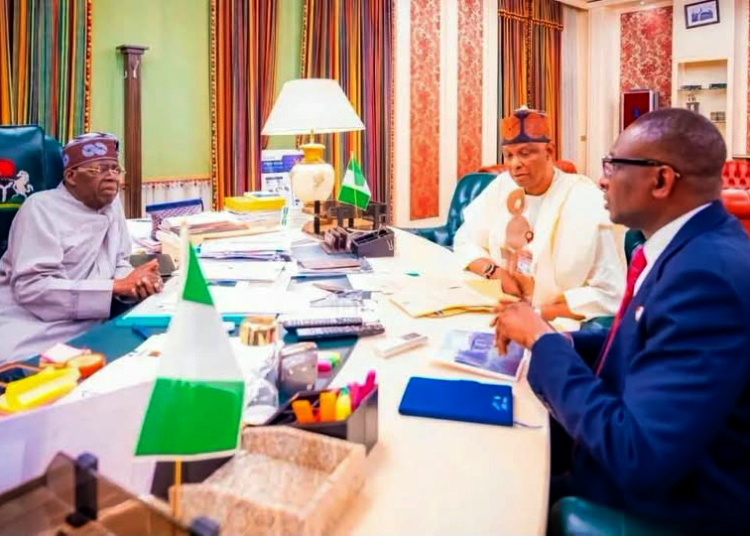
Tinubu gave the indication yesterday when he met with the Executive Chairman of the Economic and Financial Crimes Commission (EFCC), Olanipekun Olukoyede, and the Minister of Housing and Urban Development, Muttaqha Rabe Darma, at the State House, Abuja.
The meeting focused on the proper management, development and possible disposal of houses, land and other landed assets forfeited to the Federal Government through EFCC investigations and court orders.
The development comes amid the growing volume of recovered properties and the need to ensure that such assets are preserved, properly documented and ultimately put to productive use for the benefit of Nigerians.
The President, according to the focus of the meeting, stressed the importance of transparency and accountability in the administration of forfeited assets, as his administration seeks to ensure that recoveries from anti-corruption efforts translate into tangible benefits for the public.
A major example is the 753-unit housing estate in Lokogoma, Abuja, which was transferred from the EFCC to the Federal Ministry of Housing and Urban Development.
Located at Plot 109, Cadastral Zone C09, the estate occupies more than 150,000 square metres and comprises duplexes and apartment buildings.
The property, linked to former Central Bank of Nigeria Governor, Godwin Emefiele, was finally forfeited to the Federal Government in December 2024 and handed over to the Housing Ministry in May 2025 for completion and eventual public use.
The Lokogoma estate represents the administration’s attempt to move beyond the recovery of assets to their preservation, completion and deployment for public benefit.
Other properties linked to Emefiele and affected by forfeiture proceedings are located in Lagos and Delta states. They include houses and apartments in Lekki Phase 1 and Ikoyi, undeveloped land and a bungalow around Queens Drive, Ikoyi, as well as properties on Probyn Road and Adekunle Lawal Road.
Also affected is an industrial complex comprising 22 plots in Agbor, Delta State, alongside other residential, commercial, industrial and warehouse properties in parts of Lagos.
The Supreme Court in 2026 affirmed the forfeiture of seven landed properties linked to the former CBN governor, in addition to monetary and other assets.
The EFCC’s property portfolio has also expanded through cases involving former Attorney-General of the Federation and Minister of Justice, Abubakar Malami, his associates, family members and companies.
In January, a court granted an interim forfeiture order covering 57 properties estimated at about N213 billion. By July, 48 of the properties, valued at approximately N180 billion, had been finally forfeited, while nine were released.
The properties, located across the Federal Capital Territory, Kebbi, Kano and Kaduna states, include residential buildings, hotels, factories, commercial properties and large parcels of land.
Other News
Among the Abuja properties are a luxury duplex on Amazon Street, Maitama; a two-winged storey building formerly occupied by Harmonia Hotels on Onitsha Crescent, Area 11, Garki; and a five-storey hotel with 53 rooms in Jabi.
Others include a 15-room hotel on Rhine Street, Maitama, properties and terraces in Asokoro, and residential buildings in Gwarimpa, BUA Estate, Apo Legislative Quarters, Wuse II and Karsana.
The portfolio also includes commercial developments in Wuse II and other parts of the capital, as well as hospitality and residential properties in Kano.
In Kebbi State, the assets include extensive developments linked to agro-allied and hospitality businesses and large tracts of land, including more than 100 hectares along the Birnin Kebbi-Jega Road.
A residential property in Abakpa GRA, Kaduna, was also included in the forfeiture proceedings.
Similarly, the EFCC has secured an interim forfeiture order covering nine high-value properties in Abuja allegedly linked to former Minister of State for Petroleum Resources, Timipre Sylva.
The properties include terraces in Dakibiyu, duplexes and office complexes in various parts of the capital, blocks of flats in Wuse and Garki, and buildings in Maitama and Mpape.
In Lagos, 52 terrace and maisonette units at Mercyville Estate, Covenant Way, Ilasan, Lekki, were finally forfeited in July 2026.
The anti-graft agency has also secured final forfeiture orders over several unclaimed landed properties in Abuja and other states, including residential and commercial assets in Karsana, Dakibiyu and Guzape, as well as properties and land in Borno, Nasarawa and Niger states.
The growing volume of recovered assets has created a major management responsibility for the Federal Government.
The EFCC reported the recovery of more than 1,500 non-monetary assets, largely properties, between late 2023 and 2025.
However, the legal status of the properties varies, with some already forfeited to the Federal Government while others remain subject to interim orders, claims, appeals or further judicial proceedings.
The meeting is therefore expected to strengthen collaboration between the EFCC and the Housing Ministry in determining how recovered housing assets can be assessed, completed, managed, allocated or otherwise disposed of without compromising their value.
While the EFCC is responsible for securing forfeiture orders and taking possession of recovered assets, the Housing Ministry has the technical capacity to evaluate, develop and manage housing projects transferred to government.
The Federal Government is also working towards stronger systems for tracking recovered assets, including the National Central Database of Forfeited Assets.