Follow Us on Google
By Fred Ezeh, Abuja
The Federal Ministry of Health and Social Welfare has inaugurated a 35-member National Nuclear Medicine Technical Working Group (NM-TWG), chaired by Dr. Ololade Kehinde, a Nuclear Medicine Physician and Special Assistant (Technical) to the Minister of State for Health. The group aims to assist the government in developing durable strategies to enhance cancer care in Nigeria.
This move became necessary due to the rising cancer cases among Nigeria’s population and the need for a new approach to bring about improved results.
The NM-TWG consists of nuclear medicine physicians, relevant training and regulatory institutions, agencies involved in cancer care, financing and research bodies, civil society groups, equipment manufacturers, and other professional bodies and cancer advocates.
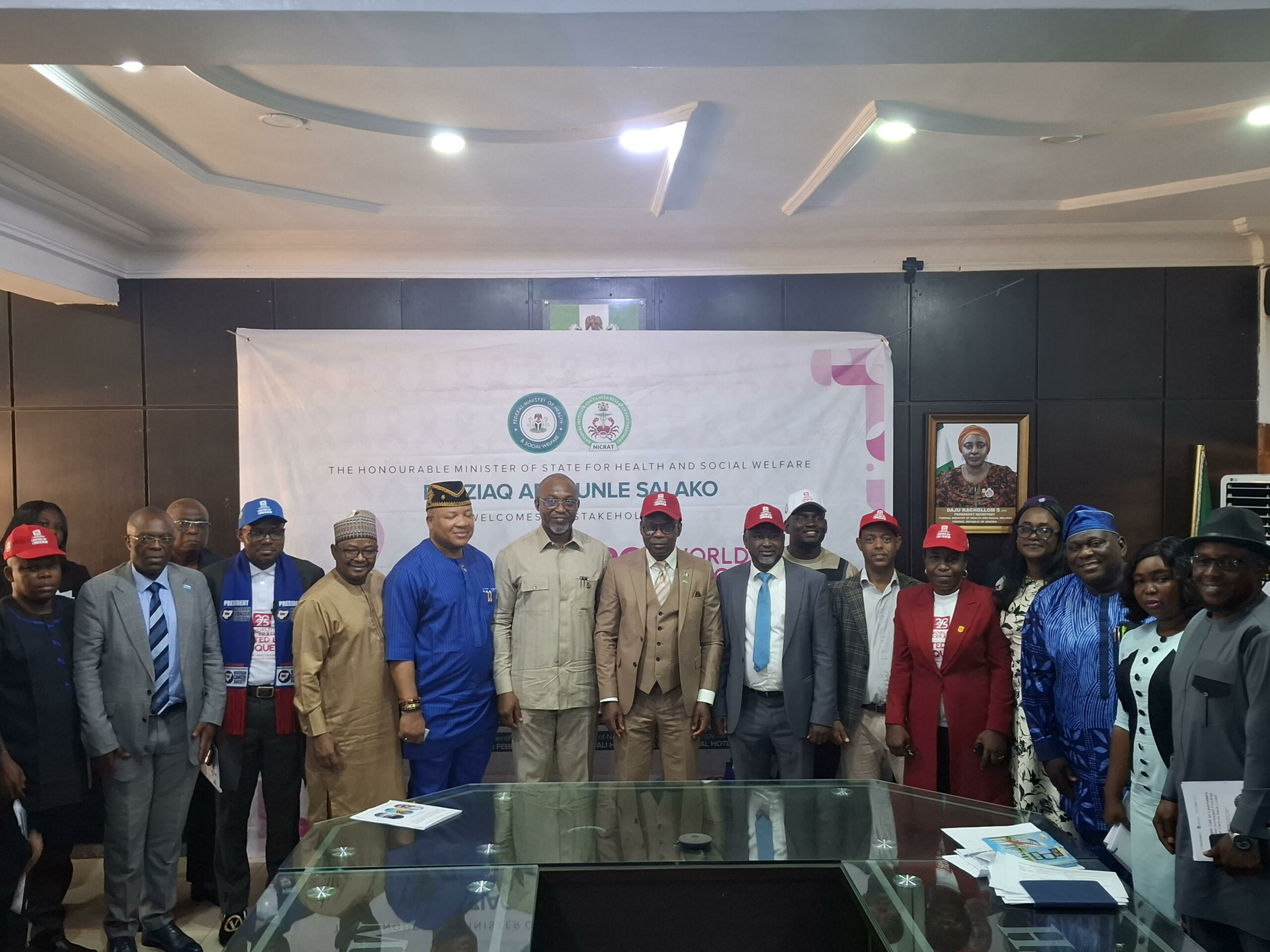
Minister of State for Health, Dr. Iziaq Adekunle Salako, inaugurated the Committee at an event in Abuja on Tuesday, marking the 2025 World Cancer Day, with the theme “United by Unique.” He reminded the members of the huge task ahead.
The Minister said the TWG will serve as an advisory body to the Federal Ministry of Health and Social Welfare on the development and implementation of nuclear medicine services in the country. It will also strengthen collaborative efforts with the International Atomic Energy Agency (IAEA) and other international agencies.
He said: “One of the major areas of disease management, including cancer care, that we are lagging behind is nuclear medicine services. As a country, we have developed robust initiatives, including partnering with IAEA to develop nuclear medicine programmes in Nigeria. The National Nuclear Medicine Management Committee did their best and facilitated the training of several nuclear medicine physicians and other allied healthcare professionals.
“But due to lack of requisite infrastructure, we lost more than half of the trained physicians to other countries. It’s in our commitment to health security that we approved the reconstitution of the National Nuclear Medicine Technical Working Group to serve as an advisory body to the Ministry on the development and implementation of nuclear medicine services in the country.”
He added that the Ministry has recorded several unique achievements in addressing cancer challenges, ranging from primary prevention through vaccination, early detection, prompt treatment, and research. He mentioned that the National Primary Healthcare Development Agency (NPHCDA) is leading the Human Papillomavirus (HPV) vaccination for the primary prevention of cervical cancer and hepatitis immunization for the prevention of liver cancers. These efforts focus on the second and fourth most common cancers in Nigeria.
Other News
“While the vaccination for viral hepatitis has been part of the National Programme on Immunization, HPV vaccination was introduced in 2023. Over 12 million girls have received the HPV vaccine, and efforts are ongoing to improve on the successes recorded so far.”
He urged parents, opinion leaders, and all stakeholders to take advantage of the immunization programmes to prevent vaccine-preventable cancers.
The Minister also mentioned that the government is exploring a unique approach to cancer care through health insurance coverage for cancer patients. He stressed that, in accordance with the National Health Insurance Authority (NHIA) Act 2022, the NHIA has developed a robust implementation plan for Catastrophic Health Insurance, which will support patients with end-stage renal diseases, sickle cell disease, and cancers.
“The Catastrophic Health Insurance will benefit from the Basic Healthcare Provision Fund (BHCPF) and other funding mechanisms within the NHIA, while the Ministry will provide the necessary support to ensure seamless implementation,” he added.
Director-General of the National Institute for Cancer Research and Treatment (NICRAT), Dr. Usman Aliyu, stated that NICRAT is building research capacity across selected institutions in the six geopolitical zones and pioneering collaborative research in cancer genomics.
“This initiative is set to map genetic mutations of common cancers in Nigeria, laying a solid foundation for precision oncology care not only in Nigeria but for the entire black race.”
President of the Nigeria Cancer Society (NCS), Prof. Abidemi Omonisi, told the gathering that people in rural communities face significant difficulties in accessing cancer care due to the uneven spread of inadequate manpower and equipment.
He also highlighted the poor interest and attitude of State governors towards cancer treatment in Nigeria. “Most Governors think that cancer care is solely the responsibility of the federal government, and they often shift the responsibility to the federal government.”
He appealed to the Minister to approach the Nigeria Governors’ Forum (NGF) for adequate enlightenment and to seek their buy-in into efforts to improve cancer care for millions of Nigerians affected by cancer each year.