Follow Us on Google
…As operators rely on foreign reinsurers for risk cover
From Adanna Nnamani, Abuja and Henry Uche
With flooding now a near-annual crisis across Nigeria, the federal government’s proposed National Flood Insurance Policy (NFIP) is drawing mixed reactions from experts who are questioning its structure, funding model and long-term sustainability.
From the North to the coastal South, flood disasters have become a recurring national emergency, wiping out homes, farmland and infrastructure despite repeated warnings from the Nigerian Meteorological Agency (NiMet).
Yet, compliance remains low, with many vulnerable households unable to act on advisories due to poverty and lack of resources, turning forecasts into forewarnings of unavoidable loss.
The urgency behind the new policy was sharpened by the 2025 Mokwa flood disaster in Niger State, which killed over 200 people and displaced thousands. The Federal Government subsequently moved to design the NFIP as a financial safety net to provide compensation and recovery support for individuals, businesses, and communities affected by flood events, while also reducing the strain on emergency relief spending.
At a technical committee session on the policy framework, former Permanent Secretary, Ministry of Environment, Mahmud Kambari, described the initiative as a decisive shift away from reactive disaster response towards structured risk financing and long-term resilience planning.
He referenced the September 2024 collapse of the Alau Dam in Borno State, which triggered one of the country’s worst flood disasters in recent years, submerging more than 70 per cent of Maiduguri, displacing over 419,000 people, and leaving dozens dead. He added that states such as Benue, Lagos, Rivers, Bayelsa, Delta, Kwara and Kogi continue to record heavy losses, particularly in agriculture, where billions of naira are wiped out annually.
However, the policy is already facing scrutiny from the insurance industry.
Sovereign Trust Insurance Plc noted that most local insurers remain dependent on foreign reinsurers to absorb catastrophic flood risks, a factor that could determine the affordability and depth of coverage under the proposed scheme.
Environmental experts also caution that insurance alone cannot solve Nigeria’s flood crisis. They argue that while the policy is timely, its credibility will depend on stronger environmental enforcement, improved urban planning, and sustained investment in drainage and climate adaptation measures. Others insist that only implementation will reveal whether the initiative is truly protective or merely another policy on paper.
As extreme weather events intensify, the NFIP is being positioned as a critical test of Nigeria’s disaster preparedness, one that will determine whether future floods remain national tragedies or become manageable, insured risks.
Environmental managers have said Nigeria’s emerging flood insurance policy has become unavoidable, driven by worsening climate shocks, rapid urban expansion, weak drainage systems and rising water levels along major river systems such as the Niger and Benue basins.
They argue that flooding, once seasonal and predictable, has evolved into a recurring national emergency, intensified by climate change, unplanned settlements, blocked waterways and increasing rainfall intensity across several ecological zones.
Against this backdrop, the federal government is pushing a National Flood Insurance Programme designed to shift disaster response from reactive relief to structured financial preparedness.
According to policymakers, the initiative is expected to support rapid recovery after flood-related losses, protect homes, farmlands, businesses, and livelihoods and strengthen risk-pooling and financing mechanisms for disaster resilience. It also seeks to deepen insurance penetration at the community level by building localized delivery systems capable of responding quickly when floods occur.
But as the policy begins to take shape, a central question continues to dominate discussions among experts and stakeholders. They wonder if it will work in practice, or remain another well-intentioned but underpowered intervention.
Experts question readiness
Speaking on the development, environmentalist and Managing Director/Chief Executive Officer of Arisco Solutions, Mr. Arinze Chibueze, said only time would reveal the authenticity and effectiveness of the Federal Government’s promises, including the flood insurance programme.
He noted that while policy announcements are encouraging, implementation remains the real test.
“We learnt that Kogi and Jigawa State would be the pilot take off of the National Flood Insurance Programme. Also recall that Rubaiyat El-Rufai, Special Adviser to the President on National Economic Council and Climate Change, told us that flood insurance should be seen as a preparedness tool rather than a post-disaster measure. So, time will tell. By next month till around August and September, we shall see how prepared the federal government is, and to what effect is its floods insurance Policy to the affected people”
Chibueze stressed that the coming rainy season would serve as a real-world stress test for the policy’s credibility and operational readiness.
Beyond policy scrutiny, he also called for sustained awareness campaigns and stronger community engagement, warning that climate risk communication in Nigeria remains weak and often ignored until disasters strike.
“Nigerians are famous for being reactive. Though a majority of them know what to do, poverty is a big challenge. While others are just recalcitrant to useful information from constituted authorities. In fact, every state government emergency management agency is supposed to be very active and working. Climate change and associated effects are a reality”.
He urged insurance companies, environmental groups, and climate advocates to intensify sensitisation efforts, particularly at grassroots level where vulnerability is highest and preparedness lowest.
Flood warnings intensify, NiMet flags high-risk states
The Nigerian Meteorological Agency (NiMet), in its 2026 Seasonal Climate Prediction (SCP), warned that several states face heightened flood risk due to above-normal rainfall patterns expected during the year.
States projected to experience unusually heavy rainfall include Borno, Sokoto, Kebbi, Kaduna, Enugu, Cross River, Abia, Ebonyi, Akwa Ibom, and the Federal Capital Territory, Abuja.
The report also predicts a prolonged rainy season in Lagos, Ogun, Benue, Enugu, Ebonyi, Nasarawa, Kaduna, Taraba, Oyo, Kwara, and Anambra States, raising concerns about extended exposure to flooding, erosion, and infrastructure stress.
In addition, early rainfall onset is expected in Bayelsa, Rivers, Akwa Ibom, Cross River, Benue, Kogi, Nasarawa, and Oyo among others, an indicator that flood conditions may begin earlier than usual in the year.
Climate experts say these forecasts reinforce the urgency of insurance-based disaster preparedness, especially in states with high population density and weak drainage infrastructure.
Insurance industry admits capacity limits
While the government explores flood insurance expansion, industry operators have raised concerns about Nigeria’s limited underwriting capacity for catastrophic risks.
Speaking on the issue, Head of Corporate Communications at Sovereign Trust Insurance Plc, Mr. Mensah Simon Peter, admitted that most local insurance firms are not financially strong enough to absorb large-scale flood losses without external support.
“In Nigeria, most insurance companies have no capacity to bear catastrophic cover like the effect of flood. Because it could be devastating- yes looking at the capital base and solvency. The effects of flood are quite extensive. It goes beyond water damage. It extends down to resettlements, reclamation of land and all of that. So it’s a very wide cover. So we bank on foreign reinsurance companies to give us that much extensive cover to do that”
He explained that flood disasters extend beyond property damage, often triggering displacement, agricultural losses, infrastructure destruction, and long-term economic disruption.
According to him, Nigerian insurers rely heavily on international reinsurers to share risk exposure and stabilize potential losses.
He referenced global and subnational interventions, including United Nations-supported disaster programmes and Lagos State’s flood risk initiatives, as early examples of structured disaster risk financing.
“Basically the Lagos State would compile a compendium of underwriters to underwrite their risks but that risk is going to be reinsured by foreign reinsurers who have sufficient capacity to cover that.”
He added that even localized flooding can overwhelm insurers without adequate reinsurance backing.
“Take for instance, a small flood in Mushin area in Lagos alone, an insurance company may not be able to recover from that loss. It might just end most of us. So we do not have much extensive cover for flood, but at least we can manage it to an extent through reinsurance programs and the likes and other risk mitigation methods, that is basically the case”
However, he expressed optimism that ongoing recapitalisation in the sector would improve underwriting strength.
“With the recapitalization, though it is not sufficient enough, but at least it is a little headway into improvement in terms of risk cover we have”
Civil society pushes climate awareness drive
In a parallel effort to strengthen preparedness, the Human and Environmental Development Agenda (HEDA Resource Centre), in collaboration with the Nigeria Hydrological Services Agency, has launched a nationwide dissemination and sensitisation programme focused on the 2026 Annual Flood Outlook (AFO).
The programme aims to improve public understanding of flood risks, strengthen early warning systems, and promote coordinated responses across vulnerable communities.
HEDA’s Executive Secretary, Mr. Sulaimon Arigbabu, said the initiative is designed to bridge the gap between technical forecasting and community-level understanding.
He explained that the two-day virtual programme brought together participants from Nigeria’s six geopolitical zones, including farmers, agricultural cooperatives, community leaders, journalists, civil society actors, researchers, humanitarian organisations, and government officials from key ministries and agencies.
According to him, the programme is part of broader efforts to simplify flood forecasts and make them accessible to the most vulnerable populations.
The organisation stressed that farmers remain among the hardest hit by recurring floods, with repeated losses in farmlands, fisheries, livestock, storage facilities, and rural transport networks contributing significantly to food insecurity.
Arigbabu emphasised the need for practical communication of risk information:
“Every year, flood predictions are released, but many communities still do not receive the information in ways they can understand or act upon. This programme is about simplifying the Annual Flood Outlook and ensuring that farmers, local institutions, media organisations, and communities are better prepared ahead of the peak rainfall period,”
The training sessions are delivered in Hausa, Yoruba, Igbo, Pidgin, and English to ensure wider reach and inclusivity.
HEDA also urged media organisations, especially radio stations and community broadcasters, to play a stronger role in translating and disseminating flood warnings to rural populations.
NAICOM urges trust rebuilding in insurance sector
Meanwhile, the National Insurance Commission (NAICOM) has called on operators in the insurance industry to reshape public perception and strengthen trust among Nigerians, warning that the sector cannot grow without public confidence.
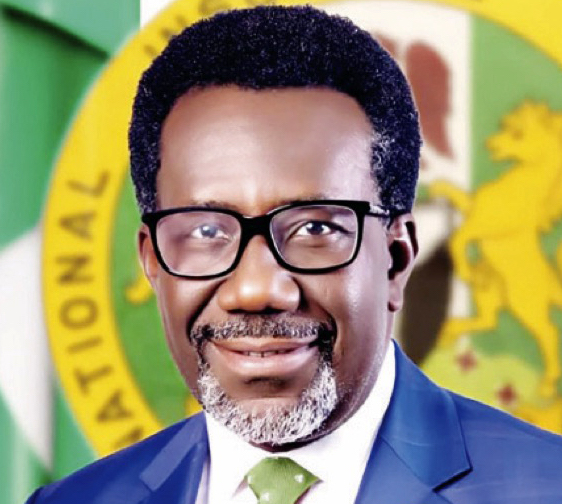
The Commissioner for Insurance and Chief Executive of NAICOM, Mr. Olusegun Ayo Omosehin, made the call during the opening ceremony of Insurance Week 2026.
He said Insurance Week provides a platform for engagement, reflection, and strategic renewal between regulators, operators, and stakeholders.
He stressed that awareness remains central to insurance development.
“At the National Insurance Commission (NAICOM), we regard public awareness not as a peripheral activity but as a core strategic priority. The success of insurance in any economy is fundamentally anchored on the level of public understanding, trust, and acceptance. Without awareness, there can be no demand. Without understanding, there can be no trust. And without trust, sustainable growth cannot be achieved.”
Omosehin warned that persistent misunderstanding of insurance products continues to limit sector growth, calling for more targeted, relatable, and consistent communication strategies.
“We must, therefore, rethink and reposition our communication strategies. Public awareness campaigns must move beyond generic messaging and evolve into more targeted, relatable, and sustained initiatives. We must communicate in languages people understand, through platforms they trust, and using real-life scenarios that resonate with their everyday experiences.”
He also urged insurers to shift from product-driven marketing to customer-centred design.
“When clients are actively engaged in product design, several positive outcomes emerge. Products become more relevant and accessible, pricing structures have become more acceptable, and, most importantly, trust and ownership are significantly enhanced.”
Omosehin highlighted the importance of simplifying insurance documentation and improving claims transparency, describing claims as the “moment of truth” in the industry.
He further emphasised the significance of the Nigerian Insurance Industry Reform Act (NIIRA) 2025, describing it as a turning point for the sector’s modernization, consumer protection, and regulatory strengthening.
However, he cautioned that reform success depends not on legislation alone but on effective implementation and sustained collaboration across stakeholders.
He also made a call for industry-wide commitment:
“Let us also remember that trust is not built overnight. It is earned through consistent actions, dependable service, and unwavering integrity. Every policy issued, every claim settled, and every client interaction contributes to the public perception of our industry.”