Follow Us on Google
From Okwe Obi, Abuja
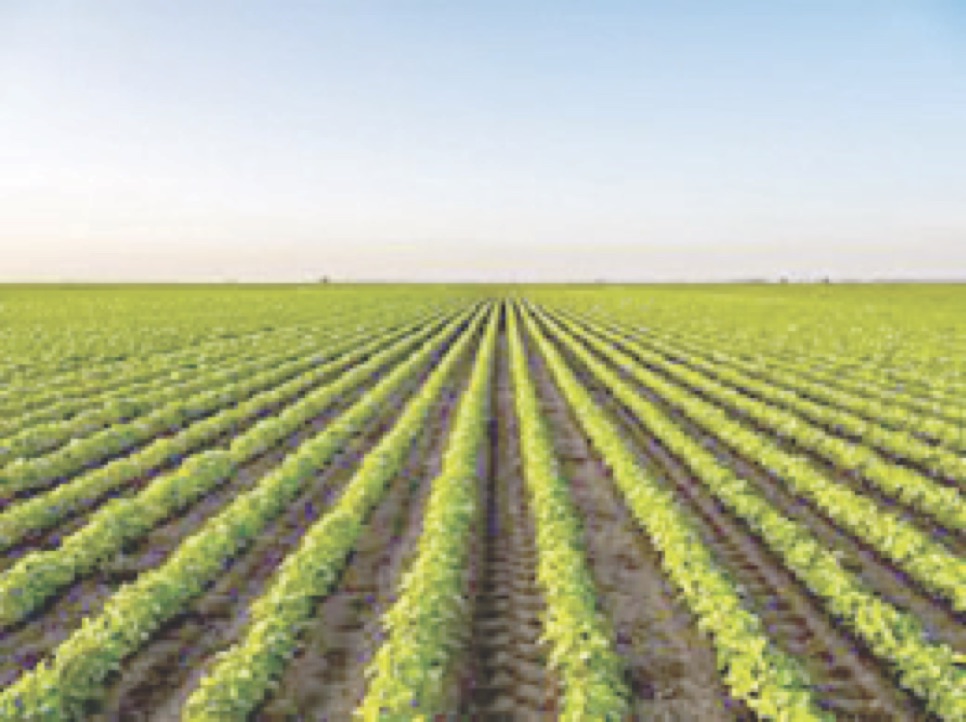
Nigeria is ramping up its push for food security and rural prosperity, with the Federal Government deepening collaboration with the United Nations Food and Agriculture Organization (FAO) to accelerate smart agriculture.
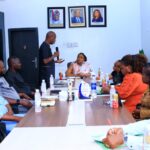
Minister of State for Agriculture and Food Security, Aliyu Sabi Abdullahi, said the partnership will boost productivity through climate-resilient practices, improved seed access, modern technologies, and stronger value chains, after talks with an FAO delegation led by Country Representative Hussein Gadain in Abuja.
Abdullahi said that the partnership would continue to promote climate-resilient farming, improve access to quality seeds, adopt modern agricultural techniques, and strengthen the agricultural value chains, among others.
He revealed that the ministry had maintained a long-standing working relationship with the FAO, particularly in the area of improving technical and financial support and agricultural data management.
Specifically, he solicited more support towards improving irrigation systems across the country, noting that expanded and modernised irrigation infrastructure is essential for promoting year-round farming and increasing food production.
He added that plant health and pest management as critical areas requiring urgent attention, describing it as key determinants of agricultural productivity.
He said: “I can tell you that ‘measures to prevent and control pests and diseases will significantly improve crop yields and promote sustainable farming practices.”
Beyond partnership, the Minister of Agriculture and Food Security, Abubakar Kyari observed that the strategic market system would transform subsistence farming into profitable, competitive, and sustainable value chains as well as revolutionise the agricultural ecosystem.
Kyari explained that a well-designed market system connects smallholder farmers to higher-value markets, directly increasing their incomes and fostering economic resilience.
Other News
He pointed out that effective market strategies encourage private sector investment in agricultural services, reducing reliance on aid and creating sustainable, self-reinforcing markets.
According to him, digital platforms and better market information enable farmers to negotiate better prices, reducing exploitation by intermediaries.
He added that research identifies market access, value addition, and strengthened linkages as primary drivers of value chain competitiveness.
Kyari revealed that ‘’Extension Africa, Pullus Africa, Nimsy Agro, Vet Konnect, and Thrive Agric stand as strong examples of how catalytic support can help scale agribusiness innovation, improve farmer access to services, and strengthen agricultural value chains’’.
He acknowledged Heifer International’s continued support to Nigeria’s private sector. ‘’through your interventions and partnerships, several innovative agribusinesses have emerged and recorded notable success’’.
He further revealed that Heifer International remains a valued and longstanding partner in Nigeria’s agricultural development journey, over the years.
“Your organisation has made meaningful contributions to supporting smallholder farmers, strengthening agricultural value chains, and improving rural livelihoods across the country.
“These efforts continue to align with our national priorities of building a resilient, productive, and inclusive agricultural sector,’’ he added.
Earlier, FAO Country Representative for Nigeria and ECOWAS, Hussein Gadain said that Nigeria has significant agricultural potential that would be harnessed through continuous partnership and strategic interventions.
He highlighted key areas for collaboration; improve market systems, promote climate-smart agriculture, and enhance national agricultural data management, among others.