Follow Us on Google
From Adanna Nnamani, Abuja
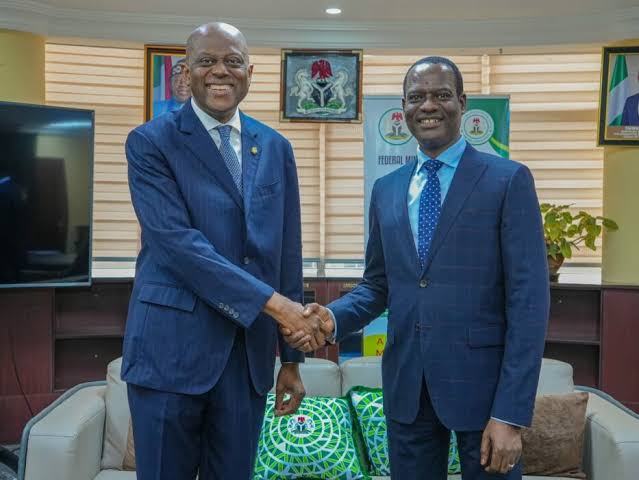
The Federal Government and the Central Bank of Nigeria (CBN) on Friday signed a Memorandum of Understanding (MoU) to institutionalise coordination between fiscal and monetary policies.
The agreement, signed by the Federal Ministry of Finance and the CBN, provides a structured framework for regular consultation, information exchange and policy coordination between the two institutions.
Speaking at the signing ceremony in Abuja, CBN Governor, Olayemi Cardoso, said the agreement represented a commitment to deepen collaboration in the interest of the Nigerian economy and its people.
Cardoso said fiscal and monetary policies were complementary instruments for managing a modern economy, noting that while fiscal policy influences economic activity through government expenditure, taxation and borrowing, monetary policy promotes price stability and financial system soundness through liquidity, interest rates and other monetary conditions.
According to him, the MoU does not create a new relationship between the CBN and the Ministry of Finance, which have worked together for decades, but to formally institutionalise the longstanding collaboration economic reforms.
Cardoso said the framework would strengthen cooperation in areas including government cash management, debt issuance planning, liquidity forecasting, macroeconomic analysis and periodic policy consultations.
He said the arrangement would transform a relationship built on practice into one anchored by clear processes and enduring institutional commitment.
The CBN governor said the timing of the agreement was particularly important as the apex bank advances its transition towards an inflation-targeting framework. He said the success of inflation targeting depended not only on effective monetary policy but also on a supportive fiscal environment.
According to him, the MoU would provide a foundation for developing the operational framework for the inflation-targeting regime, while regular dialogue, information sharing and coordinated policy assessments would help both institutions align their actions and minimise policy trade-offs.
Cardoso said the ultimate objective was to build a more stable, resilient and productive economy capable of delivering broad-based prosperity to Nigerians. He added that the agreement reflected the recognition that complex economic challenges could not be addressed by institutions acting in isolation.
“At a time when economies around the world are navigating uncertainty, geopolitical tensions, financial market volatility and evolving development challenges, cooperation among key economic institutions has become more important than ever,” he said.
Also speaking, the Minister of Finance and Coordinating Minister of the Economy, Taiwo Oyedele, reiterated that the agreement was designed to institutionalise coordination between fiscal and monetary policy, rather than make it dependent on individual personalities.
Oyedele said fiscal and monetary authorities had distinct mandates but operated within the same economy, making coordination necessary.
“Government borrowing affects liquidity and interest rates. Monetary policy affects the government’s financing costs. Tariffs and exchange rates affect prices and revenue. Spending affects demand. Agricultural productivity affects food inflation. So our mandates are distinct, but our outcomes are interconnected,” he said.
According to him, the MoU would strengthen information sharing, align macroeconomic assumptions, improve governance and provide clearer mechanisms for addressing situations where fiscal and monetary actions could work at cross purposes. He stressed that coordination would not compromise the operational independence of the CBN.
“This is independence with coordination. The operational independence of the central bank remains sacrosanct,” Oyedele said.
The minister said the government’s objective was to bring inflation sustainably into single digits, stressing that achieving the target could not be left to monetary policy alone.
He said fiscal policy would also have to contribute through discipline, disinflationary spending, sound cash and liquidity management, as well as efficient financing that would not crowd out the private sector.
Oyedele noted that some of the country’s inflationary pressures were structural, particularly those relating to food, energy and logistics, which required measures beyond monetary policy.
He said the government was working to strengthen agricultural productivity through measures including better seeds and yields, irrigation, grain reserves and improved roads for moving farm produce to markets.
On data, Oyedele said better economic management required timely, comprehensive and reliable information. He said the government was working with the National Bureau of Statistics (NBS) to provide critical data for policy decisions, including producer price information alongside the Consumer Price Index.
The minister said the two institutions would also improve the sharing of fiscal and monetary data covering cash positions, financing plans, credit growth and foreign exchange flows.
“Better coordination starts with a common evidence base,” he said.