Follow Us on Google
•Students’ graduation, admissions, accreditation threatened by strike
From Fred Ezeh, Abuja
The rift between the Academic Staff Union of Universities (ASUU) and the Federal Government that was suspended a few years ago resumed last week.
The union had declare a two-week warning strike to press the government to attend to their needs which mostly bothered on welfare, conditions of service, and other things they said could help to strengthen the teaching and learning, as well as research in the universities.
Sadly, the protracted “battle,” which began in 2009 between the two parties has failed to get a permanent solution. For the period it has lasted, they have not proffered a lasting solution to the lingering issues in the contest.
Over the period, industrial peace in the university system has been the subject of negotiation between the parties. It has been unannounced and unexpected disruptions in the system, even when the breakdown is foretold.
Efforts of several stakeholders, including prominent religious and community leaders, as well as the top political class to bring lasting peace between the government and the lecturers, have only succeeded yielded temporary result and peace in the university system.
In the last five years, ASUU has gone on several nationwide strikes, and expectedly, resulted in distorted academic calendar, and ultimately, a prolonged delay in the academic activities of the students, with many of them spending longer time than expected in the campuses.
Sadly, the demands have remained the same, except for a few additions, adjustments, or nomenclature to the demands of the unions as the negotiations proceed.
Students, parents, and other stakeholders are optimistic that the strike will not exceed the warning level which is scheduled to last for two-weeks.
The recent strike
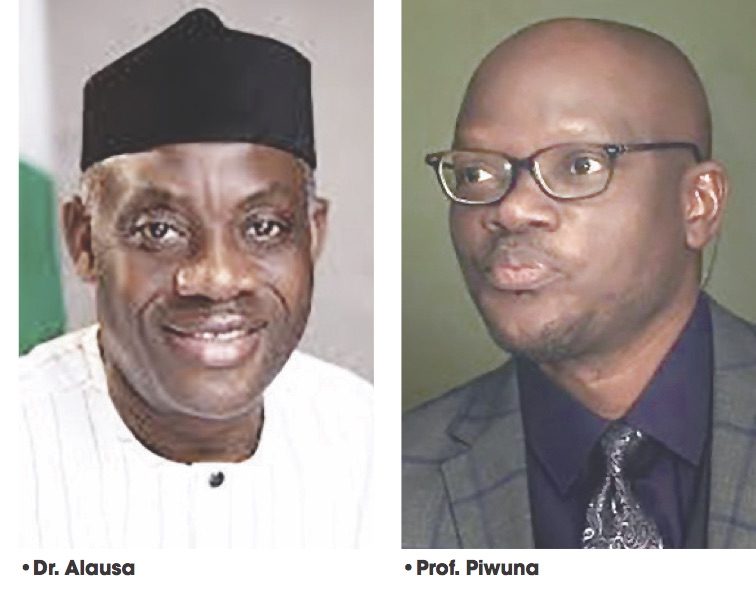
The recent ASUU nationwide strike entered its second week on Monday, and hopefully, the last week, having officially commenced on the previous Monday, October 2025, 13th, after it was officially declared on Sunday, October, 12th 2025, by ASUU President, Prof. Chris Piwuna.
He confirmed that the decision to embark on the two-weeks warning strike was taken by the National Executive Council (NEC) of the union in response to the inability of the federal government to meet their demands within the stipulated time.
ASUU president reminded Nigerians that it had raised alarm and issued notice of strike to the federal government a few weeks ago expecting them to take necessary steps to avert the unfriendly outcome.
He said the decision was taken as the last option left for the union due to the inability of the federal government to meet the university lecturers’ demands which mostly bothered on welfare, working conditions, among others.
However, Prof. Piwuna stated that the warning strike has been comprehensive as agreed at the NEC meeting, stressing that all branches of ASUU have complied, and withdrew their services with effect from midnight on Monday, October 13th, 2025.
ASUU grievances
At a press conference, the ASUU President said the NEC had decried the neglect of the university system and government’s consistent refusal to heed its demands.
He said: “The issues include conclusion of the renegotiated 2009 FG/ASUU agreement; release of the withheld three-and-half months salaries; sustainable funding of public universities; revitalization of universities; and cessation of the victimization of lecturers in Lagos State University (LASU), Kwara State University (KSU) (now Prince Abubakar Audu University) and Federal University of Technology (FUTO).
“Others are payment of the outstanding 25-35 per cent salary arrears; payment of promotion arrears for over four years; and release of withheld third-party deductions (cooperative contributions, union check-off dues, etc). In a letter dated 30th September 2025, the Permanent Secretary, Federal Ministry of Education, appealed us to withdraw the notice of the 14-day ultimatum.”
Piwuna said that ASUU had been patient with the government and shown understanding with respect to the renegotiation process, which has inadvertently lingered over time (eight years).
“The government had promised to transmit its position on the draft agreement to the union following the appointment of Alhaji Yayale Ahmed as the chairman of the Federal Government renegotiation team. But what ASUU got at the end of the meeting of the FGN/ASUU 2009 agreement renegotiation committee held on Friday, October 10th, 2025, was nothing to write home about. To say the least, the documents were neither here nor there.
“While the Permanent Secretary acknowledged in his letter that Dr. Ahmed’s committee has recorded commendable progress culminating in the transmission of the draft report of the 2009 renegotiated Nimi Briggs Agreement, the presentation to the ASUU team at the emergency meeting was a total departure from the letters and spirit of the review of the draft 2022 agreement submitted by Alhaji Ahmed to the ministry.
“In line with our union’s principles, ASUU will soon submit its position highlighting areas of deliberate distortion, inconsistency, and flagrant disregard for extant laws, policies, and practices to the federal government. Suffice to state, however, that the hurriedly packaged documents were provocative and incapable of dousing industrial tensions, which had reached an irreversible pitch across our campuses.
“However, the Federal Government raised our members’ hopes in resolving the lingering issues before we held the August 2025 NEC meeting at the Usmanu Danfodio University, Sokoto (UDUS), by asking for three weeks of grace to sort out things. It was a hard-sell, but the leadership managed to convince NEC to exercise a little more patience.
“The pre-UDUS NEC hope was dashed without a blink. Government agents have again been pleading for more time since the expiry of the three weeks promises with nothing concrete for ASUU leadership to take to their members.
“Why will a government that has been talking to the union for more than one year through its negotiating team now resort to emergency to address a negotiation process that has lingered for over eight years?
“History will not forgive intellectuals who watch helplessly while the working and living conditions of Nigerian academics further deteriorate, while our universities are further incapacitated to respond to the challenges of the 21st century knowledge economy. The matter goes beyond tokenism. What is needed is the fundamental transformation of our university system. This is all ASUU is asking for.
“We therefore plead for the understanding of our dear students and their parents. We equally invite other patriotic Nigerians, including workers, media practitioners, and civil society activists, to join ASUU in this transformational mission.”
FG’s response
The Federal Government immediately slammed an unexpected sanctions on the striking ASUU members, asking all Vice-Chancellors of affected universities to immediately begin the enforcement of the “no work, no pay” policy of the government
Minister of Education, Dr. Tunji Alausa, in a letter to VCs made reference to extant provisions of the labour laws of the federation, reiterating the position of the Federal Government to enforce the “no work, no pay” policy against any employee (ASUU members) who fails to discharge his or her official duties during the period of strike action.
The minister said: “All VCs of federal universities have been directed to ensure strict application of this provision which require immediate actions as follows; conduct a roll call and physical headcount of all academic staff in your institution; submit a comprehensive report clearly indicating staff who are present and performing their official duties, and those absent or participating in the strike; and ensure that salary payment for the period of work stoppage is withheld from those who fail to perform their duties.
“For the avoidance of doubt, academic staff who are members of the Congress of University Academics (CONUA) and the National Association of Medical and Dental Academics (NAMDA), who are not participating in the strike action, are exempted from this directive and shall not be subjected to any form of salary withholding.”
The minister asked the VCs to treat the matter with utmost urgency and a deep sense of responsibility in national interest, stressing that the National Universities Commission (NUC) will monitor compliance with this directive and submit a consolidated report to the ministry within seven days of receipt of this circular.
A few days earlier, the minister announced that the renegotiation committee led by Yayale Ahmed has been expanded, reconstituted and inaugurated to fast-track talks with both academic and non-academic unions in universities, polytechnics, and colleges of education.
He said: “In the past, we had three different committees working on the needs of the institutions. One was for universities, one for polytechnics, and one for colleges of education. But that was not an efficient way to negotiate. Now, we have one expanded negotiating committee that engages all tertiary institutions and all unions, both academic and non-academic, to ensure a holistic understanding of their needs.
“About 80 per cent of the unions’ requests are similar across the tertiary subsectors, while the remaining 20 per cent relate to peculiar career and institutional needs. We have seen all the requests, and we understand their peculiarities. The new committee has started work already and will continue to engage the unions expeditiously to reach a mutually beneficial agreement. We are finalising the components of the condition of service that ASUU had proposed.
“The President has mandated us to do everything humanly possible to avoid further strike in our institutions. People at the highest level of government have been working several hours behind the scenes to come up with a robust but affordable response to the unions’ demands. These issues have dragged on for over 10 to 15 years, but this administration is determined to resolve them once and for all.”
Ultimately, the minister promised that the government will address all outstanding demands with all university-based labour unions, notably, ASUU, Non-Academic Staff Union of Educational and Associated Institutions (NASU), and Senior Staff Association of Nigerian Universities (SSANU), thus appealing to the unions to shelve the planned nationwide strike.
Varsity lecturers divided
Meanwhile, the nationwide warning strike seems to have divided the university lecturers. Some lecturers who pulled out of ASUU to form CONUA have distanced themselves from the nationwide strike embarked by their colleagues who are members of ASUU
National President of CONUA, Comrade Niyi Sunmonu, in a statement, “CONUA remains deeply committed to academic stability, excellence, and the smooth functioning of Nigeria’s universities through constructive dialogue and peaceful engagement with government and all stakeholders.
“Our members are performing their academic and administrative duties diligently. They report to work, engage with students, and carry out your professional responsibilities as expected. Our members’ steadfastness and integrity remain vital to sustaining standards in our higher education system.”
He maintained that CONUA has no basis at this time to declare a dispute or embark on any strike, stressing that when the renegotiation committee of the 2009 agreement was inaugurated in October 2024, CONUA was conspicuously and deliberately omitted
“The union formally protested the exclusion, which eventually culminated in a meeting with the minister of education on 11th September 2025. At that meeting, the minister acknowledged CONUA’s concerns and assured that the Yayale Ahmed renegotiation committee would be expanded to include all the academic unions in Nigeria’s federal tertiary institutions.
“We are pleased to note that the ministry of education has recently expanded the committee, fulfilling that promise. Until CONUA is formally brought to the table and any of the issues it has presented to the Federal Government become subjects of dispute, there is no foundation whatsoever for any strike by CONUA,” he explained.
The ongoing industrial action in public universities have grounded academic activities, ongoing 2025 admission exercise, accreditation of new and old courses, research programmes as well as the disruption of ongoing examinations in some universities and other related academic services.
As the face-off between the Federal Government and the union enters the second week, students and parents are feeling the heat. Like the popular saying, when two elephants fight, the grass suffers. Thus, currently, the students are at the receiving of the end.