Follow Us on Google
From Fred Ezeh, Abuja
The Federal Government has announced new guidelines for admission into tertiary institutions in Nigeria.
The new framework applies to universities, polytechnics and colleges of education, as well as Innovation Enterprise Academies (IEAs) across the country as follows.
Universities: A minimum of five credit passes is required in relevant subjects, including English Language, obtained in not more than two sittings. Mathematics is mandatory for Science, Technology, and Social Science courses.
Polytechnics (ND Level): A minimum of four credit passes is required in relevant subjects, including English Language for non-science courses and Mathematics for science-related programs.
Polytechnics (HND Level): A minimum of five credit passes is required in relevant subjects, including English Language and Mathematics.
Colleges of Education (NCE Level): A minimum of four credit passes is required in relevant subjects, with English Language mandatory for Arts and Social Science courses, and Mathematics required for Science, Vocational, and Technical programs.
Colleges of Education (B.Ed Level): A minimum of five credit passes, including English Language and Mathematics, as applicable to the course of study.
The Innovation Enterprise Academies (IEAs) will adopt the same minimum requirements as Polytechnics for the National Diploma (ND) program. Meanwhile, the National Innovation Diploma (NID) is hereby abolished.
In addition, the National Industrial Diploma (NID) previously issued by Innovation Enterprise Academies will be phased out and replaced with the National Diploma (ND) to ensure uniformity, credibility, and progression opportunities for graduates.
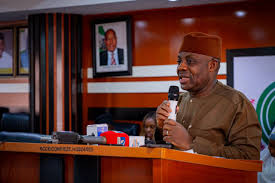
Minister of Education, Dr. Tunji Alausa, in a statement by the Director of Press and Public Relations, Federal Ministry of Education, Folasade Boriowo, on Tuesday, indicated that President Bola Ahmed Tinubu, has approved the new entry guidelines, adding that the revised national guidelines for entry requirements into Nigerian tertiary institutions was designed to remove barriers hitherto experienced in the cause of education, while maintaining academic standards.
He said the policy represents a bold step in advancing the Renewed Hope Agenda and promoting inclusive education for national development.
Dr. Alausa further explained that the reform has become necessary after years of restricted access that left many qualified candidates unable to secure admission.
He said: “Every year, over two million candidates sit for the Unified Tertiary Matriculation Examination (UTME), yet only about 700,000 gain admission. This imbalance, he notes, is not due to a lack of ability but rather to outdated and overly stringent entry requirements that must give way to fairness and opportunity.”