Follow Us on Google
From Juliana Taiwo-Obalonye, Abuja
Federal Government has acknowledged that Nigerians continue to suffer inflation and insecurity but insisted that the country is making measurable progress under President Bola Tinubu’s Renewed Hope Agenda.
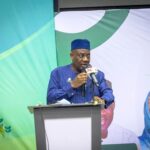
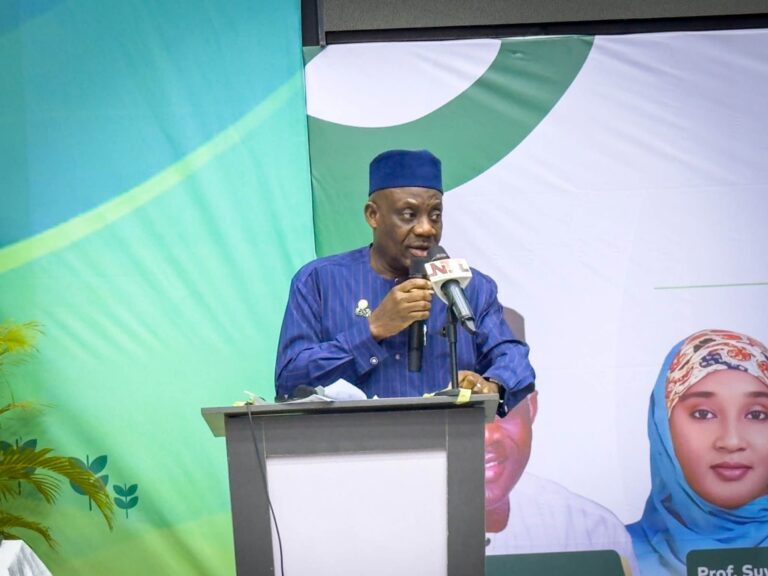
“Government will never claim that every challenge has been solved,” Secretary to the Government of the Federation (SGF), George Akume, said at a national press conference to mark the 2026 Democracy Day celebration, yesterday.
“Inflation has been painful, though it is on a downward trend. Insecurity still threatens lives and livelihoods, but evidence shows that the country is moving in the right direction.”
The SGF said Nigeria’s economy recorded growth of 4.07 percent in the fourth quarter of 2025 and 3.89 percent in the first quarter of 2026. He argued that those figures signal a recovering economy despite ongoing price pressures.
He acknowledged that inflation has significantly affected household budgets but said it was beginning to moderate. “Inflation has been painful, though it is on a downward trend,” he told reporters, framing the government’s message as both honest about difficulties and confident about direction.
On insecurity, Akume admitted threats from terrorism, banditry and other criminality continue to harm citizens. He said the Federal Government is investing in military capabilities and regional cooperation, and urged public cooperation: “We can say clearly that institutional responses are being sharpened, coordination is improving, and reforms are continuing because peace and civic order are foundations of democratic progress.”
Other News
The SGF appealed to Nigerians to remain vigilant and report suspicious movements to security agencies, making clear that the administration sees security as a shared responsibility rather than a problem it can solve alone.
To show tangible progress for vulnerable Nigerians, Akume listed social interventions meant to cushion hardships. He said more than three million households had benefited from the Renewed Hope Conditional Cash Transfer Programme, and that nearly one million people had accessed various credit schemes.
“The Nigerian Consumer Credit Corporation (CreditCorp) had disbursed N37 billion in consumer loans, with more than half of the beneficiaries obtaining formal credit for the first time,” he said, adding that the Nigerian Education Loan Fund (NELFUND) had supported more than 1.058 million students with over N184 billion released.
The SGF linked some social gains to anti-corruption efforts, noting recovered assets had been redirected to public interventions, including a transfer of more than N50 billion to support NELFUND. He also highlighted Nigeria’s removal from the Financial Action Task Force (FATF) grey list in October 2025 as evidence of improved financial governance.
As the administration approaches the 2027 general elections, Akume said the government would seek “a revalidation of our mandate” from Nigerians, while acknowledging that work remains. “Our task is not completed yet and, under the leadership of President Bola Ahmed Tinubu, more dividends will be delivered,” he said.
The Democracy Day briefing — part of activities marking June 12 — was presented as an exercise in accountability: recognising shortfalls, outlining responses, and asking citizens to judge the government’s record as it asks for continued support.