Follow Us on Google
By Chukwuma Umeorah
The federal government and Access Bank have called for urgent policy and financial reforms to remove structural barriers limiting women’s participation in Nigeria’s economy, warning that failure to act could weaken productivity and slow growth.
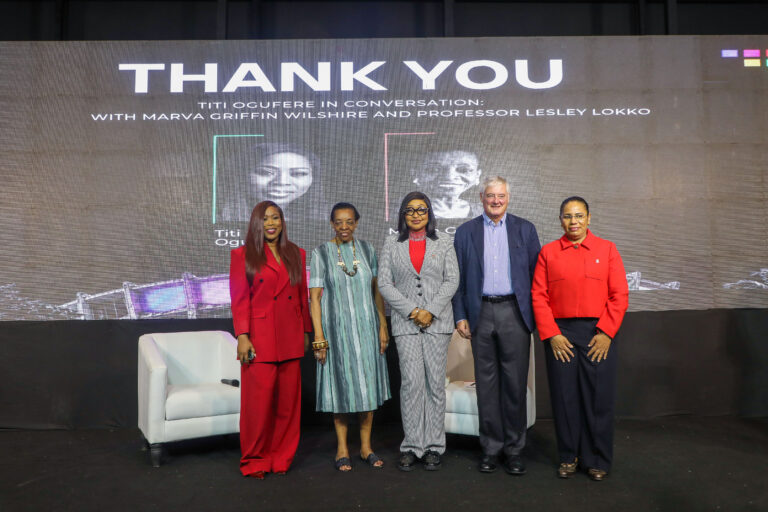
The Minister of Arts, Culture and Creative Economy, Hannatu Musawa, and former Minister of Education, Oby Ezekwesili, made the call at the 2026 International Women’s Day conference hosted by Access Bank in Lagos, highlighting persistent gaps in access to finance, markets, and institutional support, despite women owning about 40 per cent of small and medium enterprises.
They noted that funding gaps, limited access to markets, weak institutional support, and structural constraints continue to limit women’s ability to scale businesses, improve productivity, and contribute optimally to economic growth.
Musawa said women remain central to Nigeria’s economic and cultural development but continue to face structural constraints, particularly in access to finance and markets. “Empowerment without capital is deprivation, and what we need is transformation. Although women own about 40 per cent of small and medium enterprises, a significant financial gap still exists.”
She added that the federal government is working to unlock targeted funding for women in the creative and cultural sectors, strengthen market access, and support women-led enterprises to transition from informal activities to sustainable businesses.
“Capital is a prerequisite for power; too many brilliant ideas remain small, not because they lack potential, but because they lack access.”
Musawa stressed that women must be included in policy and decision-making processes, describing their underrepresentation as a constraint on national development. “This is not a gender issue. It’s an economic and developmental one. When women sit at the table, decisions change, and when decisions change, outcomes change.”
Also speaking, Ezekwesili said removing structural barriers to women’s participation is critical to improving productivity across sectors, citing evidence that equal access to resources could significantly boost output.
“You remove the barriers that stand in the way of women, and then they take off. In agriculture, for instance, we have seen that about 30 per cent improvement in output is possible if women have equal inputs as men.”
Other News
She described the financing gap as a major factor keeping women in low-productivity ventures, warning that such limitations could undermine broader economic progress.
“Low-productivity entrepreneurship cannot take the continent far,” she said, adding that access to finance, markets, and technology remains essential to scaling women-led businesses.
Ezekwesili also urged stronger collaboration between the private sector and policymakers to prioritise women’s inclusion, noting that progress depends on making the issue central to national discourse. “There is no other way that we have seen societies transform than people who care making an issue a priority,” she said.
She commended Access Bank for its role in bridging funding gaps for women through targeted initiatives and for organising the conference to foster idea sharing, networking, and partnerships.
Earlier, the Board Chairman of Access Bank, Ifeyinwa Osime, said excluding women from economic opportunities amounts to an “economic inefficiency”, stressing that no economy can optimise growth while underinvesting in half of its population.
According to her, women-owned businesses contribute significantly to Nigeria’s economy, with small and medium enterprises accounting for about 48 per cent of GDP and over 80 per cent of employment.
She, however, noted that access remains the critical gap. “To give is to expand access; access to finance, to markets, to knowledge, and to platforms that enable scale. When we give with intention, what we gain is far greater: enhanced productivity, innovation, resilience, and long-term economic value.”
She added that the focus should shift from support to structured investment in women, driven by measurable outcomes. “What is required is intentional, measurable and scalable investment,” she said.
The conference was complemented by grassroots engagement, as Access Bank extended its Women’s Month activities to Oyingbo Market in Lagos. The bank’s Women’s Initiative, W, brought International Women’s Day activities directly to market women, offering free health screenings, including blood pressure, blood sugar, and malaria tests, alongside medications, where needed.
Financial literacy sessions were also held to help women structure and scale their businesses sustainably, with participants benefiting from wellness activities aimed at promoting both economic empowerment and overall well-being.