Follow Us on Google
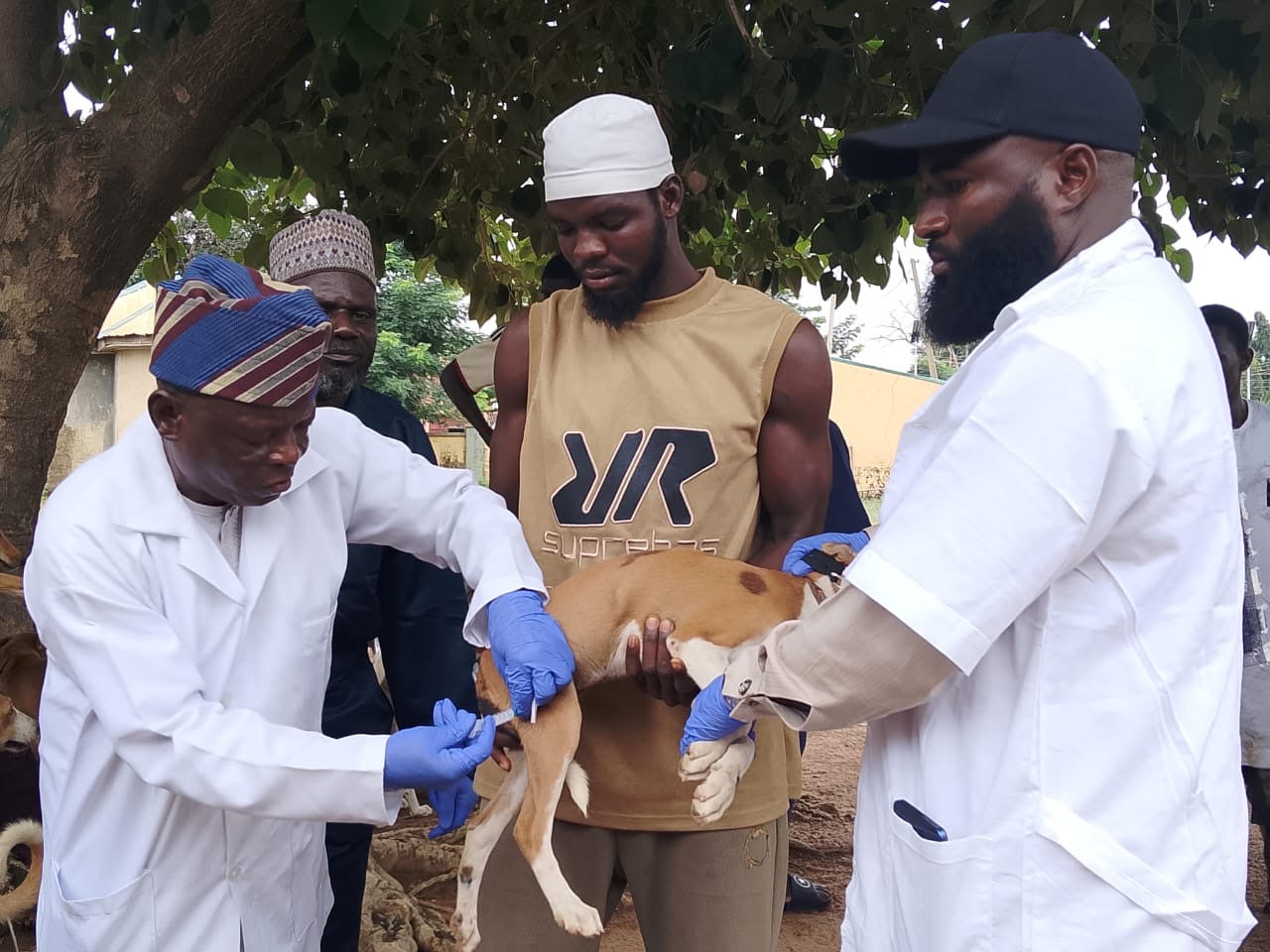
The Federal Capital Territory Administration (FCTA) has deployed more than 100 veterinary personnel across Abuja’s six area councils in an intensified campaign to vaccinate up to 20,000 dogs and halt the spread of rabies following outbreaks recorded in Gwagwalada and Kuje.
The two-week emergency vaccination exercise, being implemented by the Agriculture and Rural Development Secretariat (ARDS), covers all 62 wards across the six area councils of the FCT.
The intervention followed directives by the FCT Minister, Nyesom Wike, for urgent measures to contain the disease after cases were recorded in Gwagwalada and Kuje Area Councils.
The ARDS Mandate Secretary, Abdullahi Ango, on Wednesday led a field assessment of the exercise in Kuje and Gwagwalada, where he expressed confidence that the FCTA would meet its target of vaccinating between 15,000 and 20,000 dogs within two weeks.
Ango said physical supervision of the exercise was crucial to ensuring the effective deployment of personnel, evaluating results and maintaining the integrity of data generated from the campaign.
“One of the cardinal tenets of efficiency, efficacy and a result-oriented exercise is supervision and monitoring,” Ango said.
“When you represent the Honourable Minister, you have to be physically present to inspect and see what exactly is being done in order to report accurately.”
He said the FCTA was encouraged by the fact that no further outbreaks had been recorded elsewhere in the Territory beyond the initial cases reported in Gwagwalada and Kuje.
“Our target is 15,000 to 20,000 dogs. We have the firm conviction that with this, we are going to stop whatever we are scared or afraid is going to happen,” he said.
“We have over 100 experienced veterinary officers on the field, so two weeks is sufficient to cover the FCT.”
Other News
The Director of Veterinary Services, Karnak Dandam, described rabies as a deadly but entirely preventable disease, warning that human victims could face fatal consequences once symptoms begin to manifest if appropriate post-exposure treatment is not administered promptly.
He said an initial batch of 12,000 vaccine doses had been deployed for the exercise, alongside more than 100 veterinary personnel working across the FCT.
“Rabies is a deadly disease. If a rabid dog bites a human and post-exposure treatment is not administered immediately, death is inevitable once clinical symptoms manifest,” Dandam said.
“However, it is 100 per cent preventable if the primary vectors—specifically dogs—are vaccinated.”
According to him, vaccinating dogs significantly reduces the risk of transmission of the disease to humans.
The FCTA’s assessment also showed growing community participation in the exercise, particularly among dog owners and local hunters.
One of the beneficiaries, Nation Yusuf, who brought his dogs for their first rabies vaccination, said the government intervention had provided a safer alternative to the unverified home treatments he previously relied upon.
Similarly, a local hunter, Bashir Yusuf, who presented three dogs for immunisation, described the exercise as timely, saying it had provided much-needed veterinary care for his hunting animals.
The FCTA said it would continue to monitor the vaccination campaign across the area councils as it pushes to meet its target and prevent further spread of the deadly disease across the nation’s capital.