Follow Us on Google
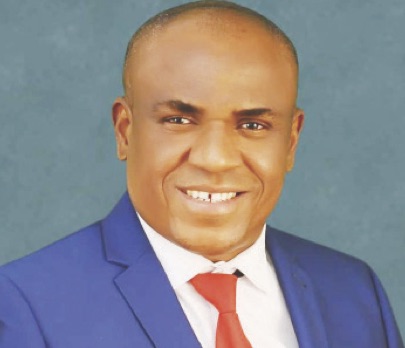
The Chairman of Blue Diamond Logistics China, Mr Festus Mbisiogu, has emphasised the importance of timely cargo clearance in reducing operational costs, minimising demurrage charges and preventing unnecessary delays for importers and terminal operators.
Mbisiogu, who recently spoke with Daily Sun on the 20th anniversary of his company, said there was an urgent need to speed up cargo clearance to improve ease of doing business in the nation’s port.
According to him, the faster cargo is cleared, the lower the risk of additional costs, demurrage charges and unnecessary delays for importers and terminal operators.
Reflecting on the company’s two decades of operations, he said one of his major achievements was helping Nigerian importers overcome the challenges associated with sourcing and shipping goods from China.
He said he established the business after spotting a gap in the link between Nigerian entrepreneurs and Chinese suppliers, at a time when many Nigerian traders depended largely on Dubai and Hong Kong for overseas sourcing.
He also highlighted the impact of the B’Odogwu platform on port operations and businesses, urging the Nigeria Customs Service to improve the system further. He identified the COVID-19 pandemic as one of the major challenges his company had faced over the past 20 years.
What would you say are your biggest achievements in the last 20 years?
Well, one of my visions was to bridge the gap for Nigerian importers who trade across the globe, mainly with China. Before now, Nigerians focused more on Dubai and Hong Kong. Then they discovered China around 1999 to 2000.
So, I discovered a vacuum. The indigenous companies are the ones managing the shipment of goods to Nigeria, and Nigeria is the giant of Africa. So I was so determined to bridge that gap.
So, the biggest achievement I know I have achieved is making sure that our importers and Nigerian entrepreneurs who want to import from China can now do business with ease. I’m there to stand as a middleman between them and the supplier. What I mean by middleman is that I’ll stand as an interpreter, have a trained Chinese team that can translate the language for them, help them sell these goods, and make sure that they receive their goods on time.
Apart from the money I want to make, I want to make sure that the ease of doing business is witnessed. And to God be the glory, we have achieved that.
What is your biggest challenge?
One of the biggest challenges I have faced over the years, particularly during the COVID-19 pandemic, was doing business in China.
During that period, strict lockdown measures were imposed, movement was severely restricted, and business activities came almost to a standstill. From 2018 to around 2021, we experienced significant disruptions, and there was very little we could do to keep our operations running effectively.
At one point, as I mentioned before, I almost shut down my company. In fact, about four or five shipping companies had to close down because of the difficulties they encountered during that period. It was a very challenging time for us as business owners, and it tested our resilience, patience, and determination.
However, what kept me going was the dream I had, the passion I had for the business, and my determination to see that dream become a reality. Despite the difficulties, I refused to give up because I believed in what I was building. Looking back, that experience had a significant impact on me, both personally and professionally. It taught me the importance of perseverance and remaining committed to one’s vision, even when circumstances become unfavourable.
Another major challenge I faced in doing business in China was the language barrier. Communication can be quite difficult, especially when you receive emails, messages, or business proposals written in Chinese and you are unable to understand or translate them properly. Sometimes, you may receive an important business proposal, but because of the language barrier, you may not know how to respond or what steps to take next. This can delay decisions, affect negotiations, and even lead to missed business opportunities.
That is why I always appreciate my staff for their support and commitment. They have been there for me, helping me interpret communications, understand messages, and navigate some of these challenges. Their support has been invaluable to me and to the growth of the business. Ultimately, these are some of the major challenges I have had to overcome.
Earlier, you commended Customs for doing a lot of innovation. How do you think that will help your operation?
Other News
Before now, clearing cargo through the ports of Apapa and Onne was quite challenging due to the systems and procedures in place. The process could be time-consuming, often resulting in delays in cargo clearance and the eventual release of consignments.
However, the current leadership of the Nigerian Customs Service recognised the need for improvement and introduced a digital platform known as B’Odogwu. It is an indigenous platform designed to address some of the challenges we face in cargo clearance and to improve efficiency in customs operations.
One of the major advantages of B’Odogwu is that it allows for better tracking and monitoring of cargo electronically. Once you obtain your Pre-Arrival Assessment Report (PAAR), you can track your consignment’s progress through the clearance process, including updates on its release status. This level of visibility helps stakeholders monitor their cargo and plan their operations more effectively.
The platform has also contributed to reducing the time required to clear cargo. What could previously take about a week can now, in many cases, be completed within two or three days. This is a significant improvement because time is very important in our business. The faster cargo is cleared, the lower the risk of additional costs, demurrage charges, and unnecessary delays for importers and terminal operators.
Of course, like every new system, B’Odogwu may still have some challenges that need to be addressed. No system is perfect from the outset, and there will always be room for improvement as users become more familiar with it and the relevant authorities continue to refine its operations.
Nevertheless, I must commend the leadership of the Nigerian Customs Service for taking this step towards digitalisation and modernisation. The introduction of an indigenous platform to address our operational challenges is a welcome development, and we appreciate the efforts being made to improve the cargo clearance process.
My hope is that Customs will continue to build on this progress by addressing the remaining bottlenecks, improving the platform’s efficiency and ensuring that the system delivers an even faster, smoother and more transparent clearance process for all stakeholders. Ultimately, our collective goal is to make cargo clearance at our ports more efficient, reduce the cost of doing business, and facilitate trade in Nigeria.
Recently, the Nigerian Customs Service clamped down on some bonded terminals for not meeting up with them. How would you describe the activities of some of these bonded terminals and the actions that have been taken by the Nigerian Customs Service?
It was fantastic. I would describe their action as a very commendable initiative. In fact, the Nigerian Customs Service is taking further steps to strengthen oversight of bonded terminals. What they have done is ensure that the bonded terminals to which they have issued licences operate in accordance with the established regulations.
Secondly, they are reminding us, as stakeholders and owners of bonded terminals, that their eyes are on us and that we are accountable for everything that comes into our terminals. I commend them for this initiative because it promotes accountability and ensures proper monitoring of our operations.
They are really doing a good job, and I believe the verification process is still ongoing.
To the glory of God, my terminal has been cleared. The process is also continuing for other terminals, and I am pleased with the progress so far.
In terms of supply and logistics, what do you think is the biggest bottleneck?
I think the biggest bottleneck is the issue of clearing, particularly when it comes to debit notes (DNs), also known as additional debit notes. I want to use this opportunity to appeal to the Nigerian Customs Service to look into this process and make the necessary improvements.
Sometimes, when we receive an additional debit note, it takes two to three days before we can obtain the original debit note required to make the duty payment. The question is: what is the essence of the B’Odogwu system if this process still takes that long?
I would, therefore, like to appeal to Customs to review and streamline the process so that once an additional debit note is issued for a container or consignment, the processing can be completed within one to three hours, rather than taking two to three days.
As I have said before, no system is perfect, and there is always room for improvement. We appreciate the efforts Customs is making, but we believe this is one area that requires urgent attention. If an importer is asked to pay additional duties, the process should be fast-tracked to enable payment within a few hours.
This delay is one of the major challenges we face in the clearing process, and addressing it would significantly improve efficiency, reduce unnecessary delays, and facilitate the timely clearance of goods.