Follow Us on Google
By Chinyere Anyanwu
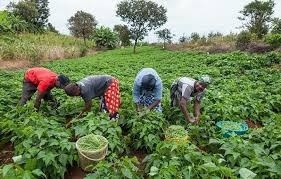
The year 2025 is a year majority of Nigerian farmers will not forget in a hurry. Across various value chains, it is estimated that farmers suffered financial losses ranging from $2.3 billion to $3.7 billion due to climate change challenges, resulting in drought, unpredictable rainfall and severe flooding. These extreme weather events triggered widespread crop destruction as well as washing away of fish ponds in aquaculture clusters.
Among victims of the devastation that hit agricultural value chain investors last year were catfish farmers in Ikorodu whose investments worth over N150 million were swept away by floodwaters in early August.
The President of the Lagos State Catfish and Allied Farmers Association (LASCAFAN), Olatoye Fajimi, who at the time, spoke on the incident with Daily Sun, lamented the magnitude of despair the losses had plunged the farmers into, especially as most of them invested loaned funds.
Also counting the losses suffered by farmers in 2025, the leader of the Women Wing of the Lagos State Chapter of the All Farmers Association of Nigeria (AFAN), Farmer Ekaite Gorden, said agricultural production, as far as 2025 was concerned, was a huge disaster.
Gorden, whose 60-hectare farm in the Pakoto area of Ogun State was not spared in last year’s climate change-induced destruction, said, “last year, we ran at a loss. There was this climate change challenge. We learnt that in the last 11 years, 2025 was one of the worst. It was the hottest and farm production was a disaster.”
She lamented: “I have about five acres of ofada rice which dried up. It discouraged me. I didn’t plant ofada rice this year. The climate has been hectic. I had issues with my ofada rice farm, my cucumber farm, and my cassava farm. Even the maize in the farm dried up. Everything dried up in the farm there, so we didn’t produce anything.”
Other News
The multi-value chain farmer further noted that apart from the extreme heat which resulted in drought, “when rainfall came, it was another disaster also. Fish farmers incurred huge losses because the flood cleared all their fish. So, it was from one disaster to the other.”
Gorden, who said the situation brought a lot of discouragement, was, however, quick to add that, “we cannot say as a farmer we will be discouraged by that and not farm anymore. So what we really did last year was that we focused on processing. We bought from others who had produce and we processed them. Mostly, what we processed last year was our chicken and fish. We didn’t process any crops because of the damage done by the drought.”
The AFAN Women Leader equally noted other factors that hampered farmers’ productivity last year to include lack of capacity to practice full mechanised farming.
She lamented the unavailability of sufficient tractors, saying, “access to machineries, like all these big tractors, to work on the farm, has not been easy. Now, we are plowing 60 hectares. We have just two plowers. We’ve been begging year in, year out for the government to come to our aid on this. Though some months ago, late last year to be precise, the Federal Government launched an initiative to make tractors available to farmers. We saw it on television and that is all we know about that.”
Several thousands of hectares of rice farmlands in major producing states, including Jigawa, Niger, Kebbi, and Kwara, lost both dry and wet season crops due to heavy rainfall.
To avert or curb future destruction of investments in agriculture, and subsequently safeguard the country’s food system, the farmers have advised the government to adopt climate-smart agricultural practices to ensure a sustainable future.