Follow Us on Google
By Doris Obinna
The National Agency for Food and Drug Administration and Control (NAFDAC) has raised an alarm over the circulation of counterfeit Augmentin 625mg Tablets in Nigeria, warning that the fake antibiotic poses serious health risks to consumers.
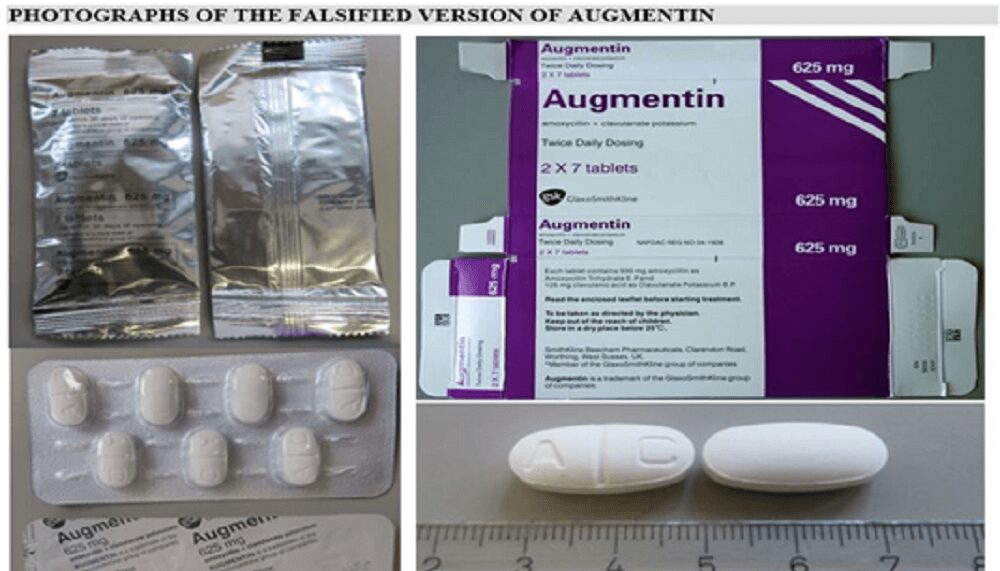
In a Public Alert No. 024/2026 issued on Thursday, the agency said the falsified product involves Augmentin 625mg Tablets packaged in a 2 x 7 tablets pack with Batch Number AC3N. NAFDAC said the alert followed information received from the Marketing Authorisation Holder for GlaxoSmithKline (GSK) products in Nigeria after multiple complaints about suspicious Augmentin tablets circulating in the market.
According to the agency, GSK investigated the product using documentary evidence, photographs and videos shared on social media and confirmed that the medicine was counterfeit. Although the fake product carried the same batch number as genuine Augmentin previously supplied to Nigeria, investigators discovered inconsistencies in its manufacturing and expiry dates.
GSK said Batch AC3N was manufactured at its Worthing facility in the United Kingdom on August 23, 2023, and packed between September 19 and 20, 2023. However, the suspected counterfeit sample indicated it was manufactured in September 2025 and would expire in September 2028.
Other News
The company clarified that no batch bearing AC3N was produced in September 2025, making the dates on the suspicious product inconsistent with official production records. The investigation also uncovered packaging irregularities, including textual errors and poor-quality fin sealing, which further confirmed the product was fake.
NAFDAC warned that counterfeit Augmentin may contain the wrong quantity of active ingredients, no active ingredients at all, or dangerous substances capable of causing treatment failure, adverse reactions and antimicrobial resistance. Augmentin, a combination of amoxicillin and clavulanic acid, is widely used in the treatment of bacterial infections.
The agency directed healthcare professionals, hospitals, pharmacies and medicine distributors to immediately inspect their stocks, quarantine any suspected products and halt their sale or distribution. It also urged members of the public to avoid purchasing medicines from unlicensed vendors and open markets, where counterfeit drugs are commonly distributed.
NAFDAC advised healthcare workers and consumers to report any suspected falsified medicines or medical devices to the nearest NAFDAC office for investigation and regulatory action. The alert underscores continuing concerns over the circulation of counterfeit medicines in Nigeria despite ongoing regulatory enforcement aimed at protecting public health.