Follow Us on Google
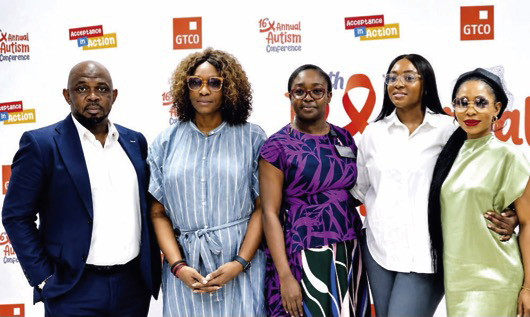
Guaranty Trust Holding Company Plc (GTCO) has announced plans for its 16th Annual Autism Conference, calling for a shift from autism awareness to practical acceptance and inclusion across families, schools, workplaces and public spaces.
The two-day conference, themed “Acceptance in Action: From Family to Classroom to Workplace to Public Spaces,” will hold on Monday, July 27 and Tuesday, 28 at the Muson Centre, Lagos, and will be followed by free one-on-one consultations for families with medical and developmental specialists from July 29 to August 1 at the Adeyemi Bero Auditorium, Alausa, Ikeja.
The programme, which has become one of West Africa’s leading autism advocacy platforms over the past 16 years, brings together healthcare professionals, therapists, educators, policymakers, caregivers and families to promote greater understanding, inclusion and support for individuals on the autism spectrum.
Speaking ahead of the conference, Group Chief Executive Officer, (GTCO), Mr. Segun Agbaje, disclosed that the initiative reflects the company’s sustained commitment to ensuring that people living with autism have access to developmental support, professional guidance and opportunities to thrive.
He said this year’s theme challenges society to move beyond good intentions by making inclusion visible in schools, workplaces and public spaces.
“Sixteen years ago, we set out to help families navigate a journey that too often felt isolating. Today, this programme stands as proof of what sustained commitment can achieve. No single institution can build an inclusive society alone. It takes families willing to advocate, educators willing to adapt, employers willing to open doors and policymakers willing to act.
“The Orange Ribbon Initiative could not support persons on the autism spectrum and their families without the continuing collaborative efforts of many individuals and organisations involved in making the GTCO Autism Conference a success each year, Agbaje added.
The conference will feature expert-led discussions, workshops and free consultation sessions by local and international specialists covering early intervention, behavioural therapy, communication strategies, inclusive education and caregiver support. The programme will also be held in Ghana from August 4 to 8 at the University of Professional Studies, Accra.
Behavioural analyst, psychologist and Founder of Post-ABA Centre, Osezusi Bolodeoku, urged Nigerians to translate autism awareness into everyday acts of acceptance. She described autism as a neurodevelopmental condition requiring biomedical, psychological and social interventions, stressing that inclusion depends largely on how society responds to autistic individuals.
Other News
“We have done a lot of awareness. People now know what autism is, but acceptance begins when someone with autism is seen in a public place and people respond with understanding instead of fear or discomfort. Inclusion is action, not just words,” she said.
Bolodeoku encouraged families to seek help early for children showing developmental delays and called for sensory-friendly public spaces and greater workplace recognition of neurodiversity.
Founder, Cradle Lounge Special Needs Initiative, Solape Azazi, said acceptance starts at home, urging parents to embrace their children before focusing on the diagnosis.
She noted that many families still struggle with guilt and misconceptions about autism, often linking it to spiritual causes, and stressed that unconditional love and advocacy by parents help educate communities.
Azazi also called on schools to equip teachers with practical skills to support autistic learners and highlighted grassroots awareness campaigns conducted in markets, schools, religious centres and primary healthcare facilities.
Board Certified Behaviour Analyst, Dr. Eziafakaku Nwokolo, described autism as an invisible disability that requires empathy rather than judgment.
She urged employers and public institutions to introduce practical accommodations such as sensory-friendly spaces, staff sensitisation programmes and flexible service arrangements, while encouraging clearer communication with autistic individuals.
Nwokolo further urged governments to strengthen disability policies by giving greater attention to developmental conditions such as autism, expanding inclusive education, training teachers, healthcare workers and public servants, and involving parents and advocacy groups in policy development.
Stakeholders agreed that while autism awareness has grown considerably in Nigeria, meaningful acceptance will require sustained public education, stronger collaboration among stakeholders and deliberate efforts to ensure that every autistic individual is treated with dignity, understanding and respect.