Follow Us on Google

The House of Representatives committee investigating the alleged fake government agency has received investigative documents from major security and anti-graft agencies detailing their findings on the organisation and its Director-General, Prince Adeniyi Adeyemi.
Chairman of the Ad Hoc Committee, Yusuf Gagdi, disclosed this on ARISE News while explaining the scope and progress of the investigation into the Presidential Foreign Intervention Promotion Council, also referred to as the Presidential Economic Advisory Council.
Gagdi stressed that the probe was not designed to target the Chief of Staff to the President, Femi Gbajabiamila, saying the committee’s primary responsibility was to determine whether the agency had legal backing and how it gained access to government structures and funding.
“First and foremost, the impression that people have that the entirety of that committee is about Femi Gbajabiamila is not true,” Gagdi said.
He explained that the committee was investigating the authenticity of documents presented as the agency’s legal and presidential authorisation, including its purported establishment order and the appointment letter of its DG.
According to him, the committee also wanted to determine how an organisation allegedly not established by law was able to penetrate the Federal Government system and secure accommodation.
Gagdi said the committee had received submissions from the Independent Corrupt Practices and Other Related Offences Commission (ICPC), Economic and Financial Crimes Commission (EFCC), Department of State Services (DSS) and the Nigeria Police Force.
“We obtained documents. In those documents, we discovered a lot,” he said, adding that the agencies provided information on their ongoing investigations involving Adeyemi and the alleged organisation.
The committee chairman further disclosed that documents obtained during the investigation contained information connected to Gbajabiamila.
“Through those documentation processes, we laid our hands on a lot of documents that are connected to Femi Gbajabiamila,” he said.
Gagdi said the committee’s preliminary findings showed that the purported Act establishing the agency, the directive allegedly issued by the Presidency for its take-off and Adeyemi’s appointment letter were forged.
“We discovered that the Act is forged, the letter instructing the takeoff of the agency by the Villa is forged, and the appointment letter is forged,” he said.
Other News
He added that documents before the committee indicated that Gbajabiamila only became aware of the alleged agency in February last year during the course of the investigation.
The lawmaker also disclosed that the committee traced 58 bank accounts linked to Adeyemi’s Bank Verification Number (BVN), with the accounts connected to 12 different agencies.
He said the committee would examine how the alleged agency’s DG was able to establish the accounts and whether officials within government institutions assisted the process.
“There are definitely compliances in different agencies that are accomplices to Prince Adeyemi,” Gagdi said, while noting that investigations were still ongoing.
On the committee’s proceedings, Gagdi rejected claims that the investigation was conducted secretly, explaining that its sessions were publicly covered except for its interaction with Adeyemi.
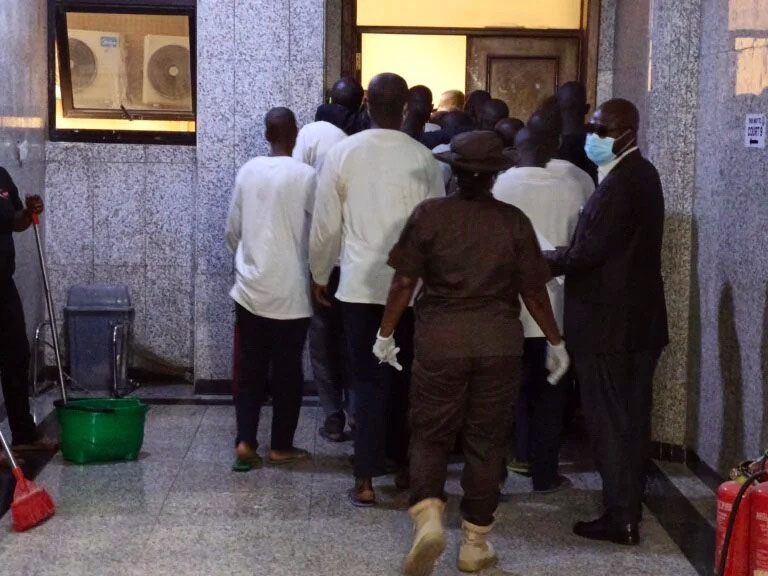
He said the committee had invited Adeyemi through the police, but the law enforcement agency cited a court order requiring him to remain in its custody.
Gagdi also dismissed claims that the investigation was sub judice, arguing that the House was examining issues outside the matters currently before the courts, including the legality of the alleged agency and how it gained access to the Federal Government’s budget.
He said the committee was working to conclude its findings and would submit a comprehensive final report to the House when plenary resumes.
The lawmaker also defended the National Assembly against suggestions that legislative oversight failures allowed the alleged agency to operate.
According to him, verifying the legality and authenticity of agencies during the budget preparation process is primarily an executive responsibility, involving ministries, the Head of Service and the Budget Office.
He said the National Assembly’s role is to scrutinise proposed allocations, while legislative reforms could be recommended where gaps are identified.