Follow Us on Google
By Ngozi Nwoke
Don Davis and many others have something in common. They were bullied and maltreatment in school. While some have died, others contend with near-death experiences.
Indeed, many students, especially those in boarding schools, are victims of bullying by the senior students or classmates. Bullying, which is not attributed to a particular personality trait is reported to be as a result of environmental influence, family background, peer pressure and bad parenting.
The United Nations UNICEF identifies the characteristics of bullying as an “intentional, repeated use of power to cause pain, either through physical harm or hurtful words or behaviour, and does so repeatedly. Boys are more likely to experience physical bullying, while girls are more likely to experience psychological bullying.
“Bullying is a pattern of behaviour, rather than an isolated incident. Children who bully usually come from a perceived higher social status or position of power, such as children who are bigger, stronger, or perceived to be popular.
“The most vulnerable children face a higher risk of being bullied. These are often children from communities that are marginalized, children from poor families, children with different gender identities, children with disabilities or migrant and refugee children.
“Bullying can have harmful and long-lasting consequences for children. Besides the physical effects of bullying, children may experience emotional and mental health problems, including depression and anxiety, that can lead to substance abuse and decreased performance in school. Unlike in-person bullying, cyberbullying can reach a victim anywhere, at any moment.
“It can cause profound harm, as it can quickly reach a wide audience and leave a permanent footprint online for all involved.
Your child has the right to a safe, nurturing school environment that respects their dignity. The Convention on the Rights of the Child states that all children have the right to an education, and protection from all forms of physical or mental violence, injury or abuse.”
According to the Anti-Bullying Alliance, a law enacted to help reduce and eliminate bullying states that bullying is an imbalance of power which is used to either oppress, harass, intimidate or spite another person. It further defines it as the repetitive, intentional hurting of one person or persons by another person or persons.
“The Department for Education (DfE) has produced guidance for all schools which outlines its duties towards preventing and tackling bullying in schools. The Education Act 2002 Section 175 placed a legal duty on school authorities to safeguard and promote the welfare of children.
“Some incidents of bullying may also be a child protection issue. A bullying incident should be addressed as a child protection issue under the Children Act 1989 when there is ‘reasonable cause to suspect that a child is suffering, or is likely to suffer, significant harm. These concerns must be reported to the member of staff in school responsible for child protection and then reported to the local authority’s children’s social services.
“Section 89 of the Education and Inspections Act 2006 states that maintained schools must have measures to encourage good behaviour and prevent all forms of bullying amongst pupils. Some schools choose to include this information in an anti-bullying policy, whilst others include it in their behaviour policy. These measures must be communicated to all pupils, school staff and parents. The head teacher must follow through and adopt the policy and all students, parents and teachers should be notified of it once it has been decided.”
As of today, bullying by children has become a disturbing issue. Research by the National Centre for Educational Statistics (NCES), states that male students are more likely to be physically bullied than the female gender. The research further stated that females are purposely the target of rumours.
Research published by Moradeke Abimbola Aderibigbe titled, ‘A Comparative Analysis of Bullying Laws and Policies in Public Schools in the United States and Nigeria,’ also highlighted that bullying has been an existing social menace from time immemorial.
“The research demonstrates that bullying is not a recent phenomenon; it has been in existence since ages past. It is not, however, isolated to the United States. It is a global issue. It occurs in schools, at home, in prisons, and at the workplace. It is a form of violence that is most prevalent in schools. There are children all over the world that are bullied on a daily basis. Its effects are devastating and lasting. It is, however, unfortunate that until recently not much attention has been paid to this devastating phenomenon by lawmakers, school authorities, parents, and society at large.
“Another problem significantly associated with bullying has to do with the various types that have been identified. These include examples such as verbal bullying. Verbal bullying actually belies the popular adage that “sticks and stones may break my bones, but words will never hurt” as words may even do more damage than sticks and stones. Verbal bullying can cause emotional instability/distress.
“Until recently, students and teachers used verbal bullying more often. Though it cannot easily be detected, it is harmful, hurtful, and demoralizing. Verbal bullying involves behaviors such as name calling, taunting, labeling, mocking, belittling, tale-telling, cruel criticism, personal defamation, and sexually suggestive or sexually abusive remarks. There is also physical bullying. This is usually visible and can easily be identified. It includes pushing and bumping (on purpose or seemingly accidentally), hitting, kicking, tripping, biting, spitting, punching, throwing objects like stone or stick, hair pulling, stealing, destroying, or defacing property.
“Another form of bullying is relational bullying, which is generally considered to be highly dehumanizing and destructive. Unfortunately, it is very difficult to detect from the outside. This form of bullying involves gestures such as aggressive stares and rolling of eyes. Frowns and hostile body language are also signs of relational bullying. It also includes behaviors such as gossiping, spreading false rumors, exclusion, ostracizing an individual from a group, breaking a victim’s relationship with loved ones, ruining a reputation, and threatening to end a relationship.
“The situation in Nigeria is quite different. Indeed, not only have studies on the bullying problem in Nigerian schools’ system been limited, but more unfortunately, there seems to be no attention paid in terms of laws and policies to address it. The dearth of studies and practically absence of government laws and policies on bullying in Nigeria do not in any way reflect the prevalence of the problem in Nigerian schools.
“Bullying is a daily occurrence at different levels of schooling in Nigeria and it has consequently attracted the interest and concerns of the Nigerian public, who are now demanding that governments and school authorities pay urgent and deserved attention to the problems.
A search for specific laws and policies on bullying in Nigeria has not produced any result from both the federal and state governments in the past. This position is further collaborated by the Federal Government of Nigeria document on the report on violence against children in 2004.”
Nigeria, being a country with massive population, may be impossible to get the accurate statistics of children who have been bullied so far, however, the fact remains that bullying exists in Nigerian schools and society and despite the reported and unreported cases of bullying, the lack of stringent punishment on bullies or strong laws to address the concern as a national emergency, has contributed to the rise of cases.
Experts have advised parents to teach their children the practical meaning of bullying and how to identify a bully. All types of bullying must be condemned and not tolerated; therefore, children should be encouraged to report any form of bullying to the appropriate authorities.
This includes bullying that involves violence or assault; theft; harassment and intimidation over a period of time including calling someone names or threatening them, making abusive statements, and sending abusive emails or text messages. Anything involving hate must not be handled with kid gloves.
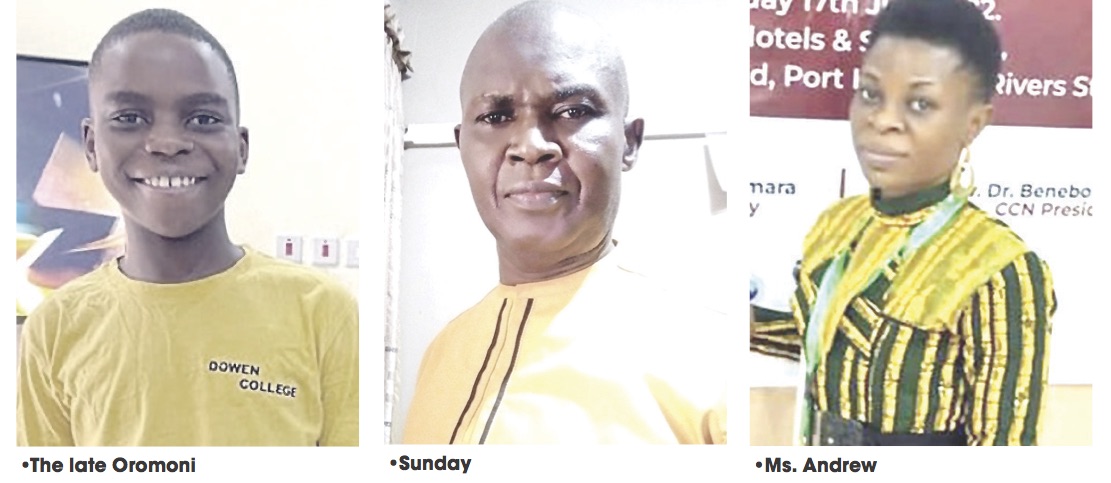
Guidance and counselor expert, Ms. Assumpta Andrew, confirmed that bullies, in most cases, begin to exhibit the trait from a very tender age. She noted that most parents usually notice that their children bully their peers but take little or no action to correct them of such detestable behaviour until they grow into habitual bullies.
She said: “First, we must consider the root causes of bullying, why children bully their fellow minors, what they enjoy when they bully others and possible actions to take against them. How do we identify a bully? A bully is anyone who intentionally metes out verbal and physical abuse in an aggressive manner with the plan to cause pain, harm and fear on the other person. Not only do bullies cause harm to an intended person, they are also a bad influence on other peers around them. Both children who bully and children who have been bullied, suffer mental and behavioral disorders which are anxiety, depression, low self-esteem, sleep difficulty. In the worst cases, they don’t perform well academically and sometimes end up dropping out of school. Another adverse effect of being a bully or a victim of bully is that some of them begin to nurse suicidal thoughts due to depression and inflict harm on themselves. The negative impact of people who have been bullied affects their relationship with their family, friends and society. Victims of bullying turn out to be worse than those who bullied them.
“Causes of bullying by children include lack of attention by their parents. Children are very sensitive to whatever situation is going on in a family. For example, if parents are going through a divorce or are constantly having unresolved marital issues, the child starts to feel neglected. This is why marriage counsellors always stand against divorce or separation, if the issue is reconcilable. A separation may be a tough change for the child to cope with. He or she may seek attention through different outlets and if the attention is not gotten, the child resorts to keeping company that may not be healthy.
“Bullies love to be in control. They love to be respected and feared. They love to feel popular at school or in any environment they find themselves in. Some children who bully their peers want to dominate their classroom and feel like the leader of the group. Children who see bullying around them, or perhaps have fallen victim to bullying, oftentimes become aggressors. Bullying is a learned behavior, and children demonstrate practices they see. Some people bully to feel among or fit into their peer group. Most children who grow up to become bullies were tolerated, overlooked and pampered by the family, school teacher and society.
“How siblings treat each other at home is very important. It plays a significant role in their lives and upbringing. Siblings may bully their younger brother or sister, which could affect the way a child treats his or her peers. It becomes a learned behavior that is carried on into the classroom and the society. This is the point where parents need to watch them closely.
“Remedies that can be given to a child who has the habit of bullying or tendency to become a bully includes talking, spending time together. In addition, it’s vital to engage in bullying prevention efforts to keep these destructive actions from taking place at school. As a parent or guardian, it can be difficult to know everything that goes on in the classroom. Give quality attention to your child or children at home. It’s important to be conscious of the type of attention your child receives at home from siblings, relatives and visitors. Make sure your child receives positive, encouraging attention that praises his/her strengths and builds healthy self-confidence.
“Educate your child on how to resist peer pressure. Teach your child about peer differences. You see children who aspire to be like others and wish to live the kind of life others live. In this case, contentment is the key word. Letting your child know the different ways of life can help them better understand the diverse world we live in and will make them less likely to lash out against those who are different from them. Parents should inculcate kindness and good empathy in their children. Young children are just learning how to have healthy relationships with others. It’s important for parents to show examples of treating others with dignity and respect, and how to have empathy for others. Parents who have children that indulge in bullying need to participate in awareness creation campaigns, seminars and talk shows that prevent bullying. Teach your kids that bullying is an inhumane act that is unacceptable. With all these, we can collectively help end bullying in society and prevent ourselves from raising bullies.”
Another psychotherapist, Mrs. Dedoyin Ajayi, warned that until the society recognises bullying as a grievous crime or an offense punishable by law, the heinous act will continue to be prevalent and thousands of innocent children will become victims.
She said: “Bullying has been so tolerated in schools that it has become a way of life or seen as training for students in secondary schools. It is now regarded as part of school life with the belief that it would make the students, especially the boys, become tough and fearless to withstand the real world. Junior students were constantly punished by their seniors for what they seem to be disobedience and disloyalty to their commands or directives.
“They are often made to tie shoelaces, fetch water, wash their clothes and run other errands for the seniors. It was a way of life in boarding schools that junior students would later brag about the experience the senior students put them through that made them become tough and hardened when they became seniors. This norm made the students see the need to put the same treatment on their juniors. The unfortunate reality about bullying is that victims of bullying turn out to become bullies themselves.
“These students develop the traits of bullying from their homes unknown to their parents and they demonstrate these hidden traits in the boarding schools when they have the opportunity. It’s been proven that some people develop bullying traits because they want to be recognized as ‘superior’ over their schoolmates/age mates, to be feared and respected amongst their peers and so they join the gang of bullies to form a sort of formidable fraternity and begin to terrorize others. In some cases, low self-esteem and insecurity are factors that cause bullying.
“Sadly, bullies do not know or understand the emotional/psychological trauma and pain they cause their victims and continue until an unfortunate incident occurs or the victims finds the courage to confront them verbally or physically. Interestingly, some victims stand up for themselves and confront their bullies, which makes them unaware because they have already underestimated the victim, and in most cases, they stop bullying the victim after the confrontation. While in some cases, the bullies stand up to the challenge and seek more back up from their other bullies to continue oppressing the victim.
“We always advise victims of bullying to report any kind of oppression or ill-treatment. Any ill-treatment you tolerate or go silent about, has every tendency to increase on a regular basis. And it gets to a point where it becomes worse and life-threatening. The fact is that these bullies are humans and they have fear in themselves. They feel fear, they identify threats and it makes them uncomfortable. So, when they are challenged or confronted, they tend to back-off completely or lie low for some time. Please, students or victims should always be encouraged to speak out to people in higher positions when they are being bullied or threatened. The school authorities should improve in the area of handling cases of bullying with utmost urgency and every measure necessary to keep the victims safe and protected.”
David Iyiegbu, a student of Brighter Academy, Surulere, Lagos, recalled that he was tortured and extorted by the “seniors” who always threatened him with punishments if he reported their barbaric acts to the school authority or his parents. David, who narrated that his ordeal began on the first day he was admitted into the school, said his worst nightmare was his supposed ‘school father.’
He said: “The day I came to the school as a junior student, one senior student said he wanted me to be his school son. I didn’t know what he meant. So, I told him I already have a father and declined his offer to be my school father.
“From that day, he said I must be his boy whether I like it or not. That night, he and other senior students of the same class bounced into my hostel holding belts and were ordering all new junior students to stand up from the bed.
“We all did as they ordered and next thing they asked us to obey any command they gave to us and we should never report what happened that night to the hostel master. They took our beverages and other valuables including cash given to us by our parents.
“Since then, until the next visiting day, I reported to my mother and she took it up with the principal. My ‘school father’ didn’t stop bullying me. He would beat me whenever I argued with him or gave him excuses for not obeying his instruction, asking me to fetch water for him to bathe with every morning before I went for morning devotion.
“It affected my performance in my learning because I wasn’t doing well in classes. I attended classes late because of his errands. When I reported to my hostel master, he simply said that I should avoid him but there was no way to avoid him. I lived in fear and was always hiding in the library to avoid his torture. I was lucky that he graduated the next year and I gained my freedom.”
Mr. Ejikeme Sunday, who is a parent, shared some behavioural patterns to look out from children who exhibit traits of bullying. He said: “The behaviour of a child is indicative of two factors. The upbringing of the child and the type of environment the child was raised in. We are told that charity begins at home.
“Some parents unknowingly orchestrate their children’s misbehavior because they indulge them in everything with the belief that they need to be pampered. And by doing so, fail to discipline their children when they go wrong. Some parents do not even create time to nurture their children but would rather send them off to boarding schools.
“What is disturbing about such bullying behaviour, is the silence of victims to this dastardly act. This is as a result of the effect bullying has on the victims. A bully first of all, instills fear in their victims to subdue and overpower them. Confronting bullies is the best solution to their obnoxious character. Parents should be vigilant. They should watch out for different behaviour exhibited by their children. The signs are always there at the beginning, but we are too busy or insensitive to see them.
Similarly, Mr. Dayo Adeniran, also a parent, noted: “Parents must begin to realise what bullying is and the impact it has on children. They need to watch how siblings treat themselves. They need to scrutinize and check the family background of the nannies or housekeepers they employ to care for their children.
“Sadly, most domestic staff come from horrible family backgrounds with bullying experiences that have destabilized their orientation about life. They now see bullying as part of life. Some house helps have been battered by their masters and feel it is okay to do the same to another.
“So, parents need to watch activities that happen in their homes around their children. Bullying should not be tolerated in any way and for any reason. School authorities must enforce strict policies that stand against bullying and tough punishments for bullies; as well as protection for victims of bullying. School authorities must improve measures to stop bullying.
“We have had cases where students are bullied and are killed. We cannot even imagine the psychological stress the victim was made to go through before being killed. It is their responsibility to provide adequate protection for every pupil and student under their care. I lack words to narrate how a mother would feel when she entrusts her child in the hands of a teacher and due to negligence on the part of the school or teacher, the parent is told that her child died from one cause. It is devastating to say the least.”
Principal of Wokens Ideal Group of Schools, Port Harcourt, Mrs. Peace Nkechi Nwoke, said: “There is absolutely no excuse for bullying, and it must not be tolerated in all its ramifications. Just as we do here. We organize campaigns against bullying. We teach the pupils and students consequences of bullying. They taught what bullying is, because some of them do not realise what they do until they are cautioned or punished.
“Other schools need to be involved in the awareness campaigns, including civil society groups and law enforcement agencies. Students should be made aware of what bullying is in practical terms and informed of the punishment involved if found guilty. It’s not just paying lip-service and trying to impress the parents due to their societal influence or personality.
“Here in Wokens, anyone found guilty of bullying is reprimanded; either suspended or expelled, depending on the nature of the offence. I tell my teachers and students that school life should be fun-filled and made enjoyable for learning. It should not be a place of harrowing experience, but rather a learning institution where future leaders are groomed.