Follow Us on Google
By Vivian Onyebukwa
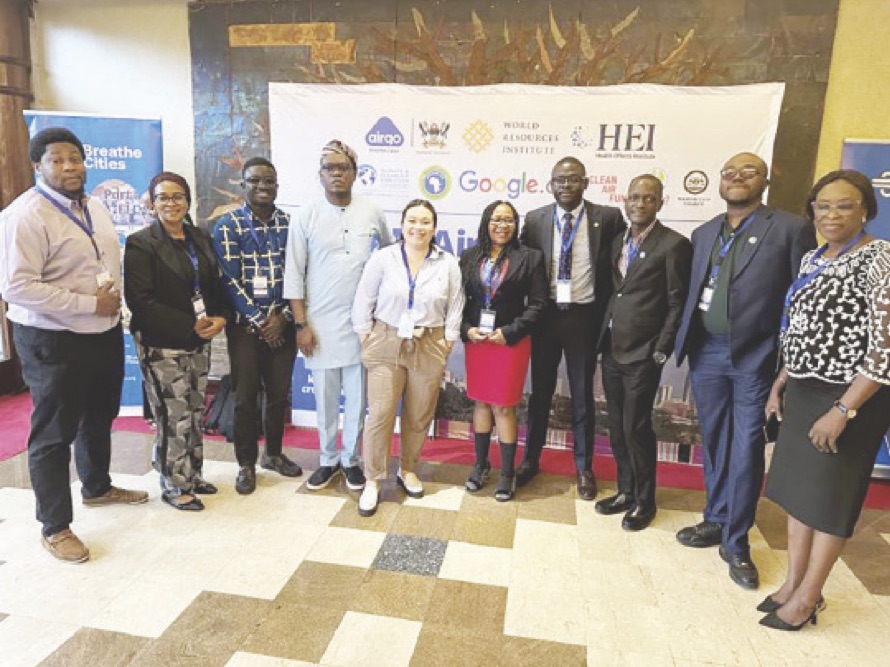
Recently in Nairobi, Kenya, over 300 air quality experts, policymakers, researchers, development partners, and grassroots leaders from across Africa and beyond converged for the third edition of the CLEAN-Air Forum, a pan-African platform that tackles the escalating crisis of air pollution on the continent.
Convened by the Africa Clean Air Network, it provides a space for mutual learning, showcasing innovative tools, and aligning city and national efforts with global sustainable development and health goals.
The week-long programme came under the theme, “Partnerships for Clean Air Solutions.” It was a joint initiative by AirQo, the Health Effects Institute (HEI), and World Resources Institute Africa (WRI), in collaboration with the Nairobi City County Government. In 2023, Kampala hosted the programme, followed by Lagos, Nigeria in 2024. The programme, which was also virtual, availed participants, including journalists who were not able to travel to Nairobi, to participate in the event.
According to the organisers, this year’s gathering marked a major milestone in Africa’s environmental dialogue by fostering collaboration between governments, researchers, civil society organisations, development actors, city authorities, youth leaders, and private sector players to address one of the continent’s most critical public health and environmental challenges.
Wanjira Mathai, Managing Director for Africa and Global Partnerships at WRI, while speaking at the opening ceremony, described the CLEAN-Air Forum as Africa’s leading platform for driving evidence, innovation, and equity in air quality. He described the theme of the programme as a timely reminder that no one city, country, or community can solve the crisis alone.
Also, Johnson Sakaja, Governor of Nairobi City County, noted that air pollution remains a major public health and environmental threat, both locally and globally. “The data we have must drive inclusive and informed action. This forum will unite leaders, experts, civil society and citizens to share policies that protect our health and our city’s future,” Sakaja said.
Speakers at the forum underscored that this silent crisis requires not just local solutions but pan-African collaboration, financial commitment, and technological innovation.
As one of the keynote speakers, Dr Babatunde Ajayi, General Manager of the Lagos State Environmental Protection Agency (LASEPA), praised the value of continental cooperation saying, “When we collaborate, we share expertise, benchmark standards, and speak with one voice. The CLEAN-Air Forum is helping African cities build that shared language and vision.”
Ajayi called for urgent cross-border efforts to curb the crisis, adding that stakeholders must mobilise resources, invest in technology, and build trans-disciplinary partnerships as clean air is not a luxury, but a right that must be defended.
Also, Dr Mathew Ochieng Owili, Deputy Governor of Kisumu County, Kenya, echoed the sentiment, noting the advantages of collective policy and data sharing. “Through shared data, harmonised policies, and joint strategies, cities can access more funding and implement innovation faster. I hope this forum catalyses a united front, bigger investments, stronger commitments, and new partnerships for clean air.”
Other News
Tackling transport-related air pollution at one of the sessions, which was focused on Africa’s rapidly expanding transport sector, a significant contributor to urban air pollution, speakers discussed investment in non-motorised transport, clean mobility strategies, and awareness campaigns. African and global case studies offered a blueprint for cities to reduce emissions while improving urban mobility.
The session ended with a strong call by the participants for political will, regional cooperation, and regulatory reform, urging African governments to treat clean transport as a public health priority.
Using Lagos as a case study for air quality innovation, Dr Ajayi made a reference to a 2020 World Bank study which estimated that air pollution cost Lagos $2.1 billion in 2018, equivalent to 2.1 per cent of the state’s GDP, and caused over 11,000 premature deaths, with children under five accounting for 60 per cent.
Dr Ajayi equally tackled the issue of Nigeria’s heavy reliance on fossil-fuel-powered generators. According to him, it is time people realised that their generators may bring light but are also polluting the air.
“Switching to clean energy is no longer just an environmental issue, it’s a public health imperative,” Ajayi stated.
Another session of the forum examined one of the Household Air Pollution (HAP), which is the impact of cooking practices on public health, climate, and household economies. Case studies from Kenya, Uganda, and Ethiopia explored the importance of adopting cleaner cooking technologies and inclusive energy policies.
“The path to clean cooking in African countries starts with equity,” said Perez Mweine, Programme Assistant at WePlanet Africa, who stressed the importance of ensuring households have the tools and resources to transition.
Another highlight, the Next Generation of Urban Air Quality Management session, brought together researchers and experts from Africa and Europe to explore how real-time monitoring, low-cost sensors, and satellite data can close Africa’s vast data gaps.
Insights were shared from projects in Ghana, Nigeria, Kenya, and across Europe. Discussions revealed how apportionment techniques can help cities identify pollution sources and tailor interventions.
Dr George Mwaniki, World Resources Institute Africa Country Representative for Kenya and the Head of Air Quality, expressed concern over the persistent gap between research findings and policy making in Nairobi. He noted that there’s a disconnect between scientific research and policy in Nairobi, and the need for a deeper engagement between researchers and policymakers to create actionable and funded air quality plans.
The highlight of this year’s forum was the unveiling of a renewed vision for the Africa Clean Air Network, a growing alliance of stakeholders dedicated to transforming Africa’s air quality landscape. Launched during the first forum in Kampala, the network has since emerged as a continental force, bridging the gap between science and policy, expanding access to air quality data, raising public awareness, and pushing for trans-formative policy reforms.
Participants at the forum affirmed that air pollution now ranks among the deadliest environmental threats in Africa, claiming over a million lives annually and imposing billions of dollars in economic losses.