Follow Us on Google
From Okwe Obi, Abuja
Experts in the agricultural sector have suggested a full-blown adoption of technology in a bid to shore up food production.
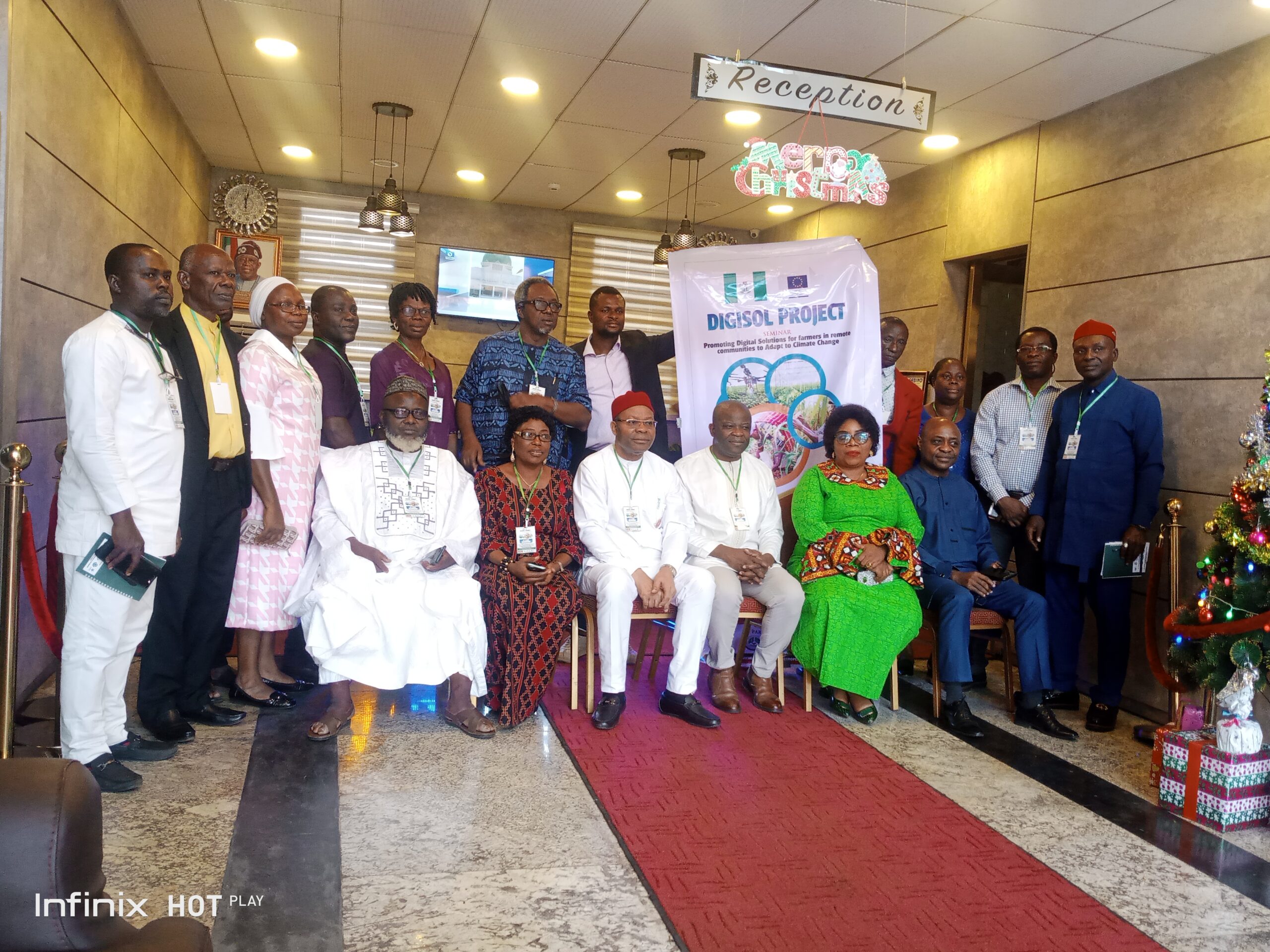
The experts were draw from the Eurpean Union, University of Agriculture and Environmental Science (UAES), Federal University of Agriculture, Abeokuta, and Al-Hikmah University, Ilorin, Kwara State.
UAES Vice Chancellor, Professor Chris Eze, explained yesterday in Abuja, that aside the purchase of tractors and other farm tools, farmer should be equipped with cellphones to constantly get updates from Nigeria Meteorological Agency (NIMET) and Nigeria Hydrological Services Agency (NIHSA) on seasonal farming.
Eze said: “When I talked about precision agriculture, it is about digital solutions. If you have technology and the farmers are knowledgeable about it, they will know when floodings and the period of dry season farming will come.
“Recently, you hear NIMET announcing climate change, they will get the information online with their phones.
“And with that they will have the opportunity to guide their leons against any of these climate gullibility.
“The technology we are talking about is your phone, whereby through their connectivity they will get information online without listening to radio. From the research we have done in Imo State, most of them have small phones. They messages and notifications. It is not a high-tech thing. Your farmer with his phone can inform you about who is in Abuja
“For us we are in partnership with Nigerian and to put in our work to ensure digital solutions to agriculture.
“We are in support of climate change. It possess a significant threat to food security.
“Our goal is to bring a diverse string of agricultural players to dialogue on how to support small holders farmers and to enhance their productivity.
Also, the Team Lead for Digital EU Finance Project, Chris Addy-Nayo, explained that while some farmers would need financial competitive resources, others would want training to be at par with the global standard in food production.
“The main objective of this workshop is discuss the pathway to digital project and engage the Federal Government authority in relations to the survey undertaking in their various states and to present the recommendations and the challenges, so that government can follow up and provide the necessary support in terms of the engagement of digital solutions for farmers in remote communities across the country.
“The digital solutions come in different forms and different contest which we are discussing.
“It includes access to telecommunication network within rural communities where we visited. Some do have access but sometimes, it is too expensive.
“They have to commit a greater percentage of their income to purchase communication requirements. Others require training to understand digital solutions to be able to facilitate the promotion of new agricultural products that are produced.
“Some need financial competitive resources using very simple technological means either make or receive payment given their remote location,” he said.