Follow Us on Google

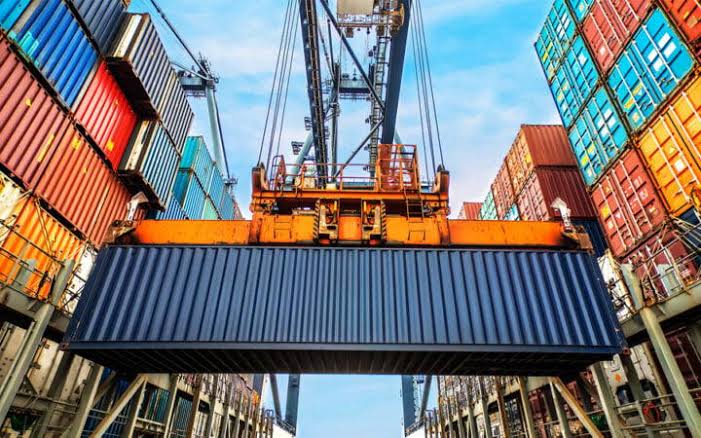
Nigeria’s non-oil export earnings hit a record $6.1 billion in 2025, up 11.5 per cent from the $5.46 billion recorded in 2024. However, the impressive growth, experts note, raises questions about how much of the money actually goes to local manufacturers and businesses.
During the year, the country exported 8.02 million metric tonnes of non-oil products to 120 countries, covering 281 product categories.
While this flaunts progress in the Federal Government’s efforts to diversify the economy beyond oil, local manufacturers are still struggling to take full advantage of the growing international market.
High production costs, poor infrastructure, inadequate processing facilities and difficulty accessing affordable loans continue to hold businesses back.
As a result, Nigeria is yet to earn as much as it could from international trade. Much of what the country exports is still in raw or partly processed form, rather than finished products that could earn more money, create jobs and give local manufacturers a stronger foothold in global markets.One of the major obstacles is the country’s weak capacity to add value to locally produced raw materials. Although Nigeria exports significant quantities of cocoa, cashew, sesame, ginger and other agricultural commodities, a substantial proportion leaves the country without adequate processing, packaging and branding. This means that foreign manufacturers capture a significant share of the value generated from transforming these commodities into finished products.
Chief Executive Officer, the Nigerian Export Promotion Council (NEPC), Nonye Ayeni, who cited the report recently, empahsised the importance of moving beyond raw commodity exports.
Ayeni stressed transitioning from selling raw, unprocessed commodities (such as raw mineral ores or raw cocoa) to processed, higher-value products (such as processed minerals, cocoa butter, and cocoa liquor) to boost earnings and competitiveness. She warned that poor documentation, inconsistent quality, and non-compliance with international trade standards have led to consignment rejections, financial losses, and lost market access.
Leye Kupoluyi, president of the Lagos Chamber of Commerce and Industry, observed that “Exporting raw cocoa, for instance, yields only a fraction of the value compared to processed chocolate products.” The situation highlights the need for investments in agro-processing, modern manufacturing equipment and technology to enable Nigerian businesses to compete in higher-value segments of international markets.
Beyond inadequate value addition, the high cost of doing business continues to undermine the competitiveness of Nigerian manufacturers. Unreliable electricity supply, expensive alternative energy, high interest rates, rising transportation costs and foreign exchange exposure have significantly increased production expenses. These challenges make locally manufactured products more expensive than competing products from countries with better infrastructure and lower production costs.
The Director General of the Manufacturers Association of Nigeria (MAN), Segun Ajayi-Kadir, identified the high cost of energy, finance, transportation, taxes and other operating expenses as major constraints to manufacturing exports. At the ninth Annual General Meeting of MAN Export Group, export trade expert Kolawole Awe disclosed that logistics costs account for about 26 to 30 per cent of the free-on-board value of exports. He warned that “Logistics cost is about 26 to 30 per cent of the FOB value,” highlighting the enormous burden Nigerian businesses face in moving their products from factories to international destinations.
Another major challenge is the difficulty manufacturers, particularly small and medium-scale enterprises, face in accessing affordable financing and meeting international quality standards. Exporting requires substantial investment in production capacity, certification, packaging, product testing, documentation and distribution networks.
However, many local businesses lack the financial resources to meet these requirements consistently. A market access study by the Network of Practising Non-Oil Exporters of Nigeria revealed that 66 per cent of surveyed exporters recorded export values below $50,000, while only a small proportion of businesses had the capacity to operate at significantly higher export volumes. The study also identified inadequate access to finance, fragmented regulatory processes, poor infrastructure and difficulties meeting foreign technical standards as major barriers. Ahmad Rabiu, national president of the network, stressed that “realizing these opportunities requires more than access, it requires awareness, capacity, coordination, and deliberate policy support.”
This suggests that trade agreements such as the African Continental Free Trade Area (AfCFTA) will deliver limited benefits unless local manufacturers have the capacity to take advantage of them.
For Nigeria to translate its $6.1 billion non-oil export performance into substantially higher earnings, experts say the focus must shift from recording export growth to building a competitive domestic production and export ecosystem.
This requires sustained investment in power, roads, rail and port infrastructure, accessible long-term export financing, modern processing facilities and internationally accredited testing laboratories. It also requires reducing bureaucratic bottlenecks and improving coordination among agencies involved in export documentation and certification. However, administrative reforms alone will not resolve the underlying production challenges. As the country pursues higher non-oil export earnings, the real test will be its ability to move from exporting more commodities to manufacturing and exporting more finished products. Until local manufacturers can produce competitively, meet international standards and deliver goods reliably, Nigeria risks increasing its export volumes without capturing the full economic value of its abundant resources.
For David Etim, Team Lead, Project Implementation, Calabar and Gulf of Guinea Municipal and Trade Centre Limited By Guarantee, one of the issues preventing local manufacturers from earning more from international markets is the low level of value addition to Nigeria’s non-oil exports.
Etim said although the country earns about $6.1 billion from non-oil exports, a significant proportion of these earnings comes from primary products, including raw minerals such as lithium and manganese ores, and agricultural commodities such as cocoa beans and sesame seeds.
“These products occupy the lower end of the value chain and generate relatively low export earnings. When raw materials are processed into finished or semi-finished products locally, their value can increase by 300, 500 or even 1,000 per cent, depending on the level of processing.
“To achieve this, Nigeria must address its energy challenges. Manufacturers need affordable and reliable energy, particularly gas-powered electricity, to process raw materials at competitive costs.”
David stressed that Nigeria cannot rely on diesel to undertake large-scale manufacturing and expect to compete effectively in international markets.
“Nigeria has abundant gas resources, but much of it is still being flared or left untapped. Countries such as Qatar have leveraged similar resources to drive industrial growth. Nigeria must develop large-scale energy infrastructure that can supply industrial clusters and entire states rather than individual factories.
“Ultimately, increasing local value addition, supported by affordable energy and deliberate industrial policies, is critical to expanding Nigeria’s non-oil export earnings and strengthening the global competitiveness of local manufacturers.
“High energy costs, low productivity hinder Nigeria’s manufacturing competitiveness.”
Etim noted that improving Nigeria’s earnings from international markets requires increased domestic production, reliable electricity supply and higher productivity across the agricultural, solid minerals and manufacturing sectors.
“One major challenge is the country’s power supply deficit. Although Nigeria has the potential to generate about 13,000 megawatts, only about 4,000 to 5,000 megawatts is being utilised, leaving significant stranded capacity.
“ The country must address transmission and distribution bottlenecks to unlock the unused electricity, while expanding metering to reduce energy theft and commercial losses.
“Fully metered electricity systems, where consumers pay for what they actually consume, would also help reduce the burden on compliant customers and potentially lower electricity costs.
“Beyond electricity, Nigeria must address low productivity in agriculture and solid minerals through mechanisation, technology and improved production methods.
“ For instance, Nigerian cocoa farmers reportedly achieve yields of about 400 to 600 kilogrammes per hectare, compared with about 1,000 kilogrammes in some South American countries. Similarly, while local cattle may produce about four litres of milk daily, improved breeds in other countries can produce between 20 and 40 litres. These differences highlight the importance of better farming practices, improved breeds and scientific production methods.
“The same productivity gap exists in solid minerals, where artisanal mining remains widespread, relying heavily on rudimentary tools such as hoes, shovels and head pans. Nigeria must transition towards mechanised, safer and more efficient mining operations to increase output and improve the quality of mineral resources.
“Ultimately, Nigeria needs a holistic approach that combines macroeconomic stability, reliable electricity, mechanised agriculture, industrial mining and improved production efficiency. While economic reforms have been painful, stabilising the macroeconomic environment is necessary to create the foundation for sustainable industrial growth, increased local production and stronger participation in international markets.”
In his comments, a trade expert and former director general of the Nigerian Association of Chambers of Commerce, Industry, Mines and Agriculture (NACCIMA), John Isemede, identified weak industrial policies, excessive dependence on imports, poor export infrastructure and inconsistent government policies as major factors preventing Nigerian manufacturers from earning more from international trade.
Isemede said Nigeria’s persistent trade imbalance, characterised by imports exceeding exports, has contributed to the country’s foreign exchange challenges and growing dependence on borrowing.
He expressed concern that the country’s annual non-oil export earnings of about $6.1 billion were insufficient to cover even one month’s import bills, despite Nigeria’s population of over 240 million.
According to him, the country’s import-dependent economic structure, coupled with the absence of a clear industrialisation roadmap and effective linkages among stakeholders, has continued to undermine local production and export competitiveness.
He criticised monetary and trade policies, arguing that they had failed to provide the necessary support for local manufacturers. He also lamented the lack of adequate incentives for domestic producers, while government policies appeared to favour imports and established business interests.
Isemede further identified the absence of a coordinated export value chain, alleging that foreign operators dominate major export activities while local manufacturers face barriers, including cartel-like practices. He also faulted the lack of effective monitoring of foreign exchange transactions, noting that substantial foreign currencies circulate outside the formal banking system.
He said Nigeria’s history of multiple exchange rates and restrictive foreign exchange and trade policies had encouraged some exporters to route their transactions through neighbouring countries, thereby depriving the country of potential foreign exchange repatriation.
The trade expert also decried inadequate export infrastructure, particularly the absence of dedicated container terminals and border facilities to facilitate trade within the Economic Community of West African States (ECOWAS).
“The growing disconnect between government and organised private sector operators is another major obstacle. Businesses directly affected by trade agreements and policies are often excluded from critical decision-making processes.”
Isemede also expressed concern over policy instability, multiple taxation and the continued imposition of the Nigerian Export Supervision Scheme (NESS) payments without corresponding improvements in export support systems. He questioned the effectiveness of the Export Expansion Grant (EEG), arguing that manufacturers needed more practical incentives to compete in international markets.
“The decline of trade promotion institutions and support structures, including trade researchers, trade attaches in Nigerian embassies abroad and trade information officers, are essential for identifying opportunities and connecting local businesses to foreign markets.”
He further criticised the country’s export procedures and documentation, describing them as outdated and largely unchanged for over four decades. According to him, the absence of adequate training institutions and sustained human capacity development programmes has weakened the ability of Nigerian exporters to meet international trade requirements.
“Like China, Nigeria needs a deliberate strategy to develop foreign markets through its diplomatic missions and trade representatives.”
He called for a comprehensive economic roadmap that would address production constraints, strengthen export institutions, improve trade infrastructure and create a more supportive environment for local businesses.