Follow Us on Google
From Okwe Obi, Abuja
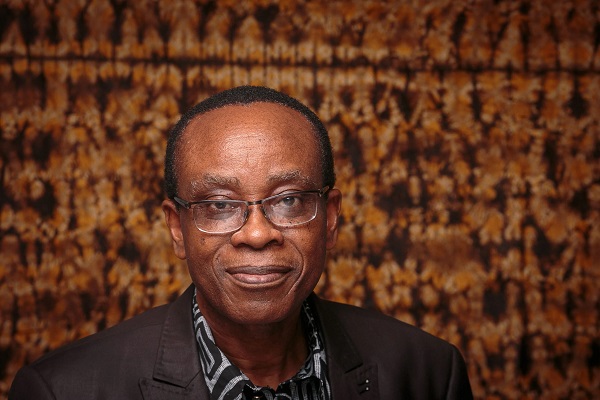
Executive Director of Health for Mother Earth Foundation (HOMEF), Nnimmo Bassey, has warned about the dangers of Genetically Modified Organisms crops (GMO).
Bassey, who spoke at a one-day event entitled: ‘Beyond the Propaganda, Unveiling the Truth Behind GMOs’ organised, in Abuja, said if allowed to take the centre stage, it would increase the rate of cancer and other health challenges.
Contrary to the speculations that GMO crops would address the hunger, he said it would rather increase hunger for the nation as it depends on the United States and other developed countries for seeds.
He said: “The recent debate and uproar in Nigeria on genetically modified organisms (GMOs) have brought to light the pre-existing loopholes in Nigeria’s Biosafety regulatory architecture.
“One key issue of concern is the failure of the regulatory agency to make available documents on risk assessment either for peer review or generally to the public to confirm that the approved GM varieties would not create problems for human and environmental health.
“So far, the NBMA and other advertisers have repeatedly used the stock phrase that whatever GMO they approve is safe without presenting any scientific proof. Simply parroting this stock phrase and dubbing critical voices ignorant or unscientific is an insult to Nigerians who demand their right to safe food.
“A second issue of concern is the lax regulatory oversight and practical flouting of provisions of the National Biosafety Management Agency (NBMA) Act 2015 as amended in 2019.
“The law in section 24(5) provides that the National Agency for Food and Drug Administration and Control (NAFDAC) shall certify and determine whether GMOs are safe for human consumption.
“GMOs are not just about science. Indeed not everything that is scientific is desirable or acceptable. GMOs directly impact the fundamental human rights to food, the right of choice, the right to a healthy environment, and the right to life.
“As judiciary officials in various capacities, entrusted with upholding the rule of law and ensuring justice prevails in our society, it is imperative that we are well-versed in this issue of national concern.
“We should be mindful of vested interests and ensure that decisions regarding GMOs are guided by the precautionary approach, ethical principles and unbiased scientific evidence.
“We must not compromise the safety of our people, the integrity of our ecosystems or our food sovereignty. Indeed, we must always keep in view that the Cartagena Protocol on which biosafety regulatory measures are hinged recognizes the negative impacts of GMOs and thus underscored the Precautionary Principle.
“We are going to be on the way to bring back our indigenous food heritage, decolonise our test boards and kick out GMOs.
“What must be done to ensure food sovereignty is to ensure stringent regulations, outrightly ban GMOs in Nigeria and take control of our food system, preserve the integrity of ecosystems and preserve overall bowel safety.”
Vice Chancellor, University of Mkar, Benue State, Prof Zacharys Gundu, on his part, claimed that most health challenges could be traced to the consumption of GMO crops.
“Nigeria must feed herself. We have the people, we have the arable land, we have the corps; we just need to open our eyes, think, imagine properly, create a food system that can feed us. Provide security, maximal utilization of our arable lands, registration of all small farmers to track production and draw them into the formal sector.
“Promotion of biodiversity in place of monocultures, political and economic reforms, integration of animals for soil renewal, increased agricultural research and development,” he stated.