Follow Us on Google
• Igbo groups, northern elders, MBF, others demand swift action
By Vincent Kalu, Olakunle Olafioye, Stanley Uzoaru (Owerri), Noah Ebije (Kaduna)
The clamour for the establishment of state police in Nigeria has taken a new turn with the worsening insecurity and the limitations of the country’s centralised policing structure.
From the two arms of the National Assembly –the House of Representatives and the Senate, substantial work has been done for the amendment of the constitution to set up State Police across the country. The president, state governors as well as the leadership of the Nigeria Police Force have equally shown commitment to the decentralisation of the current policing structure, to tackle the alarming rate at which violent crimes are spreading.


A growing wave of criminality that manifest in forms of rampant kidnappings, gruesome killing of abducted persons as well as attacks on communities and schools have given rise to the urgency for State Police.
Renewed calls for reform
Among several others, the continued stay in captivity of no fewer than 46 pupils and their teachers who were kidnapped last month in Oyo State and more than 50 students who were abducted from three schools in Mussa town in Borno State by suspected Boko Haram insurgents, have triggered renewed calls for a new system of policing.
The security situation is equally alarming in the North-West. In Sokoto State, bandits have carried out mass abductions of farmers and villagers in local government areas including Isa, Sabon Birni and Tureta. Similarly, in Zamfara State, armed bandits reportedly kidnapped at least 39 civilians travelling to a peace meeting aimed at improving community relations in Maradun Local Government Area.
These incidents have further amplified demands for a security architecture that is capable of responding swiftly to local threats.
House of Representatives raises hope for State Police
A major breakthrough in the push for state police came on June 10, 2026, when the House of Representatives passed a constitutional amendment bill seeking to establish state police across the federation.
One of the bill’s central provisions seeks to amend Section 214 of the 1999 Constitution to formally recognise both federal and state police.
Under the proposal, the National Assembly would be empowered to determine the structure, administration, organisation and functions of the Federal Police, while also setting the legal framework and minimum operational standards for state police forces.
The bill further stipulates that no state police force can commence operations unless the relevant State House of Assembly passes an enabling law and the proposed force is certified as meeting nationally prescribed standards.
Police leadership commits to state police
The debate over state police has generated mixed reactions within the nation’s policing establishment. The Inspector-General of Police, Olatunji Disu, has openly acknowledged that state police is inevitable, declaring that it “has come to stay.” He disclosed that the Nigeria Police Force is already participating in discussions on implementation and reassured officers that their jobs, pensions and career prospects would remain protected under any new arrangement.
Disu explained that the existing police structure would eventually evolve into a Federal Police Service.
His position contrasts sharply with that of the immediate past Inspector-General of Police, Kayode Egbetokun, who consistently opposed the proposal. Egbetokun argued that Nigeria was not yet politically mature for state-controlled police forces, expressing concerns that governors could weaponise such institutions against political opponents and abuse citizens’ rights.
Instead, he advocated the integration of the Nigeria Security and Civil Defence Corps (NSCDC) and the Federal Road Safety Corps (FRSC) into the Nigeria Police Force as specialised departments.
Tinubu throws weight behind State Police
Concerned by the deteriorating security situation, President Bola Tinubu recently directed security agencies to work closely with state governors to halt the growing wave of kidnappings targeting schoolchildren and communities.
The directive came amid renewed legislative efforts to create state police.
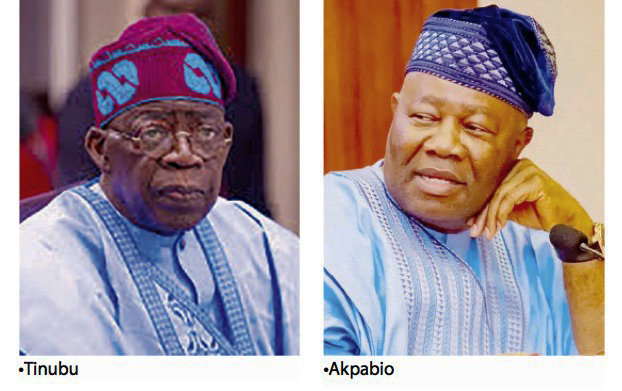
In February, during an interfaith breakfast with senators at the Presidential Villa in Abuja, the President urged the leadership of the 10th Senate to support constitutional amendments that would provide the legal foundation for state police.
According to the president, the creation of state police has become imperative to address Nigeria’s evolving security challenges, strengthen grassroots policing and enhance the ability of states to respond effectively to threats within their jurisdictions.
He argued that a decentralised policing structure would complement existing federal security agencies and promote intelligence-driven, community-based law enforcement.
Long road still ahead
Although the House’s approval represents a significant milestone, the journey towards the actual establishment of state police remains far from being realised.
The bill must still secure the approval of the Senate, where it has only scaled the second reading before being referred to the Senate Ad-hoc Committee on the Review of the 1999 Constitution.
The committee is expected to conduct public hearings and gather stakeholders’ input before presenting the bill for clause-by-clause consideration and final voting.
Beyond the senate approval, the proposal must also receive endorsement from at least 24 State Houses of Assembly, secure presidential assent and be supported by additional federal and state legislation before becoming fully operational.
Demand for swift action
A coalition of socio-cultural, regional groups and some eminent Nigerians have thrown their weights behind ongoing efforts by the National Assembly for the establishment of State Police, describing the initiative as one of the most far-reaching security reforms in Nigeria’s history.
Chief Chekwas Okorie, the founding National Chairman of the All Progressives Grand Alliance (APGA), reiterated his longstanding support for the establishment of state and community policing as a strategic response to Nigeria’s worsening security challenges.
According to him, effective security can only be achieved when local communities are empowered to take responsibility for safeguarding their immediate environment.
“I have consistently maintained for over 30 years that unless people are allowed to participate actively in securing their communities and territories, the nation’s security architecture will remain ineffective,” he said, noting that Nigeria remains one of the few large nations operating a highly centralised policing system.
He observed that support for state policing has grown considerably over the years, but expressed concern that lawmakers are yet to provide sufficient details on the proposed framework currently before the National Assembly. He particularly lamented the absence of clear provisions for community policing.
Other News
“State police alone may not be enough. Without community policing, it will be difficult to achieve meaningful security in a country as vast and diverse as Nigeria,” he stated.
They, however, stressed the need for strong constitutional safeguards to prevent abuse by state governments and ensure professionalism, accountability, and respect for human rights.
Igbo heroes, INC hails legislative efforts, call for support
The Igbo Heroes and Icons Foundation (IHIF) commended the lawmakers for responding to Nigerians’ growing demand for State Police.
Speaking on behalf of the organisation, National Coordinator, Chinedu Nsofor, expressed satisfaction that the group’s long-standing advocacy for decentralised policing had finally gained traction at both the legislative and executive levels.
According to him, the current centralised policing structure has proven inadequate in addressing Nigeria’s complex security challenges.
“State Police would help bridge existing security gaps, improve intelligence gathering, facilitate quicker responses to threats, and strengthen community trust through local knowledge and cultural understanding,” Nsofor stated.
To prevent political interference, the group recommended that recruitment, promotions, disciplinary matters, and oversight functions be entrusted in the hands of independent commissions insulated from partisan influence. It also called for uniform national standards on training, accountability, human rights compliance, and inter-agency cooperation.
IHIF further urged state governors to resist the temptation of deploying state police for political purposes.
Similarly, the Igbo National Council (INC) urged the senate to follow the steps of the House of Representatives by endorsing the constitutional amendment seeking the creation of state police.
In a statement issued by its leader, Chilos Godsent, the council described the House’s decision as a landmark step toward combating violent and non-violent crimes across the country.
The group argued that decentralised policing would enhance intelligence gathering, strengthen police-community relations, and improve crime-fighting efficiency.
It also appealed to the 36 state Houses of Assembly to take what it described as a “historic and courageous step” by approving the amendment when it is transmitted to them.
Godsent further called on the Federal Government to engage state governors and other stakeholders to ensure widespread support for the proposal.
NEF: Insecurity now at alarming rate
The Northern Elders Forum (NEF) also endorsed the creation of state police, describing it as consistent with Nigeria’s federal structure. The forum’s spokesperson, Professor Abubakar Jika Jiddere, said the country’s worsening insecurity had reached alarming levels, threatening national stability, economic development, and social cohesion.
According to him, communities across the federation remain vulnerable to attacks by bandits, kidnappers, terrorists, and organised criminal networks, while public confidence in the government’s ability to protect lives and property continues to decline.
“From the forests of Zamfara and Katsina to the highways of Kaduna and Niger; from communities in Plateau and Benue to parts of Kogi, Kwara, Borno, Oyo, Edo, Enugu, Imo and beyond, violence has become a recurring feature of daily life,” he said.
Citing Section 14(2)(b) of the Constitution, which declares that the security and welfare of citizens shall be the primary purpose of government, the forum questioned why Nigerians were increasingly being left to defend themselves against criminal elements.
MBF backs constitutional amendment
The Middle Belt Forum (MBF) has equally applauded the National Assembly for advancing the constitutional amendment process aimed at decentralising policing and creating state police formations.
The group urged governors to work closely with their respective State Houses of Assembly to facilitate speedy passage of the amendment.
President of the Middle Belt Forum, Dr. Bitrus Pogu, disclosed that the nation’s 36 governors had extensively deliberated on the issue and endorsed the establishment of state police.
According to him, governors should now engage their state legislatures to ensure prompt ratification of the amendment in line with constitutional requirements.
“Since the governors have accepted the proposal, their respective state Houses of Assembly should be able to pass the bill within a short period, paving the way for implementation,” he said.
CNG seeks constitutional safeguards
While expressing support for the ongoing constitutional review, the National Coordinator of the Coalition of Northern Groups, Comrade Jamilu Aliyu Charanchi, said his organisation initially opposed state police due to fears that some governors could weaponise the institution against political opponents, journalists, civil society groups, and critics.
“Our concern has always been the potential for abuse by state governors. We feared state police could become instruments of intimidation and suppression rather than solutions to insecurity,” he stated.
He, however, acknowledged that the deteriorating security situation had exposed the limitations of the current policing structure and necessitated a fresh approach.
Charanchi maintained that any constitutional framework establishing state police must contain robust safeguards against abuse.
He proposed the creation of independent state policing commissions comprising representatives of the judiciary, traditional institutions, civil society organisations, and other non-partisan stakeholders to oversee recruitment, deployment, promotions, funding, and disciplinary processes.
He further urged governors to demonstrate genuine commitment to security through investments in intelligence gathering, community policing initiatives, youth empowerment, education, surveillance technology, and support for existing security agencies.
COSEYL: State police now a necessity
The Coalition of South East Youth Leaders (COSEYL) described the proposed decentralisation of policing as a necessity rather than an option.
The group’s President-General argued that effective policing requires local knowledge and swift responses that cannot always be achieved through a highly centralised command structure.
“We firmly believe that security is local. Criminals operate within communities, forests, towns, and villages. Those responsible for protecting the people must possess local knowledge and intelligence and be able to respond promptly without waiting for directives from Abuja,” he said.
COSEYL urged State Houses of Assembly to fast-track the ratification process and called on governors to begin preparations for the eventual take-off of state police by establishing implementation committees and making adequate budgetary provisions.
The group also advocated investments in surveillance technology, modern communication systems, intelligence networks, command-and-control centres, and stronger partnerships with traditional rulers, youth organisations, town unions, and community vigilante groups.
In addition, it called on the Federal Government to work closely with state legislatures to secure the constitutional approvals required for the reform and to establish uniform national operational standards and independent oversight mechanisms to guard against abuse of power.