Follow Us on Google
By Moses Akaigwe

Mrs. Felicia Irene Oyebolu, NADDC Deputy Director, Information and Public Relations, speaking during reception for the new DG
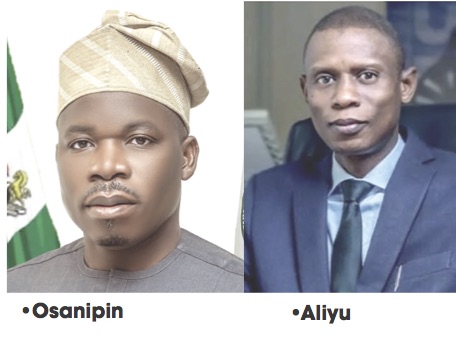
Four days after his appointment was announced by the Presidency, the new director-general of the National Automotive Design and Development Council (NADDC), Oluwemimo Joseph Osanipin, on Tuesday October 17, formally assumed duty at the NADDC headquarters in Abuja.
Osanipin replaces Jelani Aliyu, a respected former senior automotive designer with GM of the United States of America, who spent six years and five months in the NADDC saddle, having assumed duty in May 2017 and was re-appointed by the then President Muhammadu Buhari on April 7, 2021.
Impressed with the warm reception accorded him on arrival on Tuesday, the new DG assured the management and staff of exemplary leadership as he urged all departments of the council to synergise for adequate service delivery with utmost sense of responsibility,
Addressing the council’s management team, Osanipin applauded the achievements of NADDC and implored all to align with the people-oriented agenda of the new administration to reposition the economy, in the interest of the nation.
He spoke on the importance of automobiles in everyday life, underscoring the need for relentless efforts towards the development of Nigeria’s automotive industry.
The baton change at the NADDC has an interesting irony, for only a few months ago, on July 10, 2023, Osanipin was at the same headquarters dutifully showing some units of Jet Motors’ 14-seater electric bus to Jelani Aliyu and seeking for more support from him.
Unlike Aliyu whose antecedents in the auto industry is known even internationally, not much is in the fore about the new DG, beyond being the appointed CEO of Jet Motors.
However, industry players who have so far reacted to his appointment believe that, with the right attitude and vision, as well as getting his priorities right and executing them with determination, he could make a difference.
“He is in the industry. He is still a young man too. So, he is expected to bring a lot of energy and ideas with him,” said a stakeholder.
“But, he should not be fixated on electric vehicles. Vehicles that run on autogas (Compressed Natural Gas, CNG), and Liquified Natural Gas, LNG) have enormous advantages over EV in our environment,” he remarked.
Expectations are sky-high, and that is because the local auto industry is in doldrums, and therefore, in dire need of urgent intervention, no thanks to an interplay of harsh economic factors resulting in most auto plants currently utilising a very small percentage of their installed capacities, and others largely dormant..
And some of the factors include high exchange rate/scarcity of forex, scary interest rates on loans and increasing cost of running factories – which have ‘conspired’ to shoot up the prices of locally produced vehicles beyond the reach of most buyers at a time of dwindling purchasing power across board.
Uppermost in the new DG’s priority scale should be to liaise with the Minister of Industry, Trade and Investment to get the Auto Policy (Nigeria Automotive Industry Development Plan (NAIDP) working.
The industry has not recovered from the effects of the decline of assent by President Buhari to the Nigeria Automotive Industry Development Plan (NAIDP) Fiscal Incentive and Guarantees Bill passed by the National Assembly.
As a player in the industry, Osanipin should be aware that lack of legal framework for the auto policy has discouraged many investors, including OEMs (some of whom have turned to Ghana where a similar, but more progressive policy took effect years after Nigeria’s).
The promised return of the NAIDP bill to the legislature as an executive bill never materialised; rather a new policy was drafted by the NADDC and the ministry with the help of KPMG.
Titled “2023-2033 National Automotive Industry Development Plan,”
the new policy document which was an improvement on the 2014 version, was passed by the Federal Executive Council only a few days to the end of the Buhari regime in May, 2023.
Whether the present government will (in the spirit of its Renewed Hope mantra), depart from the usual policy summersault that defines successive regimes in the country, by implementing the new policy, remains to be seen.
But,Osanipin will have willing allies in the Nigeria Automotive Manufacturers Association (NAMA) which seems to have recently rejuvenated itself after a period of hibernation that followed the death of the hardworking and versatile Associate Executive Directive Director, Arthur Madueke on Monday, July 6, 2014.
Feelers from the fold of the new NAMA which constituted a seven-member board last month, indicate that members believe that,if implemented with a sincere sense of purpose, the 2023-2033 National Automotive Industry Development Plan,” will take the industry out of the woods.
Also deserving top priority is the need to sustainably stimulate patronage of made-in-Nigeria automobiles especially in government circles, and ensure that the average citizens are empowered to purchase locally made vehicles through the elusive auto purchase scheme.
If this is achieved, the expected increase in demand will raise volume of production in the various plants which will lead to a reduction in the prices of vehicles produced in Nigeria.
The new DG should leverage on the fact that the 2023-2033 policy is expected to strategically provide outstandingly competitive fiscal and non-fiscal incentives needed by investors in the domestic auto industry.
And these include access to the funds that have so far accrued from the various duties and levies on imported fully built up vehicles and related charges, and perhaps, concessionary forex allocation too.
A situation where the duty differential between fully built imported commercial vehicles and similar locally produced commercial vehicles is still slim, should be redressed in favour of the latter.
As the DG, initiating, recommending and supervising policies and programmes for locally manufactured vehicles and components, will not be as easy as hot knife goes through butter. Not in an economy in distress as Nigeria’s currently is.
But, with the right attitude and synergy with the supervising ministry and the stakeholders, he is likely to leave the industry better that he met it.