Follow Us on Google
By Percy Owaiye
Buhari’s conversion story to a democrat is public knowledge. As he recalled, his conversion was easy the day he saw the almighty Soviet Union crumble without as much as the shot of a bullet. For a war-tested veteran, that was the equivalent of a miracle. The stuff of the biblical conversion of Saul on the way to Damascus. He has not looked back since.
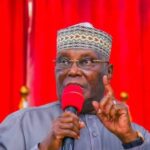
President Buhari may be tough to bend, but not when he is presented with superior argument and compelling reason. He has become a faithful student of the democratic ethos and keen observer of its nuances. This transformation for a man famed for his rigid adherence to his principles is what some of his critics find difficult to understand. For example, one read an interview recently granted by former vice=president Atiku Abubakar where he sought to diminish the president by saying that he expected him to force a resolution of the well-advertised face-off between successive Inspectors-General of Police and the Police Service Commission on who has the responsibility of recruiting policemen rather than allowing them test their powers in court. Ovie Kokori, erstwhile NUPENG President and political activist has expressed similar frustrations, swearing that the Buhari of old is different from the present.
These criticisms, rather than diminish him, actually accentuate his democratic credentials. The methods of democracy are respect for the independence of the separate branches of government, rule of law and painstaking consensus building. President Buhari has had reason to express his frustrations with the slow processes of democracy too, but if you must practice it, you must adhere to its methods.
And he has kept the faith. As presidential candidate of the opposition APP and later, ANPP, he kept faith with the dictates of democracy by contesting the outcome of the obviously flawed elections by going to court each time he lost the election. For someone with his military antecedents, that was not an easy sacrifice to make. One does not remember the exact tabulation, but I suspect the total amount of time it took to prosecute his three failed presidential bids through the courts was probably the equivalent of two years!
When Buhari finally succeeded at the fourth time of asking, and became president in 2015, he did not need further prompting to prioritize electoral reforms. He had said repeatedly that one of the legacies he must leave behind is an improved electoral system, safeguarded from the manipulations of the umpire and players. But his critics misjudged his attention to detail, if they thought because of that, he would quickly append his signature to anything that parliament presented before him, as per the travails of the severally unsigned electoral bills.
As we are finding out, democracy is a very complicated, but ultimately rewarding system of government, when its adherents are patient with its methods. While the parliament has a duty as representatives of the people to make law for the good governance of the state, the executive has a duty too to do its own audit of the processes to ensure that the best interest of all concerned is served. When there is a dispute between the two the court steps in. Of course, as there is no perfect system anywhere in the world, when personal and narrow interests sometimes interfere with the general good, the person who steps in is one who has the entire country as their constituency.
President Buhari has been very deliberate and consistent in all he does. Even as a distant observer, it is clear that his politics is grass-root and masses oriented. It is perhaps clear too this abiding commitment must have drawn him into politics ultimately. Otherwise, Buhari was ordinarily too principled, too straight to engage in partisan politics. And that is probably one of his weaknesses to date. He is honest to a fault the way he relates to the sub-nationals and even his party. Recall, that the first state he visited and has returned to at least one more timer is Cross River. The state was under the control of the opposition PDP then, but that did not matter.
He maintained close relationship too with Governor Dave Umahi of Ebonyi State, even when he was a member of the opposition party. Same for Governor Mutawalle of Zamfara State, not minding the peculiar circumstances of his ascion to power at his own party’s detriment at the time. Former Governor Willie Obiano is on record to have publicly acknowledged his transparent neutrality at key moments in the affairs of his state. That the previous three are members of his party today, is probably reward for the president’s fidelity. So when his critics accuse him of nepotism, on account of political patronage, that would probably not ruffle the president. As far as he is concerned what should be paramount to the ordinary man on the street is not occupies a particular office, but how he goes about his daily business in relative safety to put food on the table? To be honest, the fight for political patronage is an elite pastime which does not tally with Buhari’s politics and philosophy. And he dares to be different.
Notice how this preoccupation runs through every step he has taken in office. He is the promoter of the basic things of life. Grow the food you eat. Build your basic infrastructure. And where possible, build or collaborate on the big ones too. The Dangote Fertilizer Plant which he recently commissioned and the soon-to-be-ready Dangote Refinery are massive projects which will shoot the irrepressible investor to the second largest employer of labour after the federal government in the country. The Lekki Deep sea port is huge too. So will be a resuscitated Lake Chad Basin and cleaned Niger Delta region. These are projects which hold lots of possibilities for the ordinary masses of the country, in the immediate and long term future.
And then, finally, when he considers anyone for appointment, the ethnicity or religion of the person is the least of his considerations. Otherwise, Femi Adesina, would not be his Special Adviser, Media. Nor will he still have held on to personal staff, including cooks and drivers as we hear, who are Christians. I have the testimonies too of eminent Nigerians like the retired Ambassador Ignatius Olisemeka and the war correspondent of then Daily Times during the unfortunate civil war and the benevolent exploits then Captain Muhammadu Buhari at the Akwa Sector Command.
Owaiye writes from Lagos