Follow Us on Google
By Doris Obinna
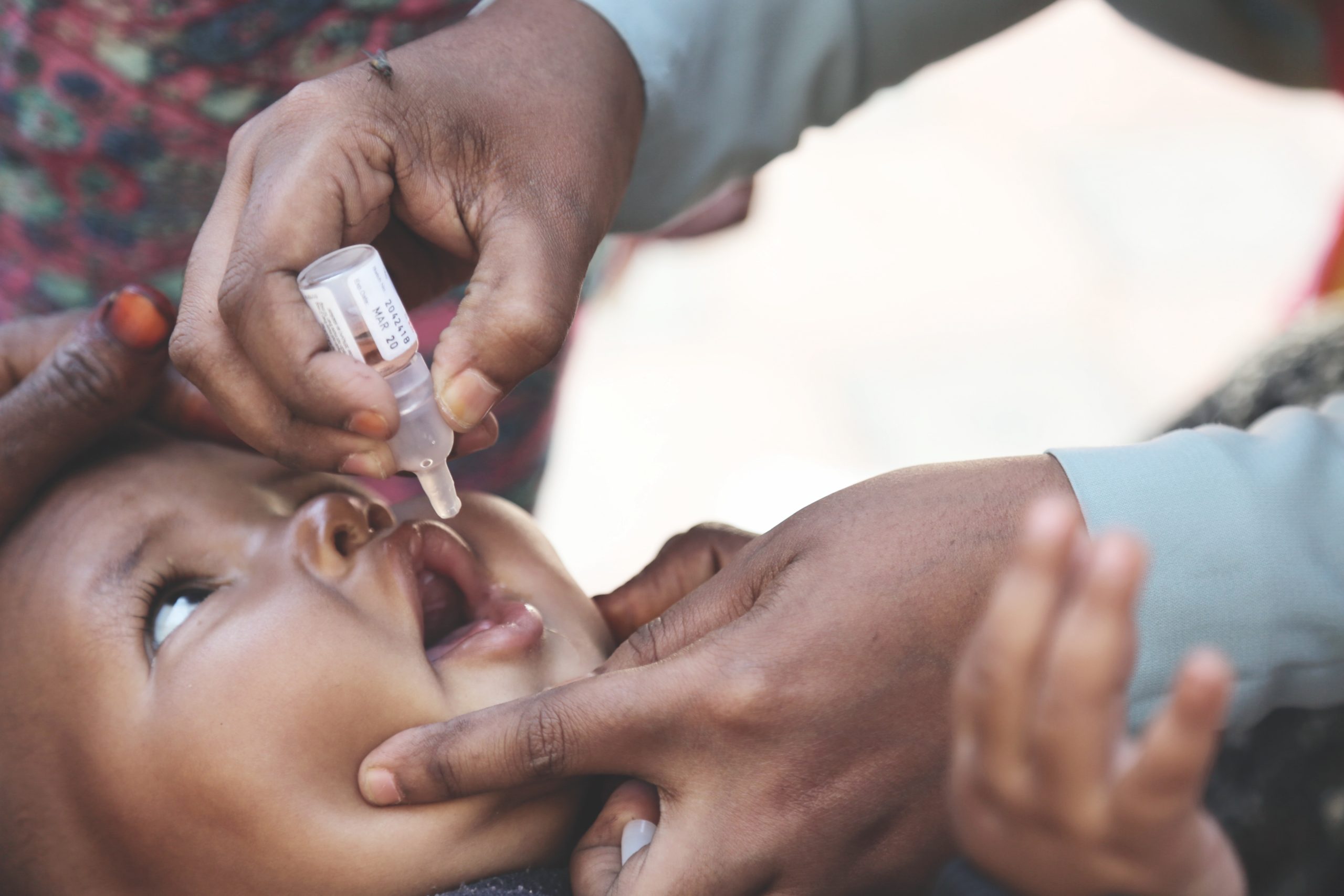
Poliomyelitis is a highly infectious disease that most commonly affects children under the age of five. Most know it as poliovirus. The virus is spread person to person, typically through contaminated water. It can attack the nervous system, and in some instances, lead to paralysis. Although there is no cure, there is a safe and effective vaccine.
World Polio Day is an annual observance when members of Rotary International, along with public health advocates and individuals committed to a polio-free world, convene to commemorate their accomplishments in the global campaign against polio. This day also provides a platform for deliberation on the requisite measures to permanently eliminate polio from the face of the earth.
Every year on 24 October, the global world observes World Polio Day to raise awareness of the importance of polio vaccination to protect every child from this devastating disease, and to celebrate the many parents, professionals and volunteers whose contributions make polio eradication achievable.
The Nigerian government has successfully eliminated wild poliovirus (WPV) and now focuses its efforts on combating circulating variant poliovirus (cVDPV2) and maintaining its polio-free status through robust vaccination campaigns, enhanced surveillance, community engagement, and strong partnerships.
The cVDPV2, which stands for circulating vaccine-derived polio type 2, is a form of poliovirus that can cause paralysis, posing a significant public health threat in under-vaccinated communities.
The World Health Organization (WHO) has commended Africa’s continued progress toward a future free of the disease, while urging countries to sustain momentum to reach every child, with every vaccine, everywhere.
This year’s theme, “End Polio: Every Child, Every Vaccine, Everywhere,” emphasises the need to ensure that no child, in any community, is left unprotected from this preventable disease.
WHO disclosed that across the continent, countries are recording major gains; between January and October 2025, 15 African countries reached nearly 200 million children with at least one dose of polio vaccine through supplementary immunization rounds. “Thirteen of these countries mounted synchronized campaigns, including in highly challenging and conflict-affected areas.
“Nigeria, once the global epicentre of wild poliovirus continues to play a leading role in sustaining Africa’s polio-free status. Since interrupting transmission of wild poliovirus in 2016 and being certified free of it in 2020, the country has focused on preventing re-emergence through strengthened surveillance and community outreach.” WHO also noted that Nigeria remains central to the fight against variant polioviruses circulating in parts of Africa.
Health stakeholders across Lagos State have however, reiterated their commitment to ensuring every child is protected against vaccine-preventable diseases, as they marked World Polio Day 2025 with renewed focus on strengthening routine immunization, addressing zero-dose challenges, and reinforcing the state’s primary healthcare system.
The commitment, made at engagement of health workers’ association in commemoration of the World Polio Day, organised under the Better Opportunities for Optimal and Targeted Immunization for Zero-Dose and Underimmunized Children (BOOST) Project, was convened by the Lagos State Primary Health Care Board (LSPHCB) in collaboration with Save the Children International, with support from GlaxoSmithKline (GSK).
Immunization Programme Coordinator, Dr. Adetola Akinpelu, said Lagos still faces a paradox; high coverage rates alongside a high absolute number of zero-dose children.
Akinpelu, who represented the Permanent Secretary, Lagos State Primary Healthcare Board (LSPHCB), Dr. Ibrahim Mustafa, stated routine immunization, which is part of his area, has been faced with firsthand barriers and challenges. “Lagos ranks among the top three states in Nigeria for immunization coverage, yet we also record one of the highest numbers of zero-dose children nationwide. It’s a paradox we must urgently address.”
Akinpelu linked the problem to Lagos’ unique demographic profile; its rapid urbanization, high population density, and growing informal settlements that often lack easy access to healthcare services.
He said: “For every child vaccinated in Lagos, it’s as good as vaccinating five children elsewhere. The sheer population pressure, coupled with mobility and socioeconomic diversity, makes our task particularly demanding.”
Reaching the hard-to-reach
Beyond statistics, Akinpelu described the practical realities faced by health workers at the frontline of immunization delivery. He cited examples of teams spending as much as two hundred thousand naira (N200.000.00) to hire boats for outreach to riverine communities, and vaccinators administering up to 60 or 70 doses a day far above the recommended 15.
Other News
“The ideal has become unrealistic. We are now strengthening recruitment, improving outreach logistics, and working to ease the burden on our health workers so that they can reach every child effectively.”
He emphasised that physical access and supply are only part of the equation. The success of routine immunization, he said, depends equally on human connection; empathy, trust, and communication between health workers and caregivers.
“A healthcare worker who listens, explains, and reassures a mother can create a lasting impact. Empathy is as powerful as the vaccines themselves,” he added.
He further disclosed that Lagos would soon conduct two rounds of polio outbreak response in November and December, following detections of circulating variants in communities such as Makoko. “Our surveillance system is working. Now we must translate that vigilance into action by ensuring no child is left behind.”
Empathy and education
Also, Policy and Advocacy Coordinator, BOOST project, Dr. Itunu Dave-Agboola, said the meeting formed part of broader activities to mark World Polio Day, in collaboration with Rotary International and partners.
“We’ve run several awareness campaigns across media platforms as well as bringing together people who make decisions, implement policies, and serve in the field to identify barriers and collectively find solutions. Discussions, which revolved around key systemic and behavioral issues from inadequate funding and workforce shortages to caregiver empathy and health worker attitudes, are crucial in effective immunization.
“We focused a lot on attitude. Caregivers sometimes miss appointments, but sometimes it’s the health workers’ approach, impatience, and lack of empathy that discourages them. Both sides need understanding and education to make progress.”
According to her, the B.O.O.S.T. Project aims to bridge gaps between policy and community realities, by creating more inclusive, data-driven, and human-centered approaches to immunization.
“Our expectation is that all hands will be on deck, we have a collective effort to strengthen collaboration between public and private health sectors; build health worker capacity for empathy, communication, and professionalism; conduct regular review meetings to monitor progress and share best practices; expand outreach to underserved and riverine communities and promote continuous public education on the benefits and safety of immunization; health workers will be supported, caregivers will be informed, and together, we’ll make sure no child is left unprotected.”
Who is affected
According to WHO, unless we eradicate polio, within 10 years, as many as 200,000 new cases could occur around the world each year. In the past few but no child anywhere is safe until every child is vaccinated.
The years, only two countries have reported cases of polio caused by the wild virus, Organisation reported that the number of African countries with active type two poliovirus outbreaks dropped from 24 in 2024 to 14 in 2025, while total virus detections decreased by 54 per cent. WHO also credited strengthened laboratory and surveillance systems across the region, with 11 WHO-supported laboratories expanding genomic sequencing capacity and six piloting advanced techniques. “Nigeria’s National Polio Laboratory in Ibadan remains a cornerstone of regional surveillance, contributing data for early detection and response.
“Environmental surveillance including monitoring of sewage systems for polioviruses has expanded to 98 per cent of countries in the WHO African Region, providing early warnings of transmission. In Nigeria, wastewater monitoring in cities such as Kano, Sokoto, Maiduguri and Lagos continues to play a key role in tracking virus circulation.
“Digital innovation has also boosted efficiency. WHO said more than 850,000 frontline health workers across Africa now receive digital payments through mobile-money platforms, with 95 per cent paid within 10 days of campaign completion. Nigeria has been a leader in implementing this system, improving accountability and motivation among vaccination teams working in remote and insecure areas.”
Despite this progress, WHO cautioned that challenges remain, including insecurity in some parts of northern Nigeria, declining routine immunization coverage in certain regions, and persistent vaccine hesitancy.
“To truly end polio, countries must sustain cross-border coordination, reach zero-dose and under-immunized children, and maintain high-quality outbreak response. Ending polio is not only about halting transmission it’s about building resilient health systems that protect every child,” WHO said.