Follow Us on Google

By Oluseye Ojo
Oyo State Government, in partnership with the United Nations Children’s Fund (UNICEF), officially launched the Supporting Sustainable Social Protection Systems in Nigeria (SUSI) Project.
The initiative, unveiled at the Executive Council Chambers of the Governor’s Office in Ibadan recently, aims to reshape the social safety net for some of the most marginalised populations in the state.
The launch attracted key stakeholders, including government officials, international organisations, and civil society representatives, all united under the cause of tackling poverty in the state.
The initiative, supported by the European Union (EU) and implemented in collaboration with the International Labour Organisation (ILO), is expected to bolster the state’s capacity to provide effective and inclusive social protection that responds to emerging challenges.
The deputy governor of the state, Adebayo Lawal, in his remarks, emphasised the government’s commitment to the SUSI programme
“The assistance of grants and whatever that may come in will meet us and push us further to reduce poverty in the land,” he stated.
Lawal announced plans for a social protection bill aimed at solidifying the initiative within the legal system, saying, “We must give this initiative legal backing so that when it begins to operate, it will do so within the ambit of the law.”
Chief of the UNICEF Lagos Field Office, Celine Lafoucriere, lauded the Oyo State Government for its promising strides in expanding social welfare.
“This gathering represents our shared commitment to transform the lives of the most vulnerable in our communities,” she noted, adding that social protection is “not a luxury, but a lifeline.”
Lafoucriere pointed out the stark reality that nearly 49 per cent of Oyo State’s population live in multidimensional poverty, yet only 11 per cent are currently captured in the social registry for assistance. She urged the state to integrate social protection measures into its financial mechanisms sustainably.
The International Labour Organisation’s Regional Manager, Guite Diop, announced that by 2027, the SUSI project would have significantly improved the state’s social registry, with particular attention to the most vulnerable households.
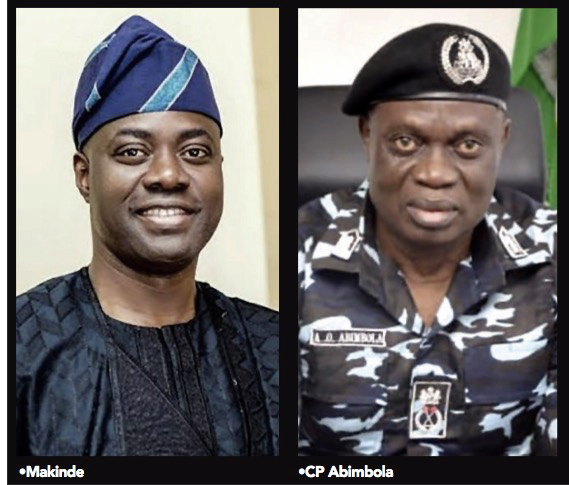
Commissioner for Health, Dr. Oluwaserimi Ajetumobi, and the Commissioner for Women Affairs, Mrs. Toyin Balogun, reaffirmed the commitment of the Seyi Makinde-led administration in the state to foster a climate-resilient population through targeted interventions, such as conditional cash transfers and revitalised healthcare services.
Following the launch, the team proceeded to Oke-Suna in Idi-Arere area of Ibadan South East Local Government on the same day to verify some names on the list of beneficiaries. The team met some of the vulnerable households in their clustered houses, checked their names and their genuine identity cards.
As a follow-up to the launch some days after the launch, UNICEF, EU-SUSI project, and Oyo State Government empowered lawmakers in the state on Programme-Based Budgeting (PBB) via a workshop to enhance the lives of children.
The workshop, held at Haruna De Plaza in Oyo town, brought together the leadership and members of the Oyo State House of Assembly Committees on Finance and Appropriation, Health, Education, Environment, and Women Affairs, to deepen their understanding of the Medium-Term Expenditure Framework (MTEF), Fiscal Strategy Paper (FSP), and Medium-Term Sector Strategy (MTSS), all of which will guide the state’s 2026 budget.
Lafoucriere, in her speech at the workshop , emphasised that the initiative was ultimately about improving the lives of children in the state.
“How resources are planned, allocated, and tracked will determine whether children can survive, learn, and thrive,” she stressed.
According to Lafoucriere, Oyo State has already demonstrated leadership by launching its first Social Protection Policy and strengthening accountability systems.
She noted that in the 2025 budget, education received ₦145billion, which is 21 per cent of the total budget, while health got ₦59billion, and social protection received ₦2.18billion, deserving it as a fourfold increase in two years.
Commissioner for Budget and Economic Planning, Prof. Musibau Babatunde, explained that the initiative was designed to validate the new budgetary framework with legislators and ensure they are fully carried along in the allocation of resources to critical sectors, such as education and health.
Lawmakers in attendance, who spoke the Chief Whip of the House, Gbenga Oyekola, who is also the vice chairman of the House Committee on Finance and Appropriation, pledged their support for the reforms.
They, noted that programme-based budgeting would improve oversight, enhance budget realism, and ensure that projects captured in the state budget have higher chances of execution.
The UNICEF’s Programme and Social Policy Manager, Muhammad Okorie, described the shift as a big transformation, saying it would ensure budgets are based not on assumptions but on clear programmes designed to solve specific problems across sectors.
Permanent Secretary, Ministry of Budget and Economic Planning, Mr. Tunde Ayanleke, represented by Director of Micro-Economic Planning, Mr. Ademola Adediran, stressed that the workshop was meant to strengthen collaboration between the executive and legislature so that “every kobo of public funds is used effectively to improve education, healthcare, and inclusive growth.”