Follow Us on Google
From Romanus Ugwu, Abuja
For some weeks since the European Union Election Observation Mission (EU-EOM) submitted its final report on the 2023 general election, the Independent National Electoral Commission (INEC) has been negatively in the news again.
Understandably, it has been so for the commission in the past four months that it murdered sleep after concluding the conduct of the 2023 poll, particularly in declaring Bola Ahmed Tinubu the winner of the February 25 presidential election.
Ever since then, INEC has resolutely and tirelessly battled to defend its actions to the point of even admitting errors and challenges in conducting the poll, but the more it tried to convince and plead with Nigerians for leniency and understanding of the enormity and gravity of the obstacles that confronted it, the more futility stared at its face and the more it incurred the anger of many Nigerians.
Hunted by unfulfilled promise ahead of the election, in the consideration of many political watchers, never in the history of the conduct of general elections in Nigeria has there been this level of animosity, controversy and endless attacks hauled at the electoral umpire than this year’s poll.
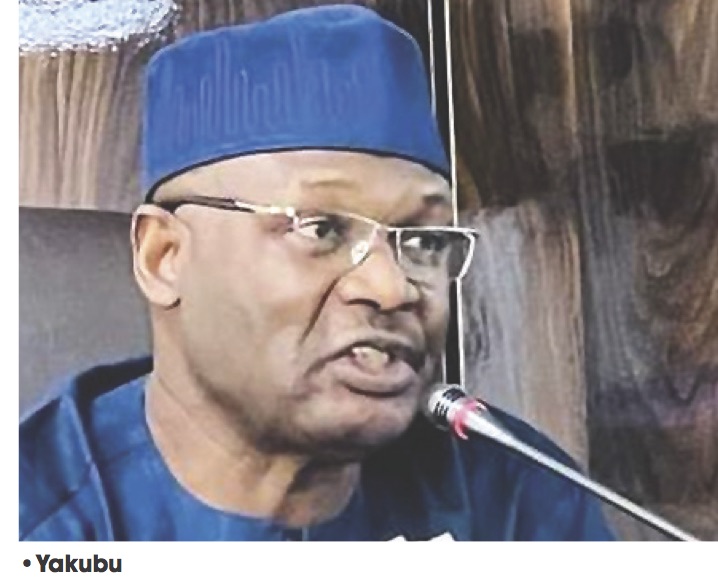
It was either that the commission is witnessing a myriad of peaceful and violent pro or anti-protest activities from aggrieved political parties and disgruntled Nigerians, demanding the immediate sack of INEC chairman, Mahmood Yakubu, or apparently sponsored youths, armed with posters, were justifying the actions of the electoral umpire through solidarity protests.
In retrospect, the attacks on the commission had consistently lasted for more than two months after the general election. And each time the commission tried to heave a sigh of relief, fresh allegations will inflame and worsen its situation.
Petrifying allegations from the Presidential Election Petition Tribunal (PEPT), unhealthy abusive comments from the political parties, unfavourable reports from domestic and foreign election observers, hostile comments from aggrieved Nigerians and persistent pro and anti-demonstrations have chained up to serve as painful constant reminders to the commission of its promises made to Nigerians and the international community but failed to keep.
And perhaps, thinking that time has healed its unpardonable errors to many Nigerians and lovers of democracy, the commission had decided to speak out and offer some modicum of explanation of what transpired in the election during its recent meeting with the Resident Electoral Commissioners (RECs).
In what looked like damage control measures, the commission had, during the meeting, explained why it deliberately refused to join issues with the diverse opinions expressed but the explanation seemed too ineffective to assuage and atone for its sins.
The defence seems to have come at the wrong time because apart from the reports both domestic and international observers submitted within the same period worsening its case, the commission, however, ended up shooting itself in the foot by confirming and admitting faults in the conduct of the poll.
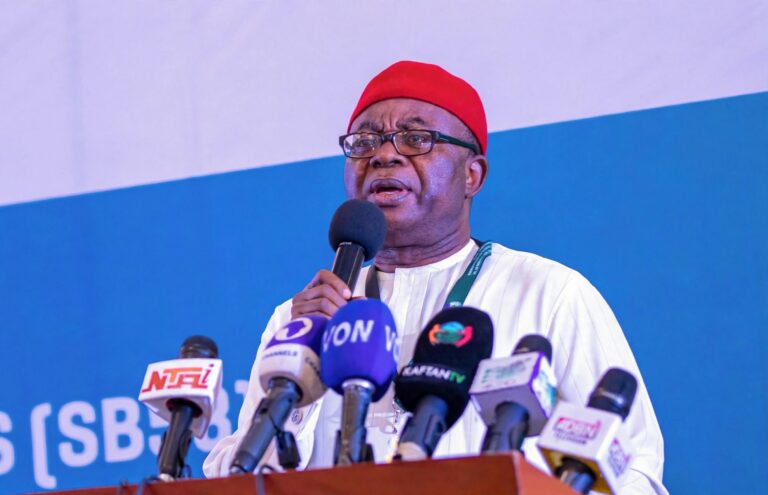
Yakubu’s words: “Since the conclusion of the election, diverse opinions have been expressed by political parties, candidates, observers, analysts and the general public on aspects of the elections that took place in February and March. Such diverse opinions should normally be expected, and the commission welcomes all of them insofar as their purpose is to improve the future conduct of elections and to consolidate our democracy.
“The commission has consciously not joined in these commentaries in the immediate aftermath of the election for several reasons. First, our preference is to listen more and draw lessons rather than join in the heated and often emotive public discussion on the election. Second, since we plan to conduct our own review of the election, we see no need to pre-empt the process. Third, the commission would not want to be seen as defensive or justificatory in joining the ongoing discussions.
“Finally, and perhaps most importantly, several issues around the election are sub-judice and it is not the intention of the commission to either undermine or promote the chances of litigants in the various election petition courts beyond what is required of us by the legal process. Indeed, practically anything coming from the commission could be cited by litigants as either justifying their claims or an indication of bias against them,” the commission’s boss noted recently.
However, in the thought of many political pundits, the commission had even worsened its case by admitting during the same meeting that it encountered human, structural and infrastructural challenges in the conduct of the poll.
While chronicling the landmark successes recorded during the poll, Yakubu however noted: “We must acknowledge that there were also some challenges, which were structural, infrastructural and human in nature. Indeed, it is in furtherance of our determination to address the challenges as we prepare for future elections that the commission is commencing its post-election review engagements.
“We are presently looking at all the evidence of infractions during the election, including the prosecution of offenders. We are looking at the activities of all actors involved in the election, including some of our high-ranking officials.
“I can also confirm that we have received 215 case files from the Nigeria Police following their arrest and the conclusion of the investigation into electoral offences arising from the 2023 general election. Similarly, we are working with the Economic and Financial Crimes Commission (EFCC) and the Independent Corrupt Practices Commission (ICPC) on the prosecution of cases relating to vote buying and associated violations,” the commission disclosed during the meeting.
If the admittance was not strong enough to put the commission on the edge and renew hostilities against it, the damning report of the EU-EOM helped to complicate and worsen the little credibility left of the commission.
The EU-EOM in its final report had among other things identified six thematic areas for improvement in the conduct of elections in Nigeria going forward.
And while highlighting some of the key areas of improvement in its priority recommendations, the EU-EOM itemised ambiguities in the law, the establishment of a publicly accountable process for the selection of INEC staff, and ensuring real-time publication of results as well as access to election results.
Other areas were the need for protection of media practitioners, discrimination against women in elective and appointive positions in addition to impunity regarding electoral offences.
Ever since the release of the EU-EOM report, there has not been any form of respite for the commission. It was like pouring fuel to an already flaming fire. It did not only rekindle protests but also gave rise to renewed agitations by the political parties to discredit the election and the commission further.
Curiously, in condemning what they called poisonous report, a coalition of Civil Society Organisations (CSOs) had, while frowning at it through protest and occupation of European Union headquarters in Abuja, claimed that it is capable of causing disunity in the country.
One of the leaders of the coalition and pro-Tinubu group, Lillian Ene Ogbole, had lambasted the EU, declaring that enough should be enough just as she warned of the implications of such a report on the fragility of a country like Nigeria.
“You would agree with me that the report of the EU is enough to trigger a national problem, enough to trigger a national chaos, our security is at stake, our sovereignty is at stake, and our unity is at stake. We are scared about the way the EU addressed our election in the report they presented. We are scared not just because it is going to affect Nigeria as a country but also because it is going to affect the whole of the African continent,” she said.
On the mission of the protesters to the EU’s office, Ene Ogbole said: “We are here to register our grievances, we are here to tell you that as a matter of urgency, the report should be withdrawn and you should come up with a report that will be favourable to Nigeria.
“How on earth can you, less than fifty people from the EU, come to Nigeria to observe an election with over 176,000 polling units, visited less than 1000 polling units of election centres and draw conclusions?
“We also want to send a clear signal to the EU. If there are other Nigerians they are using as scapegoats to send a wrong signal about our country, we want to tell them to desist from that immediately. Nigeria wants to measure up with EU countries, Nigeria wants to be like the United States, henceforth, we will not condone any false report, and we will not condone any manipulated report against our country.
“It has happened in the past; what we are seeing is neo-colonialism in disguise and we will not allow that. We want to be a sovereign country; we want to be an independent country, independent in the true sense of it. We are saying enough is enough…,” the pro-Tinubu group warned during the protest.
Equally rattled by the EU’s final report, the presidency had, while reacting angrily, described it as a product of a poorly-done desk job that relied heavily on few persons.
The statement issued by the Special Adviser to the President on Special Duties, Communications and Strategy, Dele Alake, has a blunt and brazen title “We reject EU’s conclusions on 2023 general elections.”
The statement read: “Sometimes in May, we alerted the nation to the plan by a continental multilateral institution to discredit the 2023 general elections. The main target was the presidential election, clearly and fairly won by the then-candidate of APC, Tinubu.
“We find it preposterous and unconscionable that in this day and age, any foreign organisation of whatever hue can continue to insist on its own yardstick and assessment as the only way to determine the credibility and transparency of our elections.”
The statement further stated explicitly that: “there is no substantial evidence provided by the EU or any foreign and local organisation viable enough to impeach the integrity of the 2023 election outcomes. We are convinced that what EU-EOM called the final report on our recent elections is a product of a poorly-done desk job that relied heavily on a few instances of skirmishes in less than 1,000 polling units out of over 176,000 where Nigerians voted on election day.
“We have many reasons to believe the jaundiced report, based on the views of fewer than 50 observers, was to merely sustain the same premature denunciatory stance contained in the EU’s preliminary report released in March.
“We strongly reject, in its entirety, any notion and idea from any organisation, group and individual remotely suggesting that the 2023 election was fraudulent.”
However, condemnations have continued to trail both the protest to the EU’s office and the position of the presidency, with the Peoples Democratic Party (PDP), warning the APC and the presidency to stop, forthwith, from sponsoring such protests.
Phrank Shaibu, the Special Assistant on Public Communication to the presidential candidate of the PDP, Atiku Abubakar, had cautioned them to stop any attempt to disrupt the proceedings at the PEPC.
“We seize this opportunity to send a warning to the Tinubu government and its minions against disrupting the proceedings of the election tribunal as they have shown a clear disdain for the truth by picketing the EU office.
“We find it curious that the same security agencies which have been issuing statements barring protests were curiously available to provide cover for sponsored pro-government protesters to picket the EU office. We sound a note of warning to the security agencies to be on the alert as the tribunal proceedings wind down. The world is watching,” he quipped in the statement.
The Labour Party (LP) in its reaction to the EU’s final report discrediting the 2023 general election, demanded an outright sack of the electoral umpire boss.
Director General of the Obi-Datti Presidential Campaign Council (PCC), Akin Osuntokun, at a media briefing last week, equally called for a forensic audit of the humongous funds allotted to INEC to prosecute the 2023 election, claiming that it turned out shambolic.
“We advise that those who have deployed hired protesters to the office of the EU, in respect of their election report, should desist from any further wastage of public funds, as the objective of intimidation is without basis, and has failed, from the beginning – because indeed, the irregularities in the election, were so excessively glaring, with bitter personal and reported experiences, by the overwhelming majority of Nigerians.
“At this juncture, there is no doubt that Nigerians and the international community expect the judiciary to critically examine the evidence, law, and processes of these flawed elections, in arriving at a legally correct and overwhelmingly knowledgeable verdict.
“We also demand unequivocally, the immediate dismissal from office and prosecution of Mahmood Yakubu, and the commencement of forensic financial investigation into the expenditure of budgeted disbursements and donors’ funds received by INEC… not least of which is the N300 billion appropriated from the national purse, as well as other funds and materials, received from international donor agencies,” LP noted in the last straw that broke the camel’s back.
And upset by the demand for Yakubu’s sack and prosecution, the Chief Press Secretary to the INEC Chairman, Rotimi Oyekanmi, had dismissed the call from LP.
“The reasons adduced by the LP in making the latest and familiar demand are not only illogical but also ridiculous. INEC accredited Election Observers, both local and international to monitor elections under specific rules and regulations.
“Under these rules, they were required to submit their respective reports to the commission. Such reports may or may not include their recommendations. Therefore, it is not within the remit of any election observer whatsoever to indict INEC. They are to observe and make recommendations if they have any, but never to indict.
“In the same manner, it is also not within the LP’s jurisdiction to demand the dismissal and prosecution of the INEC Chairman over the outcome of an election in which the party fielded candidates.
“Interestingly, arising from the outcome of the same 2023 general election, the LP produced one state governor, eight Senators, 35 House of Representatives members and 38 members of the State Houses of Assembly,” he said.
Head or tail, it remains to be seen how the commission will wriggle out of the clutches of the local and international perceptions of the conduct and final outcome of the 2023 general election. Since every step to remain afloat has counted against it, the commission can only bank on the passage of time and the outcome of the litigation to continue the struggle of winning the confidence of Nigerians again.