Follow Us on Google
From Joe Effiong, Uyo
The Vice Chancellor, Federal University of Kashere in Gombe State, Prof Umaru Pate, has identified ethnicity, poverty, threats from government and non-state actors, self-censorship, digital insecurity and psychological threats as some of the major challenges facing media freedom in Nigeria.
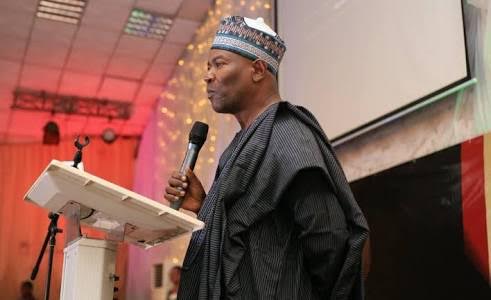
Prof Pate, who gave a keynote address during the 2023 World Press Freedom Day celebration on the theme: Shaping a Future of Rights: Freedom of Expression as Driver for All Other Human Rights, organized by the Nigeria Union of Journalists (NUJ), Akwa Ibom State Council, at the Press Centre, Uyo on Monday, explained that most media contents in Nigeria are robed with ethnic biases by journalists who have been indoctrinated to see development only from their narrow ethnic-geographical, religious or partisan prism.
Similarly, he said media houses operating on very lean budgets and cannot even pay their staff would find it difficult to generate objective and deep content as their resources are not only too limited to support such endeavours but also that their impoverished staff may not also have the mental and moral sagacity to contribute their best to produce contents that challenge institutional human rights abuses.
“The traditional media are almost collapsing; advertising that used to provide resources is now focusing on popular content producers that have large followership. It takes funds, competence and technology to generate content that will be truthful, dynamic and credible.
“But when these are lacking, it results in what we are having these days in which both the media and journalists face devastation; the contents are superficial and the journalists are passive,” Pate said,
For the media to bounce and perform their role of fighting for the freedom and rights of the people, the lecturer recommended that any crime against the media should be immediately investigated and the culprit punished, since no story is worth the life of any journalist.
He also recommended the propagation of values that social freedom is dependent on the freedom of the media; and, instituting reputable income sources for the media so as to improve the welfare of the journalists.
“The media should as a matter of deliberate corporate policy, invest in ICT, else they would continue to lose revenue, reach, reputation, resilience and relevance.”
In his welcome address, the state chairman of the NUJ. Akwa Ibom State Council, Comrade Amos Etuk, said that the Nigerian press has played critical roles in providing basic safeguards for democracy and human rights; and that their activities have added to the growing desire for the entrenchment of democratic principles and the fight against flagrant violation of the basic rights of Nigerians.
“We have had moments of triumph and times of defeat. We have had times of courage and times where we falter; but in all, the Nigerian press has shown fidelity to nation-building.
“Today, more than ever before, freedom of expression is under severe attack on many fronts… threatened by the unrestrained access to the internet and the freedom it grants to market all sorts of information many of which are injurious to national cohesion and peace.
“Social media have given rise to greater access to information both to express and to receive, but it has given room to an avalanche of socially toxic expressions that are tearing our nation apart,” Etuk said.
He enthused that the journalists in the state were able to acquaint themselves with the intense media involvement during the just concluded elections, due to the Union parading a crop of highly qualified professionals.
“Now that the elections are over, let me use this occasion to congratulate all those who have been elected to one office or the other. Let me congratulate the governor-elect of Akwa Ibom State, Pastor Umo Eno, on his victory at the polls. We also congratulate the outgoing governor, Mr Udom Emmanuel for finishing strong.”