Follow Us on Google


An Environmentalist and Researcher, Dr. Abba Maigida, has raised the alarm that environmental degradation, poor housing and unsustainable development practices are undermining the well-being of Nigerians.
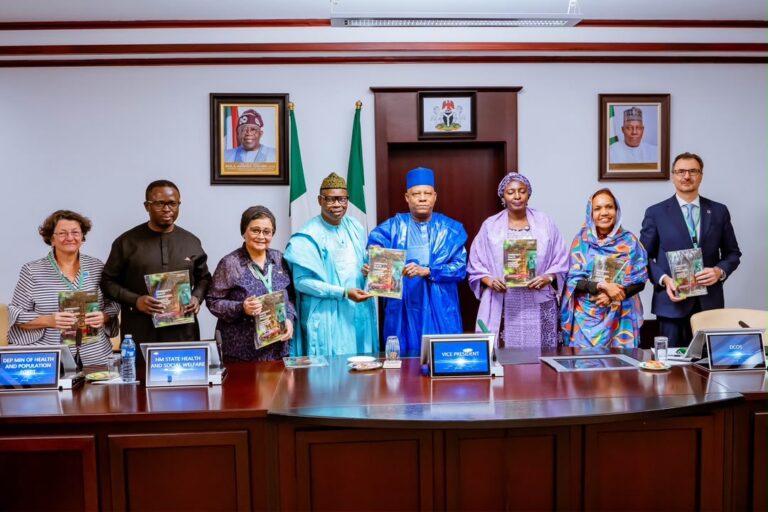
Dr. Maigida who spoke at the public presentation of his book titled “People, Nature and Environment: Pathways to Sustainable Development”, said Nigeria must adopt a development approach that balances economic growth with environmental protection and improved living conditions.
He said the book was inspired by more than two decades of public service during which he travelled across different parts of the country and witnessed the effects of environmental degradation on communities and livelihoods.
“In parts of eastern Nigeria, I witnessed the destructive impact of gully erosion on homes, roads and farmlands. In the North, I observed how desert encroachment threatens agricultural activities and rural livelihoods,” he said.
The author added that flooding in the Middle Belt frequently displaces families and destroys property, while rapid urbanisation in cities such as Abuja and Lagos continues to put pressure on housing, infrastructure and the environment.
Maigida said these experiences raised important questions about how Nigeria could pursue economic growth without destroying the natural resources on which livelihoods depend.
He also expressed concern about public servants who, despite devoting decades to national service, approach retirement without access to decent accommodation, describing their experiences as a reflection of the need to reconsider the country’s housing policies and development priorities.
According to him, the book took more than seven years to complete, drawing on field observations, research and discussions with farmers, fishermen, traditional rulers, environmental professionals and fellow public servants.
He said the publication examines environmental sustainability, housing, human development, natural resource management, climate change, community development, public policy and institutional responsibility.
Maigida explained that his intention was not to present the book as providing all the answers to Nigeria’s development challenges, but to contribute to knowledge, promote informed decision-making and encourage better management of the country’s environment and natural resources.
Reviewing the book, Professor Ishaya Sunday of the University of Abuja (UniAbuja), described it as an interdisciplinary work that connects environmental protection with human welfare, governance and sustainable development.
Prof. Sunday, who disclosed that Maigida was his student at both master’s and doctoral levels, commended the author’s commitment to research and writing.
He said the book’s central argument was that human well-being could not be separated from the condition of the environment, noting that activities harmful to nature ultimately threatened people themselves.
The reviewer said the 21-chapter publication covered issues ranging from biodiversity conservation, water and food security, waste management and ecosystem restoration to climate adaptation, environmental governance, sustainable cities and green innovation.
He also highlighted several frameworks developed by the author, including the Maigida Integrated Sustainability Framework and the Maigida Climate Adaptation and Community Resilience Framework.
In his remarks, the chairman of the occasion, retired General Alwali Jauji Kazir, a former Chief of Army Staff, stressed the importance of environmental protection and sustainable development, particularly in addressing the challenges confronting northern Nigeria.
Kazir said environmental degradation, desertification, shrinking water resources and land degradation threatened agriculture, livelihoods and community stability.
He called for practical measures, including environmental restoration, renewable energy, improved water management and stronger environmental governance, to address the challenges.
The former army chief also emphasised the relationship between environmental stewardship and national security, noting the implications of environmental pressures for displacement, migration and insecurity.
Retired AIG, Wilson Inalegwu, recalled returning to his community and former school years after joining the Nigeria Police Force, only to discover that a once-beautiful stream had largely disappeared because of development and construction within its valley.
He urged policymakers to protect the environment at the grassroots level and called for greater community participation in decisions affecting land, forests and water resources.
In a goodwill message, a representative of the Group Managing Director of Zenith Bank, Dr. Adaora Umeoji, said economic progress must be accompanied by environmental responsibility and concern for human welfare.
He said financial institutions could support sustainability through responsible lending, investment in environmentally conscious businesses and infrastructure, and consideration of environmental and social implications in financing decisions.
However, the speakers called for stronger collaboration among government, businesses, communities, researchers and individuals to ensure that development meets present needs without compromising the opportunities of future generations.