Follow Us on Google
…Pledges more transparent, competitive licensing round
By Adewale Sanyaolu
The Nigerian Upstream Petroleum Regulatory Commission (NUPRC) has declared that the era of regulatory ambiguity in Nigeria’s upstream sector is over.
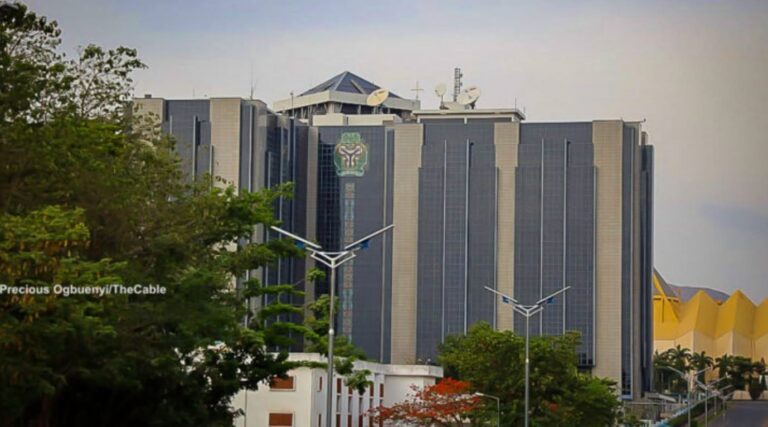
Commission Chief Executive (CCE) of NUPRC, Mr. Gbenga Komolafe, stated this when he received a high-level TotalEnergies delegation led by the President, TotalEnergies Exploration and Production, Mr. Nicolas Terraz, accompanied by the Managing Director/Chief Executive of TotalEnergies Upstream Companies in Nigeria, Mr. MathieuBouyer, and other senior executives. at the Commission’s headquarters in Abuja.
Reiterating the NUPRC’s commitment to a predictable regulatory environment, the CCE noted that the Commission is not only a regulator but a strategic business enabler in line with the provisions of the Petroleum Industry Act (PIA) 2021.
“Now, in Nigeria, we have a regulator that steps in to address the issues as an enabler,” the NUPRC helmsman stated, underscoring the Commission’s investor-centric reforms and continued drive to improve operational clarity for oil and gas companies.
Komolafe also commended TotalEnergies for its recent execution of projects under the Obagi Host Communities Development Trust (HCDT), describing the development as a demonstration of the company’s commitment to community development and the spirit of the PIA’s host community provisions.
Meanwhile, the CCE in a goodwill message at the two-day strategic media workshop for energy correspondents which ended in Lagos yesterday, pledged to a more transparent, globally competitive 2025 oil bid round.
Represented by the Deputy Director of Human Resources, Corporate Services and Administration, NUPRC, Komolafe pledged that the licensing round which begins on December 1, 2025 is anticipated to be even more transparent and globally competitive than the 2024 round as this would This initiative is designed to open new frontiers, unlock fresh prospects and further strengthen our reserves base.
Looking ahead, he said the NUPRC remains fully committed to the national aspiration of adding one million incremental barrels of oil per day to our daily production profile.
Accordingly, he disclosed that this year alone, Nigeria’s daily crude oil production has, on multiple occasions, exceeded 1.7 million barrels per day, demonstrating the capacity to surpass OPEC targets.
Other News
“Our rig count has risen to nearly 70, with over 40 rigs active. Final Investment Decisions valued in billions of dollars have been taken, and within the last 10 months, we have approved Field Development Plans worth approximately $20 billion,”.
“It is therefore clear that at the heart of both our missions, yours as the Fourth Estate of the Realm and ours, as a regulatory institution, is a shared commitment to openness, accountability and service to the Nigerian people,”
The workshop was conceived with that shared purpose in mind, to give you a deeper, behind-the-scenes understanding of the Commission’s work and Nigeria’s dynamic upstream petroleum industry.
Over the past two days, our subject-matter experts from exploration, development, production, acreage management, economic regulation, host community relations, and other critical departments have offered you first-hand insights into the sector’s evolving realities,”.
The CCE explained that one central takeaway from these engagements is that, globally, investments in oil and gas are declining as countries intensify the shift towards cleaner energy.
He, however, added that despite this global headwind, Nigeria has continued to record steady, measurable progress in the upstream sector. This, he said, has been driven by the Commission’s regulatory instruments developed under the PIA and further reinforced by President Bola Ahmed Tinubu’s far-reaching Executive Orders.
“However, as we advance these reforms and attract much-needed investments, the role of the media becomes more critical. Nigeria’s position as Africa’s leading producer depends not just on policy, regulation and geology, but also on how the nation’s story is told. The oil and gas sector is highly sensitive to perception and your reporting has the power to reassure investors or deter them.
It is therefore essential that while you continue to inform the public, such reportage remains factual, contextual and development oriented. The narrative must reflect Nigeria’s aspirations, opportunities, and progress, not merely its challenges,’’.