Follow Us on Google
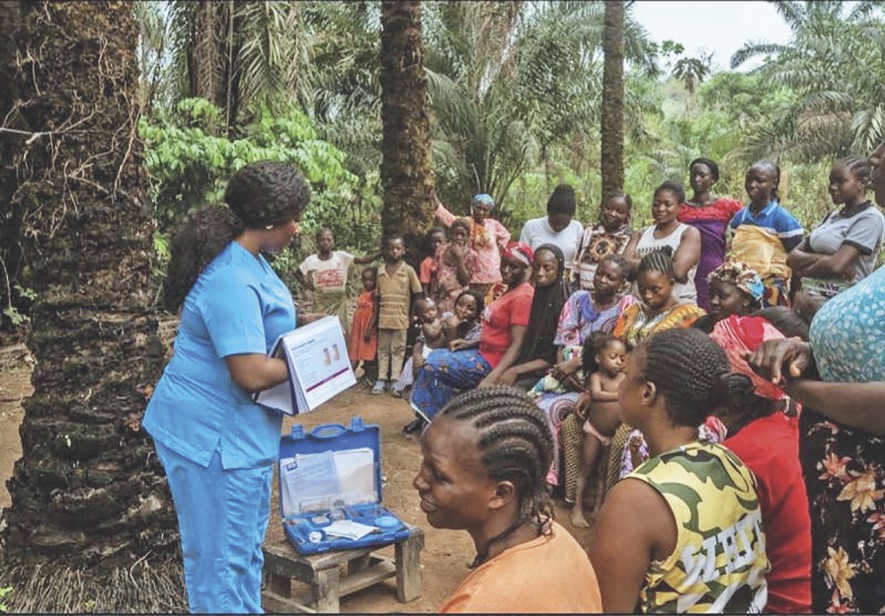
… As more women embrace use of contraceptives to control child-bearing
From Jude Chinedu, Enugu
When Mrs Jonnex Onu talks about why she chose to embrace modern family planning, she does not speak with hesitation or fear. She speaks with clarity — the kind that comes from living through Nigeria’s rising economic hardship and seeing how unplanned births can stretch a young family to breaking point.
Sitting in front of her small shop in Enugu, she explained that choosing an implant “was not only my decision but our decision,” referring to herself and her husband.
She said: “I am into family planning, and I have been into modern family planning methods for over a year now. I went into modern family planning because Nigeria is very difficult now. I have two children, and the main thing that motivated me is because Nigeria is hard and we have to plan the baby. It will not make sense that when you are struggling to get milk for the smaller child, you are already struggling to take care of a new pregnancy. My first child is four years plus and the second is two years now.”

For Jonnex, the turning point came after her second delivery. “Between the time I gave birth to my first and second child I wasn’t using modern family planning. I just calculated my monthly flow and stayed with my husband on my free period and avoided him during my fertile period. But after the second child, I decided to take a modern method.”
She opted for a method of her choice after proper counselling with full understanding and preparedness for any potential side effects. “When I took the implant, I was having spotting and irregular menstrual cycles, but later on it stopped because I took some pills. It even seized my monthly flow and I like it that way. I also added a little weight, but it didn’t bother me.”
Religion, a barrier for many women in South-East Nigeria, was not her concern. “I am a Christian, but I don’t need to go and broadcast in the church that I am taking family planning. I don’t actually want to know what the church thinks because it is not the church that provides for my family. When I was taking the method, I was properly counselled on all the side effects, so when I started spotting, I wasn’t panicking. Implant goes with hormones,” she said.
Today, she has become an informal advocate. “I have encouraged many women to take modern family planning to avoid unplanned births. The major reason is their well-being, and secondly the economic reality in this country. Things are extremely difficult, forget what the politicians tell you.”
Her story captures a growing shift in Enugu and across the South-East, where more women are finding ways to overcome misconceptions, cultural pressure and religious hesitation around family planning. It is a change now backed by strong data.
Nationally recognised demographic surveys conducted by the National Population Commission (NPC) with support from the DHS Programme, and the Multiple Indicator Cluster Survey (MICS) by the National Bureau of Statistics (NBS) in collaboration with UNICEF, show that the South-East continues to record some of Nigeria’s highest rates of modern contraceptive use.
Across the zone, modern contraceptive prevalence among women aged 15 to 49 stands between 17 and 22 per cent. Anambra leads with 22 per cent, Imo follows with about 20 per cent, while Enugu records roughly 18 per cent. Abia sits around 17 per cent, and Ebonyi, long known for lower uptake, is estimated at about 14 to 16 per cent.
These numbers, though higher than the national average, also reveal the problem: an unmet need for family planning that remains between 12 and 18 per cent. Rural women, low-income households and younger mothers are the most affected.
But Enugu is also a place where solutions are emerging from inside communities.
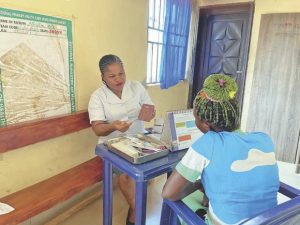
At Hilltop Health Centre in Enugu Ngwo, Family Planning Provider, Nnamani Chidimma, has spent years counselling women who arrive with fear, misinformation or uncertainty.
“The services we provide include pills, injectables, implants, hormonal IUD and Copper T. Women here take more of Sino-Implant and injectable. This month we even had a high rate of IUD. It wasn’t like that before, but once you counsel them that it is the best for their body, more women take it,” she said.
She explained that informed choice is central to their work. “When a woman comes, I take her to the counselling room and bring out all the methods. I educate her on the advantages and disadvantages. Thereafter she makes the choice herself. I don’t make it for them.”
Consent remains a complex issue, yet the centre has developed practical ways of navigating marital dynamics. “Not often do they come with their husbands but they say their husbands gave their consent. Sometimes we ask them to call him. Sometimes the husband will even call while we are talking. He will say, ‘Please do it, I don’t want her to get pregnant again — we have four kids.’”
But Chidimma also supports women who come without consent, especially when a pregnancy could endanger them. “There was a woman who had CS four times. She had a six-month-old baby and the husband still wanted sex. If she got pregnant again, it would be dangerous. I counselled her and provided the method. It was for her safety.”
Her work also reveals how norms are shifting among men. “In Ngwo now, men allow their wives to take modern methods. I also do in-reach campaigns where we announce free family planning and women come, some with husbands, some alone.”
Other News
The demographic is also changing. “I have seen girls of 18, 19 and 20 years. They always say they are married, with one or two children. Once they say they are married and want family planning, I provide it. Most come to space their births.”
At Abakpa, another family planning provider, Jennifer Ezugwu, offers a similar account. Trained by MSI Nigeria in Akwa Ibom in 2021, she says implants remain the most preferred method in her area because “injectables require women to come back every three months, and many forget.”
She has seen misconceptions decline sharply. “In the past, we had serious issues of misinformation, but things have changed. Women have realised it is their right, their body, their future. Sometimes they say their husband must agree before they take it, and I tell them the truth: it is your body.”
Her centre serves up to 50 women on campaign days and about 10 on normal days. They use town criers to mobilise women for the free sessions. “Family planning is free,” she said.
Religious institutions, often seen as barriers, are beginning to take more nuanced positions. Pastor Ifeanyi Ofili of the Redeemed Christian Church of God in Enugu believes family planning is a joint decision and not a forbidden topic.
“As Christians, our understanding is that sexual intercourse involves both partners, so they must plan their family together. We encourage spacing. A woman’s body undergoes strain with continuous childbirth,” he said.
He explained that while the church does not openly push contraceptives, it does not oppose them. “We do not encourage giving birth to children you cannot cater for, because they become a burden to the family and society. In the olden days our parents did not use modern methods, but we are in a different age now.”
Pastor Ofili admits it was once difficult to introduce the subject in church. “You know some members quote Scripture that God said we should multiply and replenish the earth. But we tell them: cut your coat according to the material available. If you cannot care for many children, listen to health professionals.”
His church now organises health talks two or three times a year. “We invite experts. They even come for cervical cancer screening. We are not health professionals, so we allow them to do their work.”
Traditional leaders are also stepping into the response. Igwe Titus Okolo, the traditional ruler of Amorji Nike and former chairman of Enugu East Local Government Area council of traditional rulers, believes culture and modern family planning are not in conflict.
“In Igboland, there is nothing that restricts a woman from giving birth to as many children as she wants,” he said. “Our prayer is that God gives people what they need to train them. But the condition of the country does not support having many children now. There is no money, no assistance from anywhere.”
He argues that spacing births is part of Igbo tradition. “In the olden days they gave three years gap, sometimes five. So family planning is not new. We are not preaching against it.”
The Igwe has made child-spacing advocacy part of his leadership. “I call the men and educate them. I tell them that while we thank God for children, we must space them for the health of our wives. I even organise other traditional rulers. Government wants all of us to help disseminate this message.”
He acknowledges that some churches remain resistant but insists that “we should not allow religion to interfere in everything.”
The combined effect of these efforts, from women like Jonnex making informed choices, to trained providers, pastors and traditional rulers, is reflected in the South-East’s comparatively high contraceptive use.
The evidence lies in the data: higher modern contraceptive prevalence than most zones in Nigeria; an increasing shift towards long-acting methods; health facilities reporting consistent uptake of implants, IUDs and injectables; improved male acceptance in some communities; and a steady decline in the most dangerous misconceptions.
But significant challenges remain. Unmet need is still high. Many rural women still rely on traditional methods. Male involvement remains low. Some churches remain cautious, and poverty still affects access. Not all women have supportive partners. And as providers note, some girls who appear at clinics are likely unmarried but feel compelled to hide it.
Still, the insights emerging from Enugu are valuable: that sustained counselling works; that community-led mobilisation reduces fear; that health workers trained by organisations like MSI and government agencies are making measurable difference; that religious and traditional leaders can shift deeply rooted norms when they choose to; and that women themselves are increasingly becoming frontline educators for others.
For Jonnex, the solution is simple. “When I want to have another child, I will remove the implant and plan for it,” she said. “But for now, things are hard. Women need to protect themselves. If you don’t plan your family, suffering will be too much.”
Her voice reflects a broader truth, that when women have knowledge, support and access to family planning, the ripple effect strengthens not just households but entire communities.