Follow Us on Google
• Our only water source has been contaminated by mining company – Protesting residents
• Protesters’ claims exaggerated, a ploy to make money from company – Monarch, others
From Jude Chinedu, Enugu
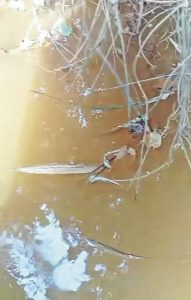
For generations, the Odu River has been the quiet lifeline of Amankwo village and other neighbouring villages in Agbada Inyi Autonomous Community, Oji River Local Government Area of Enugu State. Children learned to swim in it. Women washed cassava in it before turning it into abacha (Tapioca) and garri for the market. Farmers fetched water from it at dusk after long hours on their farms. It flowed past the edges of the community, unnoticed but essential.
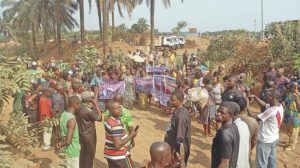
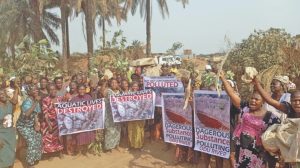
Today, the stream sits at the centre of a bitter dispute that has fractured the community, pitted villagers against a coal mining company, their traditional ruler and members of an implementation committee overseeing a coal mining operation nearby.
At the heart of the crisis are allegations by the villagers that activities of a company mining coal in the area polluted the Odu River, killed aquatic life, destroyed farms and compounded what they describe as a pattern of unfulfilled promises contained in a community development agreement.
The company and some officials, however, deny responsibility, accusing the villagers of sabotage, extortion and deliberate misinformation.
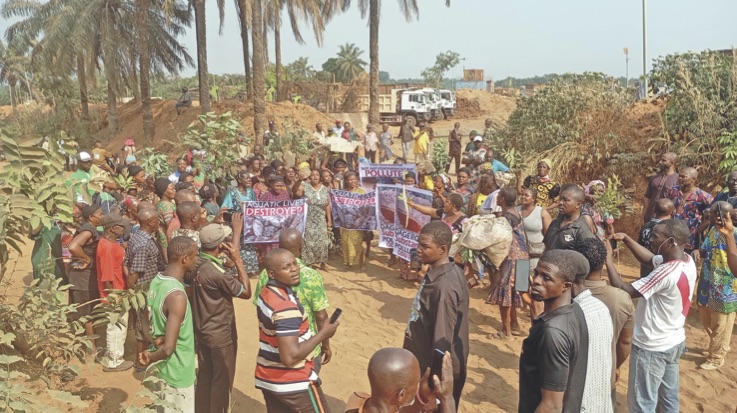
When our correspondent visited Amankwo, women, youths and elderly men held up placards along the rough, dusty road leading to the mining site. The protest, they said, had been peaceful but persistent.
Polycarp Udah, spokesman of the protesters and a member of the community Coal Mining Implementation Committee, spoke calmly but firmly.
“I am from this village, and yes, I am coordinating them in a peaceful manner. This coal mining operation started sometime last year. Since then, we have been having issues. Each time issues arise, they make promises, but those promises are not being fulfilled.
“As a community, we believe every business can have challenges, so we gave them time and room to recover and begin to fulfil their promises. But what happened to our stream, the Odu River, is where we drew the line.
“This stream supplies water to about ten hamlets here. It passes by the side of the mining site, and we fetch our water from there. We do not know what the company spilled into the stream, but very big fishes were killed, almost the entire aquatic life. After that, the river started smelling and became polluted.”
Udah said the pollution was noticed about nine days earlier and that the community complained to the authorities but no action was taken to remedy the situation.
“If not for three or four private boreholes here, people would have been stranded. Some now walk one to two kilometres to fetch water. Normally, you just walk down to the stream. This water issue is now a matter of life and death.”
He reeled out what he described as key promises made by the company under a signed agreement with the host community: expansion of the narrow road to allow two trucks pass safely, provision of five boreholes, annual scholarships, 70 per cent unskilled employment for locals, annual community support projects, and payment of N20,000 per truck of coal evacuated from the site for community development.
“One borehole they constructed is not working because there is no power. It was built in the village of the land owners but it is not working. The one meant for this community has not been done.
“They agreed to pay N20,000 per truck. We got some money from the first and second batches, but many trucks leave here daily and they have not fully settled what they owe. These funds are meant for maintaining our town hall and subsidising electricity.
“Stones from the site are dumped into the stream, blocking the free flow of water. Some workers even defecate there. There is no environmental control.”
The vice chairman of Amankwo village, Ogochukwu Nnebo, alleged that the company’s entry into the community was abrupt and intimidating.
“We woke up one day and started seeing trucks and heavy equipment destroying farms and economic trees. When we asked questions, they told us it was the governor’s project, Igwe’s project, Federal Government project, and that nobody should interfere or we would rot in prison.
Other News
“We were later told that they had agreed to sink boreholes, construct roads and give scholarships. So, we kept quiet for peace to reign. Instead, they spoiled our road with heavy trucks. We have been the ones repairing the road, not government.
“Last week, the only stream we have started changing colour and killing aquatic life. We traced it to the extreme of the site and saw where chemicals entered the stream. That is why we are protesting.”
For many women, the crisis is deeply personal and economic. Caroline Udah, a farmer and women leader, said she witnessed bulldozers flatten cassava farms when mining began and linked recent illnesses in her household to the polluted water.
“Women were crying and trying to pick the little cassava they could as bulldozers destroyed their farms. Nobody informed them before this work started.
“I nearly lost my family and friends after we ate abacha washed in the stream. Everybody started vomiting and stooling. We were weak and could not lift our hands. It took only the intervention of God for us to survive.
“They spoil the culvert repeatedly with their heavy vehicles. We have repaired it several times. When you complain, they insult you.”
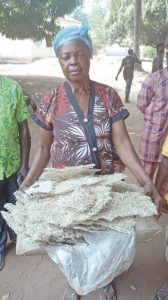
Another resident, Tochukwu Hyginus, an oil processor and farmer, fought back tears as she described losing over 50 bags of abacha after washing them in the stream.
“I hired workers to harvest cassava because we are planning for a burial. I got about 50 to 60 bags. While washing it at Odu stream, the colour of the water changed. The abacha turned black.
“I took it to the market; nobody agreed to buy it. I posted it on Facebook. Even the garri I processed with the water got spoiled. Dog trainers were the only ones buying at N500 per painter instead of N1,800.
“I have no money left for the burial. Cassava processing is how we feed our children. I appeal to government to compensate me.”
But the narrative shifts sharply when our correspondent reached out to the traditional ruler of Agbada Inyi, Igwe Ignatius Okpara. The monarch dismissed the allegations as exaggerated and accused some youths of criminal behaviour.
“No one reported anything to me or my cabinet members that anything happened. Those boys who did this are criminals. We are working well with the company in line with the agreement.
“I learnt they mounted a blockade to collect money from road users and even broke the culvert to justify toll collection. The fish they are talking about, I have not seen it. They have not shown me.
“This is just a ploy to make money from the company. You cannot just start doing anything you like in the village.”
The Chairman of Oji River LGA, Greg Chijioke Anyaegbudike, confirmed that temporary measures had been put in place.
“I arranged for water tankers to supply them because if you don’t attend to the tapioca it will spoil. What is delaying the borehole is a generator to power it, and that will be done.
“Bulldozers will start expanding the road. The miner released money for these. They should have waited for investigation to know where the contamination is coming from instead of demonstrating.”
Chairman of the Coal Mining Implementation Committee, Dr Basil Maduabuchi, was more direct, accusing Udah of leading a sabotage.
“The same Polycarp is among those who destroyed the culvert. I asked him to make a video of the fish; he refused. That type of fish is alien to our stream.
“As a veterinary doctor doing my PhD, I know the company can only use chlorine to detoxify water. It cannot cause the damage they claim.
“We agreed that the immediate remedy is to provide alternative water and then investigate what really happened. Instead, they started protesting. This is political.”
The villagers, however, insist their protest is not about stopping mining or sabotaging the company but about their survival and dignity.
“We are not asking them to stop mining. We are asking them to start fulfilling the promises they made and to give us clean water. Even if they do it in phases, we will see and appreciate their effort,” Udah said.