Follow Us on Google

One of the benefits of living in a social media age is the immediate ability to glean the views of a vast section of the public on any matter, from politics to football. The other great insight it has rendered is learning the range of extremities that a world of anonymity can unleash. Indeed, for all its upsides, the social media has laid bare a vanishing capacity, even willingness, to sustain a discussion in a decorous manner. In its place has arisen a demonstrably cynical attitude, especially in relation to opinions that diverge from ours.
In such scenarios, moderate voices are easily crowded out by bullying interlopers, stunting enriching discussions and making vapid views seem mainstream. With the country on the cusp of another Democracy Day, the preoccupation lately has been the subject of legacy projects. Not surprisingly, the dominant voices have been these self-appointed curators of public taste in whose conceited understanding of social development form often gets mistaken for substance. 
To them, the degree of a government’s success is directly proportional to the physical projects implemented by that government. But this emphasis on the physical could be misleading and may, in fact, result in ribbon development in a desperate bid by governments to be validated in the public eye. The truth is that the most enduring and impactful projects are not necessarily those with a spatial presence.
The sheer physicality of road infrastructure and the attendant fizz they create tend to obscure developments in equally critical areas of need. Real progress could be discerned in the quality of healthcare accessible to the people, the standard of public schools and the resources deployed towards their upgrade, or the living conditions in rural communities.
So, it is downright absurd if, for instance, a people crave the construction of flyovers simply for their aesthetic value than for the practical value they add to a city’s municipal life. Or, indeed, if they are constructed merely to earn some bragging rights. Flyovers are good, but the retired civil servant whose backlog of pensions and gratuities are paid years after they were due will certainly regard those settled entitlements as a better legacy project. (Indeed, arrears of gratuities in Enugu State went as far back as 2004 at the incumbent governor’s inauguration and he has been clearing this backlog every month). Same goes for that pregnant woman and her infant in a rural community who now take it for granted that securing free treatment at a state health facility is guaranteed.
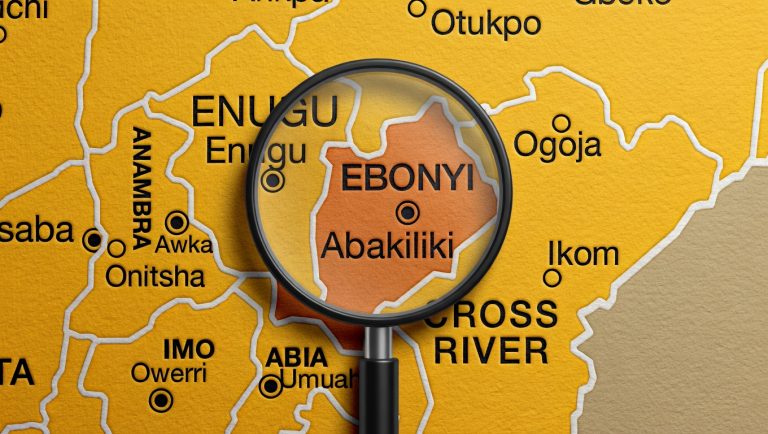
Physical developments ought to be needs-driven and not pander to populist whim merely to trumpet an achievement. Anything less might just be pork-barreling in another guise. It is in the light of this that the proposed flyover and underpass conceived by the Governor Ifeanyi Ugwuanyi administration to ease traffic gridlock at the Abakpa-Nike Lake axis in Enugu metropolis finds true socio-economic significance.
This is not suggesting that a robust social investment programme (that encompasses quality public health and education) and reliable physical infrastructure are mutually exclusive. By no means. Each of these should be considered expedient because, in their absence, the state loses its reason for existence. However, even though investing in health, education, and similar sectors does not yield the kind of traction that regularly make the headlines, they are no less important.
Ironically, investing in these critical sectors with largely intangible outcomes is by no means less expensive than committing resources to building physical infrastructure. These are key indices of human development. And the fact it is usually results arising from their survey that form the basis on which social and economic progress is measured underscores their importance.
In Enugu, it is this understanding that investing substantially in improving health, education and, indeed, in all those sectors that directly impact the human condition is just as vital as building concrete structures. The sufficient attention paid to those areas has continuously given the state remarkable scores in various development reports. As a National Bureau of Statistics report published late last year shows, Enugu State has the fourth-best doctor-to-patient ratio profile in Nigeria, with one doctor to 1,812 population. According to the report, the Federal Capital Territory (although not strictly a state) has the best ratio with one doctor to every 1,267 resident population. It was followed by Edo and Lagos with a doctor-to-patient ratio of 1:1,416 and 1:1,709, respectively.
Enugu’s impressive data stems, in part, from the rapid expansion of primary and secondary healthcare facilities by the Ugwuanyi administration, and largely from its sustained employment of doctors and sundry medical officers commensurate to the growing demands of the state’s Free Maternal and Child Health programme and recently launched Universal Health Coverage.
Although the figure fell short of the desirable doctor-population ratio of 1:1,000 recommended by the World Health Organization, it is yet further proof that the governor’s oft repeated resolve to bequeath an affordable public healthcare that caters to the needs of the people is not mere lip service. Also, the most recent (2017) Multiple Indicators Cluster Survey (a programme developed by UNICEF that measures country’s progress towards the SDGs in relation to the situation of women and children) report lists Enugu among the five states with the least child mortality rates in the country.
Enugu’s consistent top 10 position in national examinations in the last five years is a direct outcome of the governor’s intervention in education that has resulted in the massive upgrade of public primary and secondary schools. That is also because Governor Ugwuanyi believes the strength of a society does not necessarily lie in the material wealth of its people, but in how easily they are able to access quality education. His administration’s school intervention programme that has led to the construction and renovation of over 890 classroom blocks in public primary and secondary schools is just one of many other actions which demonstrate this conviction. The intervention has also led to the construction of modern lockers and chairs and equipping of several public secondary schools with computers and ICT facilities. It is not by any means a perfunctory gesture. The goal is to restore dignity to public schools.
Indeed, building gigantic physical structure and roads may attract resounding applause. No one can deny that the governor has actually excelled here, as his works in those areas have been self-evident. But he understands that no legacy is more enduring than quality and affordable education. His administration’s ongoing drive to restore public schools to their glorious era implicitly attests to that.
This egalitarianism reflects as well in Ugwuanyi’s approach to social planning which, in simple terms, can be summarized thus: development standard doesn’t have to be lower for inner city or rural dwellers and higher for posh areas that many states would normally project as poster images of their cities. Being mostly out of sight to visitors and the media – and, so, less prone to scrutiny – it is rural areas and suburbs that offer a better picture of a state’s wellbeing. It is there that the chasm between rhetoric and action is most evident.
This knowledge informed Ugwuanyi’s fitting remark in his inaugural speech in 2015: “We will continue to pay special attention to rural development because majority of our people live in rural areas”.
His administration’s spread of capital projects across the state boldly reaffirm this commitment, from the construction of the Eha Amufu-Nkalagu road abandoned for over 30 years to the reconstructed gully-ravaged road in Amurri that had never been tarred in its history, despite its significance and proximity to the council headquarters (Nkanu West Local Government Area); from the remarkable upgrade of the once dilapidated meandering century-old Milliken Hill stretch to the ongoing rehabilitation of the 26.665km Ukpabi Nimbo-Ugbene Ajima-Eziani road that cuts across several long neglected communities in Uzo Uwani Local Government Area.
Socio-economic growth is not attained fortuitously; it takes months – and even years – of scrupulous planning. As a report released last year by NBS shows, Enugu was one of only nine states that recorded a reduction in unemployment rates. The report had noted that the feat was “despite an increase in the national unemployment rate”. It was no surprise, as the World Bank Doing Business in Nigeria 2018 report had ranked Enugu as the third best state to start a business. So Enugu offers a good example of how sustained investment in nurturing small businesses and enhancing human capital can launch a state onto an enviable trajectory.
•Ani, former editor of ThisDay – The Saturday Newspaper, and Saturday Telegraph, is a senior communications aide to the governor of Enugu State