Follow Us on Google
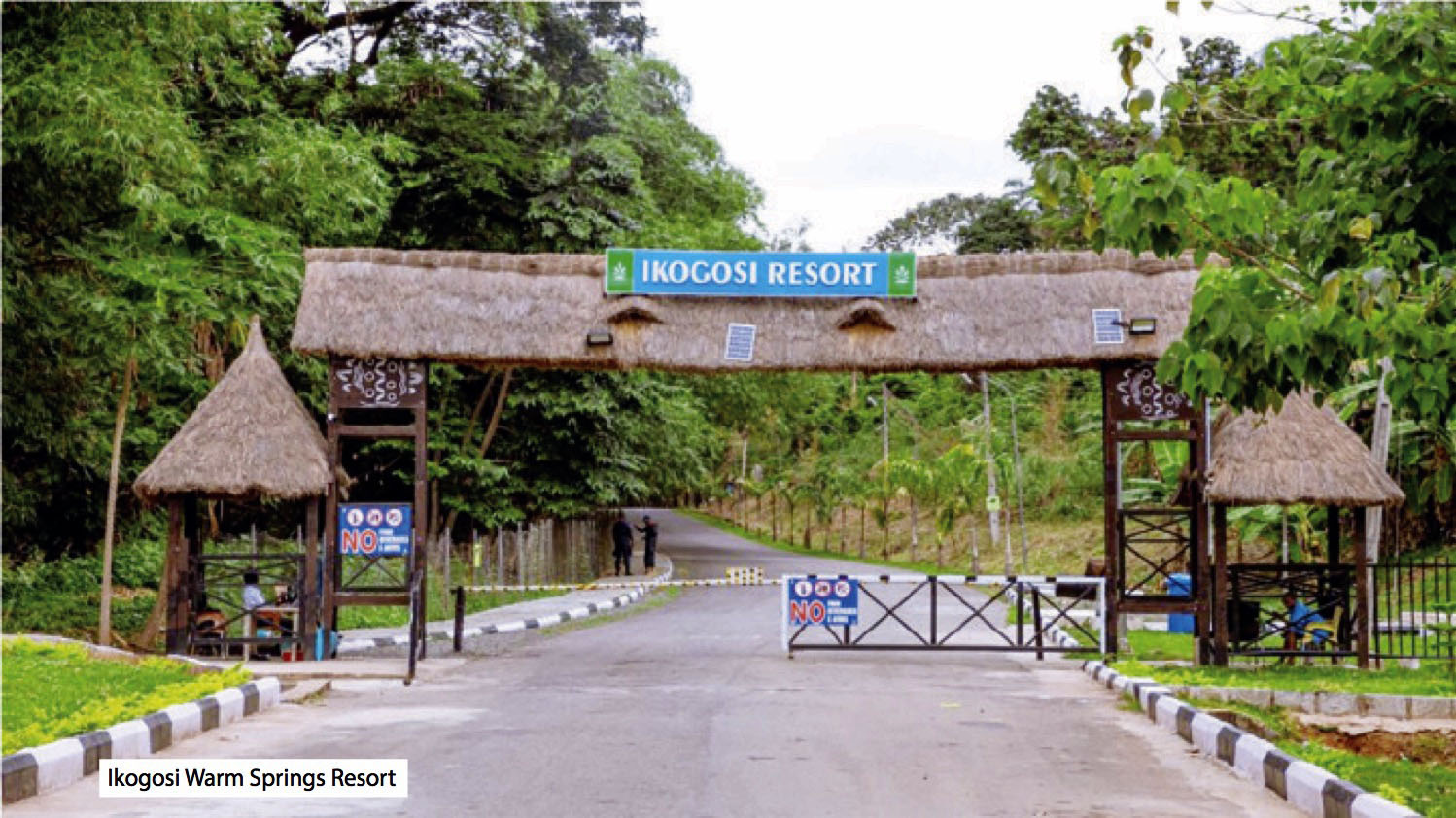
• Nigerian leaders shun local holiday resorts, opt for business, leisure tourism abroad
• Billions spent in foreign hospitals while Nigerian health sector struggles
By Fred Itua, Abuja
President Bola Ahmed Tinubu has spent approximately 270 days outside Nigeria since assuming office in May 2023, according to a compilation of official travel records and flight data. The figures show he has undertaken 52 separate foreign trips and visited at least 30 countries within the period.
Expenditure records published by GovSpend, an independent platform that tracks Nigerian public spending, show the Presidency spent N37.6 billion on presidential trips, logistics and foreign exchange transactions between June 2023 and April 2026. The spending was not evenly spread. The sum of N9.1 billion was spent in the second half of 2023, Tinubu’s first seven months in office. The figure rose to N25.2 billion in 2024, before falling to N2.7 billion in 2025.
A further N6.1 billion has been earmarked for international travel in the 2026 budget.
Of the 30 countries visited, France has featured most prominently. Tinubu has travelled to Paris at least 13 times since taking office, spending more than 50 days there across official, working and private visits, according to the same travel records. London and the United Arab Emirates follow as his next most frequent destinations.
Vice President Kashim Shettima has recorded a separate travel history over the same period, spending approximately 56 days abroad across 12 trips to 10 countries, including visits to Rome, St Petersburg, Johannesburg, Havana, Beijing, Iowa, New York, Davos, Yamoussoukro and Stockholm. An earlier tally, taken around the administration’s third anniversary in May 2026, puts the President and Vice President’s combined time abroad at 344 days since assuming office, out of roughly 1,000 days in power.
The rise in travel spending between 2023 and 2024, from N9.2 billion to N25.3 billion, coincided with the period in which the administration removed the petrol subsidy and floated the naira, two decisions that increased the cost of living for millions of households. The timing has shaped much of the public reaction to the travel figures, with critics arguing that a government asking Nigerians to absorb the cost of economic reform has not applied the same restraint to its own travel budget.
A timeline of travel
The pattern was established within weeks of Tinubu’s inauguration. On 20 June, 2023, less than a month into his presidency, Tinubu began his foreign travel schedule in Paris, attending the Summit for a New Global Financial Pact over four days. He then travelled to London on 24 June for three days of private talks with his predecessor, Muhammadu Buhari. By 8 July, he was in Guinea-Bissau for the 63 Ordinary Session of the Authority of Heads of State and Government of ECOWAS, where he was named the bloc’s chairman. A week later, on 15 July, he attended the African Union’s mid year coordination meeting in Nairobi. By 1 August 2023, he was in the Republic of Benin for the country’s independence anniversary.
The pattern, roughly one significant foreign trip every two to three weeks, has continued with some variation across the following three years. In January 2026, Tinubu spent 22 days abroad, including
10 days in France described as an end of year vacation. In August 2026, he departed Abuja for a three-week annual leave in Europe, beginning in London before continuing to France, bringing his total foreign trips to 52.
The Presidency, through its spokesman Bayo Onanuga, described the trip as a working vacation intended to prepare the President for the campaign ahead of the January 2027 election. Critics noted that the trip coincided with renewed economic hardship at home.
No foreign leader vacations in Africa
What distinguishes Nigeria’s pattern of presidential travel is its imbalance. There is no comparable documented case of a sitting American president, a British prime minister, a French president, or the leader of any major Asian economy choosing Nigeria, or any African country, as a destination for a private holiday. Western and Asian leaders travel to Africa for summits and bilateral engagements tied to a specific agenda, and typically leave once that agenda concludes. American presidents tend to holiday at Camp David or their own estates. British prime ministers favour Cornwall, Italy or Spain. French presidents have historically preferred their own coastline or other parts of Europe. None makes a habit of returning repeatedly to an African capital for reasons unconnected to official business.
Other News
Tinubu’s relationship with Paris runs in the opposite direction. He has visited the French capital more often across three years than some of Nigeria’s own 36 state capitals, raising questions about where the practical business of Nigerian governance has been conducted for extended periods of this administration.
When African leaders travel to Europe or America, the visits are usually framed around investment or security cooperation. When Western leaders travel to Africa, the visits are typically short and closely tied to a single summit or meeting. The difference in who vacations where says something about where comfort and institutional trust are presumed to reside among those in power.
The medical tourism trail
A related pattern concerns medical treatment. Nigerian leaders, presidents and governors alike, have a long history of seeking medical care abroad despite the existence of publicly funded facilities built for that purpose. Tinubu is not an exception. Before becoming president, he spent 90 days in the United Kingdom in 2021 recovering from a knee surgery.
The pattern was most pronounced with his predecessor. The late Muhammadu Buhari, between 2015 and 2023, became associated with frequent medical trips to London. Independent tallies place his cumulative time on medical leave abroad at over 200 days, with some accounts placing the figure closer to 230 days once post-presidency trips are included. His longest single absence, beginning in May 2017, lasted 104 days. In one 12-month period, he spent 154 days in the United Kingdom on medical leave, without disclosing the nature of his illness. He continued travelling to London for check ups after leaving office in 2023, and was receiving treatment there when he died in July 2025.
In 2021, the Buhari administration began construction of a 14-bed Presidential Wing at the State House Medical Centre, a facility costing N21 billion, with two operating theatres, isolation wards and diagnostic equipment. The facility was explicitly built, according to the then First Lady Aisha Buhari, so that future presidents would not need to seek treatments abroad. It was commissioned in May 2023, in Buhari’s final weeks in office. It has since remained comparatively underused.
Although no official statement was released by the presidency on the president visiting any hospital abroad during his current vacation, Tinubu has continued to be associated with reports of foreign medical consultations, prompting the Association of Medical Laboratory Scientists of Nigeria to describe the presidency as a revolving door to foreign hospitals. Public funding for the domestic facility has continued regardless. The 2026 Appropriation Act allocated over N970 million to the State House Medical Centre, of which over N300 million is earmarked for capital expenditure.
The pattern extends to earlier administrations as well. Umaru Musa Yar’Adua spent approximately 70 days receiving treatment in Saudi Arabia and Germany in 2009. The absence triggered uncertainty over who was governing the country. Goodluck Jonathan made his own trips to Germany and the United Kingdom for medical check ups during his tenure. The pattern spans four consecutive administrations over nearly two decades, regardless of party or region.
Governors follow the trend
The habit is not confined to the presidency. The Association of Medical Laboratory Scientists of Nigeria has documented similar behaviour among governors, ministers and senators, citing one former state governor, now facing trial, who sought court permission to travel abroad for treatment of hypertension despite having publicly credited himself with building a well equipped hospital in his own village. The association’s president, Dr Casmir Ifeanyi, has asked the obvious question that such cases raise, namely why officials decline to use hospitals they built with public funds.
Nigeria lost an estimated $549 million to medical tourism in the first nine months of 2025 alone, according to figures cited by medical practitioners, part of a wider outflow that earlier estimates placed at over N576 billion annually.
The accountability question
Nigeria’s health budget is not without substance. Tinubu’s 2024 health sector allocation stood at N1.48 trillion, representing 5.14 per cent of the total federal budget. The State House Clinic alone has received tens of billions of naira in construction and equipment funding across successive administrations. Yet, the pattern persists, a public facility funded and commissioned, then bypassed once its intended beneficiaries require treatment.
Medical professional bodies have become more direct in their criticism as the pattern has repeated across administrations. The Nigerian Medical Association and the Association of Medical Laboratory Scientists of Nigeria have jointly called for legislation restricting government funded medical travel abroad, except where a specific treatment is genuinely unavailable domestically and is recommended by certified Nigerian professionals. The proposal has not advanced in the National Assembly. The association described the pattern as a betrayal of public trust, arguing that facilities built by successive administrations have become largely symbolic once their political sponsors move on. They noted that for eight years under Buhari, nothing was done to make the State House Clinic reliable for the one patient it was built to serve.
The criticism is of significance, given how routinely officials who avoid Nigerian hospitals continue to defend the country’s healthcare investments during election campaigns. Nigeria has also lost thousands of its own trained doctors to emigration. The trend is often cited alongside the country’s ratio of roughly one doctor for every 5,000 citizens. The figure makes the preference among political leaders for foreign hospitals harder to justify on medical grounds alone.
What the sum total represents
Placed side by side, the travel and medical figures point to a consistent pattern. About N37.6 billion spent on presidential travel in under three years is equivalent, roughly, to thousands of kilometres of rural road construction, or the equipping of hundreds of primary healthcare centres, the same facilities whose absence contributes to the medical tourism bill and the wider crisis of public trust in Nigeria’s health system.
Nigeria’s presidents, across party lines and across nearly a decade and a half spanning Yar’Adua, Jonathan, Buhari and Tinubu, have each demonstrated a similar verdict on the country’s own institutions, expressed not in speeches but in flight records. They have not, for extended stretches, governed from the capital they were elected to serve, and they have shown limited confidence in the hospitals built and funded in their name. No foreign counterpart, in Washington, London, Paris or Beijing, has returned the pattern by choosing Abuja, Lagos or any other Nigerian city as a place to spend a private holiday of their own.