Follow Us on Google
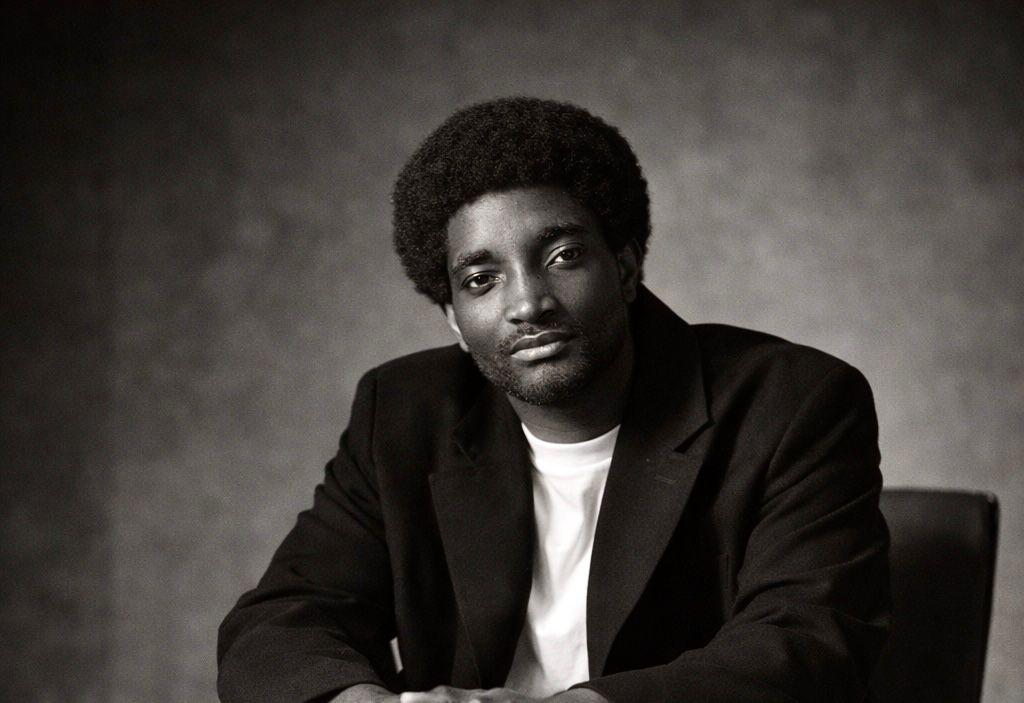
Emmanuel Adegbe is developing the edge of sustainable innovation through incorporating artificial intelligence into user experience design that is environmentally friendly. He does not only see AI as a tool to automate or achieve efficiency, but it is a strategic tool in regard to environmental responsibility.
Intelligent systems as featured in his philosophy must not only make life more convenient, but also less harmful to the environment, minimize consumption of resources, and help users make more sustainable choices. In his work, Emmanuel puts AI in the role between technological progress and environmental awareness.
In the case of Emmanuel, the eco-friendly UX starts with the design being intentional. It is his opinion that AI-based platforms should be designed to have sustainable concepts entrenched in their core. He invents systems that cut down the amount of digital waste, cut down redundant processes, and make better use of energy through adaptive algorithms and predictive modelling.
Instead of promoting overuse, his AI solutions emphasize meaningful interactions that automate work processes, minimize the amount of unnecessary data storage, and make working environments work harder in digital settings. He suggests that the real worth of AI are not complexity, but in how it will provide smarter, lightweight, and sustainable user experiences.
One of the major aspects in his approach is responsible data intelligence. Emmanuel stresses that sustainable AI should be performance-wise at the same time ethical.
He makes sure that computational power is not squandered by improving machine learning models to run smoothly and in ways that can be understood. His solutions are aimed at enhancing system responsiveness and reducing operational footprints, and this proves that innovation does not necessarily need to be at the cost of the health of the environment. To him, AI is a tool of predicting the needs of the user and also saving on resources.
Emmanuel also facilitates the sustainability of behavior using AI-based insights. He creates smart interfaces that can suggest greener options to the user by either giving a personalized suggestion, using energy-saving features or even data visualization features that point out the consumption patterns.
These characteristics enable users to make effective decisions and sustainability is no longer a passive notion but rather an active, quantifiable practice. He asserts that the most significant value of AI is not so much predictive quality, but the fact that it evokes a sense of conscious participation.
Teamwork is of key importance to his eco-friendly AI schemes. Emmanuel collaborates with engineers, data scientists, product managers and sustainability strategists to make sure that environmental concerns are in the center of the development cycles. He develops accountable and transparent systems by aligning AI innovation with ethical standards and metrics of impact.
He reckons that organizations should incorporate sustainability performance yardsticks and performance yardsticks so that the environment objectives can be monitored as seriously as the business performance.
Although the AI promises to be good, Emmanuel admits that large-scale models consume a lot of energy, there are issues of data privacy, and unwillingness to get vulnerable to keep sustainable practices in competitive markets. Nevertheless, he supports the ongoing optimization, training lean models, and responsible infrastructure selection. The way out to him is to create AI systems that are not only efficient in design but also are scalable by default without undue resource pressure, and are geared towards long-term ecological goals.
The only difference between Emmanuel Adegbe and other architects is that he can apply the abstract concept of sustainable AI to specific design outcomes. His ecological UX solutions prove that AI can be used to help make them more productive and to become better stewards of the environment.
In his model, efficiency does not entail a faster rate of consumption but rather a perfecting of the system to benefit the users and planet at the same time.
To Emmanuel, being environmentally conscious UX driven by AI is not just an IT trend it is a purpose to see to it that the future of digital transformation is smart, moral, and sustainable. He still influences a paradigm of design development by intelligently combining artificial intelligence and environmental ideals to fit the reality where development and conservation exist in balance.