Follow Us on Google
By Jubilee Isong
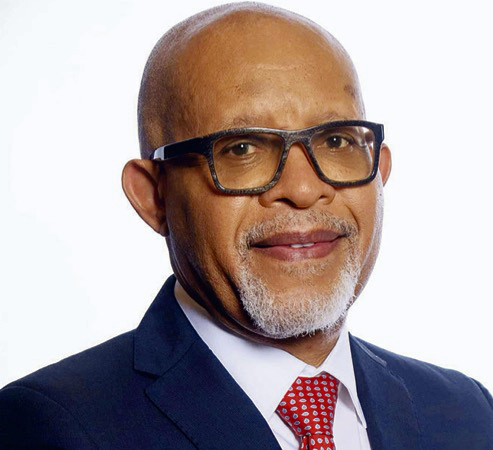
At 65, Engr. Dr. Emeka Okwuosa, CON, stands at a particularly significant intersection of personal achievement, entrepreneurial resilience and national development. For more than three decades, his name has become closely associated with the evolution of indigenous engineering capacity in Nigeria’s oil and gas industry. From returning to Nigeria in the early 1990s with a determination to build meaningful local participation in the energy services sector, Okwuosa has transformed Oilserv from a construction company into a diversified engineering, procurement, construction, installation and commissioning enterprise with a growing footprint across the energy value chain.
But the story of Engr. Emeka Okwuosa is not simply the story of a businessman who built a successful company. It is the story of an engineer who saw infrastructure as an instrument of national development; an entrepreneur who chose to build Nigerian capacity rather than merely participate in the Nigerian market; a leader who considers people, rather than equipment or capital, the most important asset of an engineering organization; and a philanthropist who has extended his philosophy of nation building beyond business into education, healthcare and basic social services.
As he marks his 65th birthday, his career offers a compelling reflection on what indigenous enterprise can achieve when vision is matched by determination, reinvestment, technical competence and an enduring sense of purpose.
Engr. Okwuosa’s journey began with engineering. He studied Electrical and Electronics Engineering and subsequently worked with Schlumberger International, gaining professional experience across 13 countries before returning to Nigeria in 1993. That return was decisive. At a time when the Nigerian oil and gas services industry was still heavily dependent on foreign technical capability, Okwuosa came home with a clear objective: to establish a company capable of strengthening Nigerian participation in the industry.
That ambition would eventually become Oilserv. What started as a construction company progressively evolved into a full EPCIC enterprise (Engineering, Procurement, Construction, Installation and Commissioning) with a particularly strong position in gas infrastructure. For Dr. Okwuosa, this evolution was not accidental. It was part of a deliberate strategy to build capability across the value chain and position an indigenous Nigerian company to undertake projects of increasing complexity.
Today, Oilserv Group has expanded beyond its flagship EPC business into a group of companies participating in engineering, energy, exploration and production, non-destructive testing, gas utilization and other emerging areas.Yet the underlying philosophy remains the same: build capability, create value and remain relevant to Nigeria’s development needs.
Few things illustrate Engr. Okwuosa’s professional legacy more powerfully than Oilserv’s record in gas infrastructure. As he explained in his recent interview with BBC and Times Africa Magazine, natural gas presents a unique infrastructure challenge. Unlike crude oil, gas cannot simply be stored and transported in its natural state at scale without specialized facilities. Its utilization therefore depends heavily on infrastructure capable of processing, transporting, distributing and delivering it to the point of consumption. That is the space Oilserv has deliberately occupied. Engr. Okwuosa states that the company has built more than 70% of Nigeria’s gas pipeline infrastructure in the Nigeria’s Gas Master Plan since 2000 and employs close to 2,000 people.
Its project portfolio tells the story. In 2001, Oilserv delivered its first full EPC project through the Lagos Gas Distribution System for GasLink. That project marked a critical transition from construction-only operations to integrated engineering, procurement and construction delivery. The company subsequently delivered gas supply infrastructure for several National Integrated Power Projects, helping to address a critical infrastructure gap: gas turbines had been installed, but the pipelines required to deliver gas to the power plants had not been completed.Oilserv’s intervention helped bridge that gap.
The company also constructed the 128-kilometre gas pipeline linking Ukanafun in Akwa Ibom State to Mfamosing in Cross River State, traversing difficult terrain and delivering the project on schedule and below budget. Then, came OB3. The Obiafu-Obrikom-Oben pipeline became another defining chapter in the Oilserv story. Okwuosa describes it as the largest-diameter pipeline built in Nigeria, an infrastructure achievement complemented by a 2 billion standard cubic feet per day gas treatment plant. And there is the Ajaokuta-Kaduna-Kano, or AKK, pipeline.
For Engr. Okwuosa, AKK is more than another engineering project. It is a strategic piece of the Nigerian Gas Master Plan, with the capacity to move gas to northern Nigeria, support industrialization and potentially serve as a catalyst for broader regional energy infrastructure.At 65, therefore, Engr. Dr. Emeka Okwuosa’s legacy is literally embedded in the infrastructure beneath Nigeria’s economic landscape.
Perhaps one of the most revealing aspects of Engr. Okwuosa’s leadership philosophy is his definition of what makes a company successful.It is not primarily equipment; It is not technology; It is not even capital; It is people. “Our success factor is based on our people,” he says. That statement encapsulates much of the philosophy that has shaped Oilserv.
Pipeline construction is rarely straightforward. Projects traverse difficult terrain, forests, mountains, rivers, and communities. They encounter security challenges, environmental considerations, multiple stakeholders and logistical complications. Yet the contractor must still deliver within the contractual budget and schedule.
For Engr. Okwuosa, this requires a culture of project delivery anchored in determination and discipline.Equipment may enable an organization to execute a project, but people make the equipment productive. That belief has informed Oilserv’s investment in human capital development.More than two decades ago, the company established structured technical and graduate training programmes. Technical personnel, including operators, welders, fitters and other skilled workers, are trained to develop specialized competencies, while graduates undergo programmes designed to prepare them for specific areas of the business. The company also accommodates industrial trainees and members of the National Youth Service Corps (NYSC), providing opportunities for young Nigerians to acquire practical, on-the-job experience.Importantly, some of those trained are subsequently retained.
For Engr. Okwuosa, however, the value of the investment does not disappear when a trained employee eventually moves to another organization. He regards the development of people as a contribution to national development.That perspective is particularly significant in an economy where the shortage of technically skilled manpower remains a major constraint to industrial growth.
Another defining characteristic of Engr. Okwuosa’s leadership is his emphasis on reinvestment.Building large infrastructure projects in an emerging economy requires more than technical capability. It requires financial credibility.A major project can demand performance bonds running into millions of dollars before physical execution even begins. For an indigenous company to secure such financing, it must possess a credible record of delivery and a level of institutional trust that financial institutions can rely upon. Dr. Emeka Okwuosa attributes Oilserv’s ability to navigate this environment to a combination of purpose, determination, financial discipline and a consistent record of project delivery.
The principle is straightforward: deliver what you undertake, preserve your credibility and reinvest in the institution. This has also produced a culture of continuous renewal.
Engr. Okwuosa explains that Oilserv periodically reviews its systems and processes to determine what is working, what needs improvement and how the organization can become better. The current expression of this philosophy is the Oilserv Rejuvenation Programme. It is a reflection of a leadership belief that success cannot be treated as a permanent condition.What worked yesterday may not be sufficient tomorrow.
Technology changes. Markets change. Customers change. Regulations change. Competition changes. The organization, therefore, must change as well.
Other News
That philosophy has driven Oilserv’s investments in enterprise systems and technology. The company deployed SAP S/4HANA, which he describes as the first deployment of the system by an entity in Nigeria at the time. For him, technological leadership is not about adopting technology for its own sake. It is about ensuring that the institution remains ahead of the curve.
At 65, Engr. Dr. Emeka Okwuosa, CON is not looking backwards.If anything, his vision for the future is more ambitious than the achievements that have already defined his career.The Oilserv Group is increasingly positioning itself beyond traditional EPC contracting. Through FrazEnergy Limited, the Group is pursuing gas utilization opportunities spanning processing, storage and delivery. Its portfolio includes a CNG plant, participation in an LNG development and plans around a major methanol project.Other businesses within the Group are active in engineering, exploration and production, non-destructive testing and industrial agriculture. This diversification reflects a strategic understanding of the energy transition.
Engr. Okwuosa does not view the future simply as a binary choice between oil and renewable energy. He sees natural gas as a critical bridge.Africa requires reliable and affordable energy to industrialize. At the same time, the global energy system is progressively moving toward lower-carbon sources. Gas, in his assessment, occupies an important intermediate position between the traditional dominance of oil and the eventual expansion of renewables. That creates opportunities not only in pipeline construction but across the gas value chain, from production and processing to transportation and utilization.
The possibilities are enormous: LNG, CNG, methanol, urea, fertilizer and gas-based industries. The implication is clear.For Engr. Okwuosa, the next chapter of Oilserv’s story will not be defined solely by building pipelines. It will increasingly involve helping to build the industries and infrastructure that enable Nigeria to convert its abundant gas resources into economic value.
Engr. Okwuosa’s vision is also increasingly continental.Oilserv’s activities and ambitions extend beyond Nigeria into countries including the Republic of Benin and Uganda, with efforts to establish a presence in Gabon and the Republic of the Congo.
The objective is not simply geographical expansion.It is to apply Nigerian engineering capability to the development of Africa’s energy infrastructure, particularly gas infrastructure. That is significant because many African countries possess substantial gas resources but lack the infrastructure required to process, transport and utilize them effectively.
For Engr. Okwuosa, that infrastructure deficit represents both a development challenge and a business opportunity. Gas, in his view, remains central to Africa’s future energy architecture. The broader message is that African energy security will require African technical capacity.And Nigerian companies with demonstrated experience have a role to play.
Perhaps the most personal dimension of Engr. Okwuosa’s story is his philanthropy.The philosophy behind his foundation (Sir Emeka Okwuosa Foundation – SEOF) can be traced to his upbringing.He recalls growing up watching his parents, who were teachers, engage in philanthropic activities even without being wealthy. That experience shaped his understanding of social responsibility.
His early interventions focused on basic social infrastructure, water boreholes, roads and support for indigent people. Over time, the foundation’s activities evolved around three major areas: social services, education and healthcare.
In education, the foundation moved beyond scholarships to the construction and funding of the Dame Irene Okwuosa Memorial Convent in Oraifite, Anambra State, named after his mother. But it is in healthcare that the scale of the philanthropic intervention has become particularly remarkable.After initially organizing medical outreach programmes involving medical professionals from the United States and Europe, Engr. Okwuosa reached a conclusion: rather than repeatedly bringing medical services into communities, a permanent specialist facility was required.The result was the establishment of a cardiothoracic hospital.
Commissioned in 2022, the hospital has provided over 224 successful open-heart surgeries and interventional cardiology services to adults and children since 2022 – July 2026, with a significant proportion of beneficiaries being indigent Nigerians. International medical teams comprising dozens of medical personnel participate in specialized medical campaigns, while the foundation subsidizes or pays for treatment for patients who cannot afford the cost. For Engr. Okwuosa, this is not merely philanthropy. It is an attempt to fill a structural gap in Nigeria’s healthcare system. The next phase of the vision includes expanding into nephrology and dialysis, followed eventually by oncology. It is a distinctly Okwuosa approach: identify a gap, understand what it takes to address it, build the required capacity and create something sustainable.
There is a recurring word in Dr. Okwuosa’s reflections on his career: purpose.
Purpose explains why he returned to Nigeria.Purpose explains why Oilserv continued investing during difficult periods.Purpose explains the emphasis on training.Purpose explains the willingness to reinvest. And purpose explains the philanthropy. His career has unfolded through some of the most challenging periods in Nigeria’s economic history. Oil prices have collapsed. Projects have slowed. Financing has become difficult. Infrastructure deficits have persisted. Yet the company survived, and continued to evolve. That resilience is perhaps one of the clearest indicators of the institutional legacy Engr. Okwuosa has created.
Companies can be built around favorable markets. Enduring institutions are built around values. At 65, Engr. Okwuosa’s record suggests that his greatest contribution may not be any single pipeline, treatment plant, engineering project or business venture.It may be the institution he has built around the conviction that Nigerians can develop, own and execute world-class technical capabilities.
For a man who has spent much of his professional life building infrastructure for the future, 65 is unlikely to represent a period of retirement or retreat. Instead, it appears to mark another point of transition. The next phase is about deepening Oilserv’s role in gas utilization, expanding across Africa, strengthening technology and enterprise systems, developing human capital, and investing in businesses capable of translating Nigeria’s natural resources into industrial and economic value.
It is also about continuing the humanitarian work that has become an important part of his identity.The engineer and the philanthropist may appear to operate in different worlds. But in Engr. Okwuosa’s case, they are driven by the same philosophy. Build. Develop. Create capacity. Solve problems. And leave something useful behind.
His professional journey, from an engineer who worked across 13 countries, to an entrepreneur who returned home to establish the most decorated indigenous company, to the Chairman and GCEO of a diversified energy group, is ultimately a story about the possibilities of local capacity. It is a story about what happens when technical knowledge meets entrepreneurial courage. It is a story about resilience in an industry that has repeatedly tested the endurance of businesses. And it is a story about the conviction that success carries an obligation to contribute to society.
As Engr. Dr. Emeka Okwuosa, CON, celebrates his 65th birthday, the most appropriate measure of his journey may therefore not be the number of years behind him.It is the infrastructure he has helped build, the people he has trained, the lives he has touched, the institutions he has established, the businesses he has created, the communities he has reached and the possibilities he continues to pursue. At 65, the Oilserv story is far from finished. For Dr. Okwuosa, the next chapter is already being engineered.
• Isong is of the Corporate Communications & Brand Management dept. of Oilserv Limited