Follow Us on Google

From Obinna Odogwu, Awka
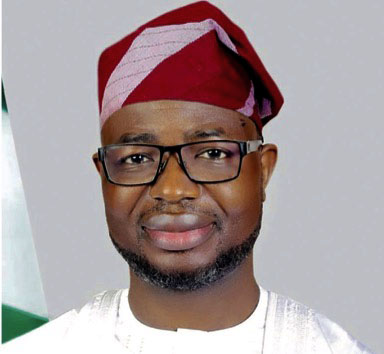
Pioneer Managing Director/Chief Executive Officer of the Anambra State Fisheries and Aquaculture Business Development Agency (FABDA), Emeka Iloghalu has lamented the poor utilisation of the multibillion-dollar business opportunities in agricultural products by the Nigerian government. In this interview, the man spoke on operating fisheries and other agricultural businesses in Nigeria and how the country can make a fortune out of it.
What is the Fisheries and Aquaculture Business Development Agency (FABDA) all about?
FABDA is about fisheries. It has a clear mandate. In the Ministry of Agriculture, there are several commodities. But the structure of the ministry is not such that will build or develop business. In the first instance, the Ministries of Agriculture across the nation were historically created and structured as a support system. They run on a welfarist mechanism such that so-called poor farmers are given extension agents that go and teach them farming systems. And in recent times, the trend tends to be changing but the actions, activities and the structure of the Ministries of Agriculture in the system have not been transformed or modified accordingly to be able to support business development and economic emancipation trends. So, the Anambra State government, together with the organised private sector came to the point of focusing and taking the bold and courageous step of having an institution in the government that is mandated to develop and grow and stabilise the economy of fisheries and aquaculture so that the economy can be grown.
What and what did you do to make the agency stand firm?
One of the first activities was to organise the private sector. And the fisheries and aquaculture value chain innovation platform for Anambra State is organised in such a way that they now have a president and other associated executives that are mainly the heads of the other activities in the value chain. They include the dried fish sellers association, the fresh fish sellers association, the fish processors’ groups, the consultants and so on. So, in Anambra State as at today, we have a very organised and structured fisheries and aquaculture economy that is thriving as a matter of fact.
From the time this agency was set up to this moment, what has its success story been like?
Number one, we have developed a lot of human resources. We have also supported a lot of fish businesses in diverse ways. Like I earlier mentioned, we have 16 segments. Examples of such segments are the fingerlings production, the table fish production, the processed fish production, the capacity building, the marketing, the water and pond construction, the equipment fabrication, the pharmaceuticals, the regulators, the standard assurance and insurance, the veterinary services segments and so on. With all these segments, each of them has input and output; each of them is structured in a professional manner such that the actors in these segments are acting for the same central purpose of stabilising, upholding, promoting and progressing the fisheries and aquaculture economy in the state. Number two, we have done trainings and will continue to do trainings because it is part of our daily activities. We give business guides, referrals, linkages. We link the actors in the value chain and several segments together. For example, the fingerlings producers are linked to the table fish producers to off-take the fingerlings from them. And the processed fish dealers are linked to table fish producers that buy from them. The consultants also come here. Sometimes people want to go into the fish production business. We link them to the appropriate consultants or groups that will guide them. Today we have over 2,000 fish businesses.
Tell us about your partnership with Norway and other international organisations and what people stand to gain from it
We have an ongoing and growing partnership with the Seafood Council of Norway. They have strong competence and expertise in what is called cage culture and we have a lot of water bodies in Anambra State and none of them has been developed till date except the existing traditional fishing methods. So, we are hoping that in our partnership with the council, we are going to be able to advance in developing these areas; utilising our abundant water bodies in Anambra State. Also, we have the Fish and Agriculture Organisation of the United Nations (FAO) in an ongoing project called Fish for ACP. It means Fish for Africa, Caribbean and Pacific. This project involves 12 countries – nine from Africa and three from the Caribbean and Pacific. And the objective is to be able to increase fish production in Africa, Caribbean and Pacific. Catfish value chain was selected and lots of information about what we do and the structure of our operations had gone into contributing to the development and advancement of this project in Nigeria.
Anambra has many water bodies. Is there any way the waters – streams, rivers, lakes, etc can be utilised to produce fish in their natural habitats?
I just mentioned that we are nurturing our relationship with the Seafood Council of Norway. One of the things we are looking at is cage culture. Cage culture means that you put a cage in natural water bodies and then do construction to have access to the cages. And then you will be feeding the fishes under captivity in the natural water body. And when they are grown, you harvest them. You can use a crane or other methods to harvest them and then put another one to continue the production instead of building physical ponds. So, this way we utilise our natural water bodies and then we can also grow several of these different species of our freshwater fish. It is part of our mandate in this agency and we are advancing that partnership already. We’ve been on it for some time and it’s yielding fruits. So far so good.
Some people believe that the Ministries of Agriculture at the state and federal levels should be unbundled to make them more effective in food production. What’s your take?
Anambra State has taken the lead in unbundling the activities or commodities within its Ministry of Agriculture. And a clear example is the establishment of Fisheries and Aquaculture Business Development Agency (FABDA). We have other commodities other than fishery. Nothing stops any government, including ours, from taking off from cassava and expanding its value chain. If you look at cassava, for example, you will see that there are several products you can get from the product. You can get starch, fufu both wet and dry; flour for baking, tapioca, garri and several others from just roots. Then, you can get several others from the leaves and stems. So, there is a huge economic potential that is locked in cassava as a commodity. There could be an agency that is dedicated to expanding the cassava value chain and structuring it in such a way that economic activities will be released and a lot of wealth creating activities will be unleashed and we will be able to expand our economy just from cassava. The economic potential and value of cassava could even be more than fish. Unbundling leads to creating more wealth-creating avenues and consequently jobs. This is because as you’re creating wealth and making companies and ventures, it is human beings that will naturally work in those places and these are jobs.
What can we do to turn agriculture into a big business in Nigeria?
We have cassava, potato, rice and maize. You can group them in different ways. You have roots, grains, vegetables and others. We are sitting on gold. We have fertile lands. We have several other ways to propagate these crops. Some of them do not take too long to mature. Vegetables will take weeks and they are ready. Potatoes will take a few weeks and they’re ready. Yam takes at most half a year; maize takes three months and so on and so forth. The ministries of agriculture are not structured to produce entrepreneurs. Everybody knows that and it’s not in contest. And all this while, the government and others have been saying that agriculture should become business. Clearly, something is still missing and as much as we say agriculture should be business, the next step is marching them with the existing agricultural commodities so that we will be able to have value and have outcomes which will increase the economy of our state and our country. We need to take the next step of taking another commodity. I mentioned cassava. It could be rice; it could be maize; it could be soya beans, it could be any other commodity.
You mentioned that fish is the main source of Norway’s revenue followed by crude oil. Where will you place Nigeria in terms of fish production and what do you think we can do to improve on what we have at the moment?
The last published data about Nigeria’s fish production, consumption and all that, known to me, is 2001. I stand to be corrected if I am wrong. That’s about 20 years ago. Now, all the other data we are getting today, we get them from the Federal Department of Fisheries and they have not been officially published. But the reality is that it is not easy to publish this data. Why? It is because of the same thing I mentioned about the structure of the Ministry of Agriculture. The Federal Department of Fisheries is a department in the Federal Ministry of Agriculture and Rural Development. You see, the Federal Ministry of Agriculture and Rural Development, from the name were created for rural development. But we need to change gear. The reason is the mechanism to get this data and correctly is not really in place. So, the consultants go to the so-called fish farmers. Meanwhile the so-called fish farmers are looking up to them for solutions. You may see that somebody invested in fish business. He grows his business and he thinks that because he read fisheries and aquaculture, he must be the doctor there. He must be the marketer, accountant and everything. This is part of our challenges especially in this country. We should have fish companies that have an objective of making money in the fisheries and aquaculture sector.
How?
A fish company makes its business plan and assembles the set of staff that will help it to achieve its business objectives. There must be roles for the fishery officers, those that read fisheries and aquaculture. There must also be roles for others like engineers, accountants and several other professionals that will help and play several other stake-holding roles in the business objectives of that fish company. Today, we don’t have fish companies defined as they should. You will be able to relate to the volume they produce per time which will be able to translate to their economic standing. That is the basis and structure you can use to try to regulate, guide and grow. But as it is today, there is nothing like that. It is only FABDA that has been structured in such a way. And with the success we have at FABDA, it is not difficult to relate and understand and even copy and paste in other states and at the federal level. This way, we will be able to say with certainty that a state is producing this volume of fish per annum. We need to have standard that everybody can relate to. Not private standards. I am afraid that we may not have accurate statistics of what we are producing as a country.
What plans do you have for this agency in terms of advancing businesses, fish productions, adding value to the economy and others?
We are hoping that by the end of next year, we should be able to point at fish companies in Anambra State that are thriving. We are envisaging that we should be able to see fish companies that would be able to show its annual financial report, show its assets and liabilities; like a standard business, not just the informal forms of farms that we have everywhere today. We are looking at that. Once this begins to happen and take shape, it means that we will be attracting more investors that will be able to invest more easily with clear models and clear direction as against having to go through tortuous processes to be able to navigate their way through.