Follow Us on Google
• Real-time transmission only way to guarantee credible election – PDP, ADC
• Rejection will sustain public distrust – Lawyers
• Cleric petitions US, UN, others
By Ndubuisi Orji, Godwin Tsa, (Abuja), Lukman Olabiyi (Lagos)Tony John (Port Harcourt)
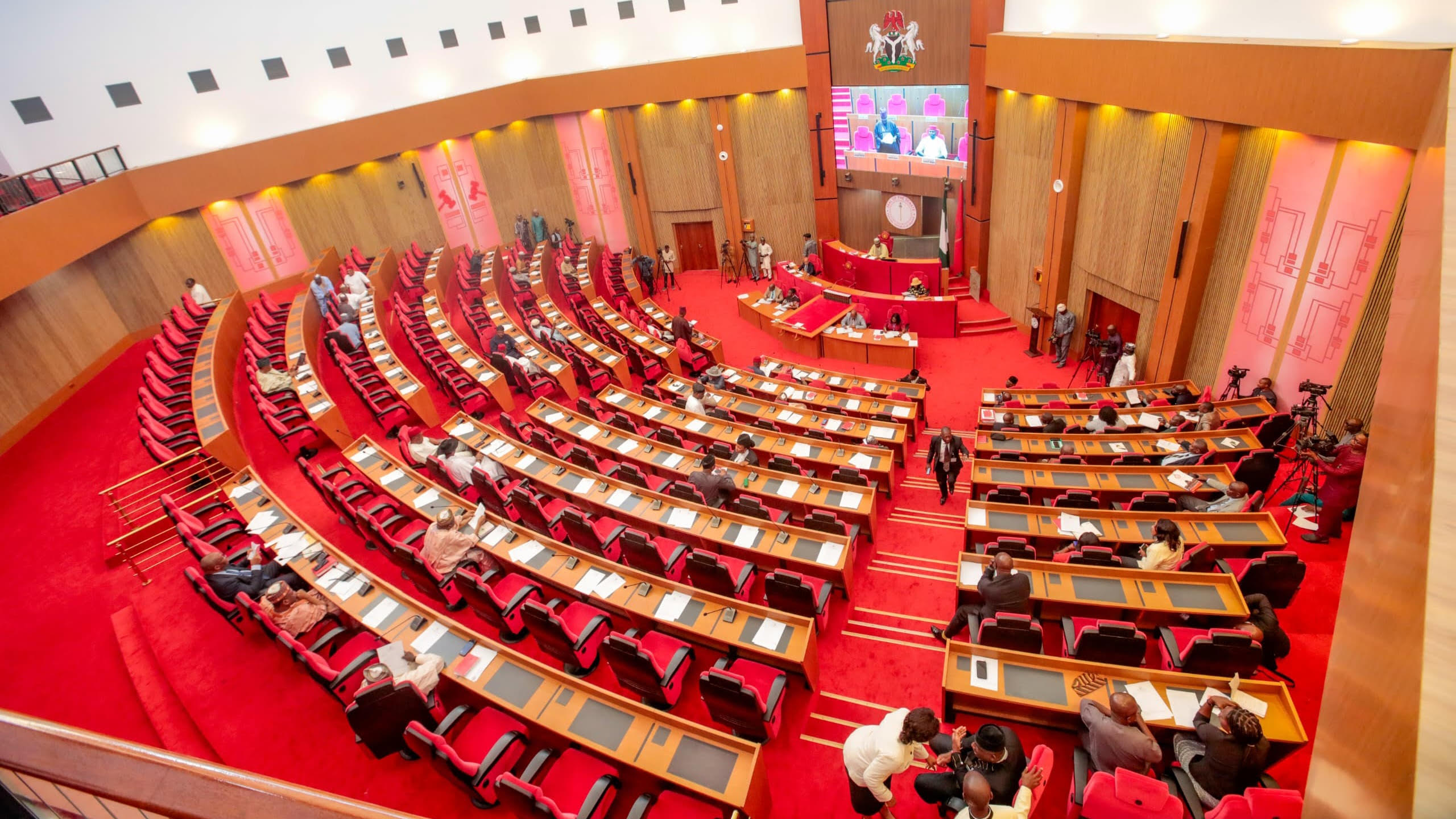
When on Wednesday, February 4, 2026 the Senate rejected the real-time electronic transmission of election results from polling units to the INEC Result Viewing (IREV) portal, little did the federal lawmakers know that Nigerians would react angrily to that action.
At the plenary where the senators considered the Bill for an Act to Repeal the Electoral Act No. 13, 2022, and enact the Electoral Act 2025, the Senate opted to retain the provisions of the 2022 Act, which does not make real-time uploading of election results mandatory.
The House of Representatives had last year approved electronic transmission of election results, in the ongoing review of the Electoral Act 2022. The two chambers are expected to set up a conference committee to harmonise areas of differences in their resolutions on the proposed electoral law.
The Senate passed the Electoral Act 2022 (Repeal and Reenactment) Amendment Bill, 2026 through its third reading, but rejected a key proposal that would have made the electronic transmission of election results mandatory.
The contentious amendment, proposed under Clause 60(3), sought to compel presiding officers of the Independent National Electoral Commission (INEC) to electronically transmit polling unit results to the IREV portal in real-time, after the signing and stamping of Form EC8A by election officials and party agents. Lawmakers, however, voted to retain the existing provision of the Electoral Act, which allows INEC discretion on how results are transmitted.
The adopted clause states that “the presiding officer shall transfer the results, including the total number of accredited voters and the results of the ballot, in a manner as prescribed by the Commission.”
The rejection of mandatory electronic transmission comes against the backdrop of widespread controversy surrounding the 2023 general elections, during which delayed and inconsistent uploads to the IREV portal triggered allegations of manipulation and undermined public confidence in the electoral process.
In the backlash that followed the Senate’s rejection of the electronic transmission of results, opposition parties, civil society groups, lawyers and other stakeholders have picked holes in the decision of the Senate to reject the digital transmission of results in real-time, pointing out its implications for future elections.
PDP, ADC kick
The Peoples Democratic Party (PDP) and the African Democratic Congress (ADC) have said Nigerians must insist on the inclusion of mandatory electronic transmission of election results in the Electoral Act, insisting that it is the only way to guarantee free and fair elections in the country.
The PDP National Publicity Secretary, Ini Ememobong and his counterpart in the ADC, in separate interviews, told Saturday Sun that Nigerians would reject any move by the National Assembly, to retain the extant provision of the Electoral Act 2022, on the transmission of election results.
The PDP spokesman charged Nigerians to mount pressure on the Conference Committee of both chambers to adopt the House of Representatives position on the contentious clause, noting that in the event that the lawmakers act otherwise, the citizens would have no other option than to embark on protests.
He said: “Where our legislators keep acting in variance with our desires then we may have no other option than to protest. Mass protest all over the country, to make sure that we bring the representatives to know that they are representatives and they ought to reflect the representation of the disposition of those they are representing.
“It is not their personal opinion, it is the opinion of the majority of their constituents; and if you check all the federal constituencies, all the senatorial districts, you will have a unanimous answer that real-time electronic transmission is what the voters want. It is the irreducible minimum that the voters want and the representatives, the senators should adhere to that.”
Similarly, Bolaji Abdullahi, spokesman for the ADC said it is obvious that the All Progressives Congress (APC) led Senate is not favourably disposed to the electronic transmission of election results. However, he expressed optimism that the Conference Committee would overturn the Senate position on the issue.
“What is clear is that they don’t want automatic transmission of results because they know that it is the only thing that can guarantee free and fair elections, which they are mortally afraid of. But we as opposition parties are united on this, and we are insisting. We are glad that some senators are coming out to say ‘this is the direction to go’.
“So, we hope that there is an opportunity with the Conference Committee that will do the final preparation of the bill for presidential assent. So, let’s see what they will come up with.”
Abdullahi, while reacting to a question on what will happen if the Conference Committee adopts the Senate position, said, “Of course, Nigerians would have to reject it because there would be no point going to the polls, when you are sure that your votes will not count. So, Nigerians have to insist that the right thing be done.
“The only way to bring back public trust in government is to shore up the credibility of the electoral process. This is not academic conversation. It is about building citizens’ trust in their government.
“The Supreme Court said according to the 2022 Electoral Act, electronic transmission of results was not mandatory. And that made it clear to all democracy lovers that there is a lacuna that must be filled. Now we have an opportunity and this APC Senate is trying to frustrate it. So, Nigerians will reject it. And I am still optimistic that the National Assembly will do the right thing,”
Lawyers’ critical views
Maxwell Gidado, a Senior Advocate of Nigeria (SAN) and a Professor of Law condemned the action of the Senate, saying it will sustain public distrust and skepticism in the electoral process.
According to Gidado, the Senate’s rejection of mandatory electronic transmission of results is expected to have far-reaching implications for the 2027 general elections, particularly given the unresolved credibility issues that trailed the 2023 polls.
“By retaining INEC’s discretionary powers over result transmission, the amendment leaves room for administrative flexibility but also reopens old fault lines.
“In 2023, INEC’s failure to upload results in real time to the IREV portal became the central trigger for public outrage, opposition protests, and post-election litigation. The absence of a clear legal mandate for electronic transmission means similar controversies could re-emerge in 2027,” the lawyer said.
He added: “The removal of Clause 142 significantly raises the evidentiary burden on election petitioners. Without the option of relying solely on documentary evidence, candidates challenging results in 2027 may again face the costly and time-consuming task of calling multiple polling unit witnesses, a hurdle that historically favours declared winners and entrenched incumbents.
“Perhaps the most significant implication is psychological. The failure to legislatively lock in real-time electronic transmission may deepen public skepticism, especially among young voters and civil society groups who saw technology as the primary safeguard against manipulation after 2023.”
Gidado said that the amendments appear to tilt toward institutional caution rather than radical reform, adding that critics argue that this may give advantage to dominant political actors who are better positioned to navigate administrative discretion and post-election litigation.
Other News
He warned that unless complemented by strong INEC regulations and transparent implementation, the amended Electoral Act risks entering the 2027 elections with unresolved legitimacy concerns from 2023.
Dave Ajetomobi, a former chairman of the Nigerian Bar Association (NBA), Ikeja Branch, noted that even within the NBA, where electronic voting has been adopted, lawyers have remained divided over the integrity of the association’s elections.
According to him, transparency is determined more by how elections are conducted than by the method used to transmit results.
He cited the June 12, 1993 presidential election, conducted without internet access, as an example of a process widely regarded as reflective of the people’s will.
“If elections at the polling units are free, fair, and credible, transmission will not be problematic,” he said, adding that widespread recording of vote counting by voters would make it difficult to manipulate results.
He explained that video evidence from multiple observers could easily challenge any discrepancies between polling unit results and figures announced by the Independent National Electoral Commission (INEC).
Ajetomobi, however, cautioned that electronic transmission is vulnerable to hacking and manipulation, recalling that security agencies reportedly dealt with over 100 hacking attempts during the 2023 general elections.
He advocated a hybrid approach that combines manual and electronic transmission, arguing that such a system would strengthen public confidence while reducing the risks associated with relying solely on one method.
Nnaemeka Amaechina, a lawyer and rights activist, criticised the Senate over its rejection of real-time transmission of election results, describing the decision as a setback for credible elections in the country.
Amaechina alleged that many elected officials emerged from flawed electoral processes and were therefore reluctant to support reforms that would guarantee free and fair elections.
According to him, such lawmakers fear that transparent processes could jeopardise their chances of returning to power.
He further accused political office holders of failing to deliver on their responsibilities, claiming their actions reflect a reluctance to enact laws that would strengthen democratic institutions, including approvals and confirmation of key appointments.
Expressing hope for accountability, the activist said he believes that forces of justice would ultimately prevail against attempts to undermine credible governance, citing a biblical reference to reinforce his position.
Similarly, Chijioke Ifenkwe, another activist, expressed Senate’s rejection of mandatory electronic transmission of election results in the newly passed Electoral Bill, warning that the decision could undermine the credibility of the 2027 general elections.
Ifenkwe expressed doubts that the 2027 elections will be transparent, noting that the decision appears to confirm fears about the integrity of Nigeria’s electoral process.
“I do not see the 2027 elections being transparent. The decision actually confirms it will not be transparent,” he said.
He dismissed suggestions that Nigeria lacks the capacity to implement electronic transmission of results, arguing that both developed and developing countries have successfully adopted the system for real-time reporting.
“It is not difficult for Nigeria. We already have the resources for it, including the necessary machinery,” Ifenkwe stated.
He referenced the 2023 general elections, claiming that existing loopholes were exploited, while court decisions further reinforced the outcome.
“Like we saw in 2023, the hunger for rigging and the loophole the courts used to confirm the rigging show clearly that it is deliberately not implemented, not because it is difficult or impossible,” he added.
Petition against Senate
A former chairman of the Pentecostal Fellowship of Nigeria (PFN), Rivers State chapter, Apostle Eugene Ogu, has petitioned the United States government and others over a direct threat to Nigeria’s democracy by the National Assembly.
Ogu’s reaction followed the rage across the country by citizens for non-passage of the bill on electronic transmission of election results early.
The cleric, in a strongly worded petition on Thursday, called on the United Nations, European Union and the entire international community to rise up and save Nigeria from the hands of “anti-masses political leaders”.
He warned against those he described as “political contractors in the National Assembly” to desist from setting the country on fire as any attempt to derail constitutional democracy would be firmly resisted by Nigerians.
“Nigerians may have endured massive looting of our country’s treasury by our politicians which is responsible for the poor standard of living, resulting in lack of good roads, poor power supply, lack of medical care, lack of quality education, lack of confidence in the judicial system, lack of security, no human rights freedom and high level of bribery and corruption in all sectors of the government. The National Assembly must not play games with the country’s democracy.
“Only a free and fair transparent legal electoral process with a compulsory electronic transmission of election results which is domiciled in the constitution is what Nigerians crave for, not what the fraudulent INEC that publicly lied to Nigerians that there will be an electronic transfer of results only to turn around to tell us that it’s not in the constitution,” Ogu wrote in the petition.
The former PFN boss alleged that the refusal of Senator Godswill Akpabio-led Senate to pass the electronic transmission of election results in real-time is an invitation to rig the 2027 presidential election and fraudulently manipulate the will of the people.
He called on the governments of the United States, United Kingdom, the leadership of the United Nations, European Union and lovers of democracy across the world to stand up against the anti-masses tendencies against the people of Nigeria.
He also called on the leadership of local institutions such as the NLC , TUC, NUC, NBA, NANS, ASUU, NASU, PFN, CAN to speak out now and do the needful to compel the National Assembly to pass the electronic transmission of election results in good time, into law.
“The international community should show sufficient commitment in the wellbeing of Nigeria by compelling the Nigerian government and the National Assembly to pass the bill into law, as it will be the greatest gift and contribution any country can give to Nigeria or the National Assembly,” the petitioner added.